



What is an Impacted Tooth? How is it Treated?
The eruption of each tooth is actually a planned and orderly miracle of our bodies. This process, which begins with baby teeth in infancy, eventually gives way to permanent teeth. Each tooth has a specific eruption time and sequence; in other words, it follows its own “timetable” for taking its place in the mouth. However, sometimes things don’t proceed so smoothly. A tooth fails to emerge at the appropriate time or becomes trapped somewhere in the jawbone. This is what we encounter in these cases, called an “impacted tooth.”
An impacted tooth can often remain silent in the mouth for years, often without being noticed. Sometimes it can cause pain, swelling, or deformities in the jaw. Sometimes, it can be completely asymptomatic and go unnoticed until an X-ray is taken. Therefore, impacted teeth are both a matter of curiosity and one of the most common problems.
What is an Impacted Tooth?
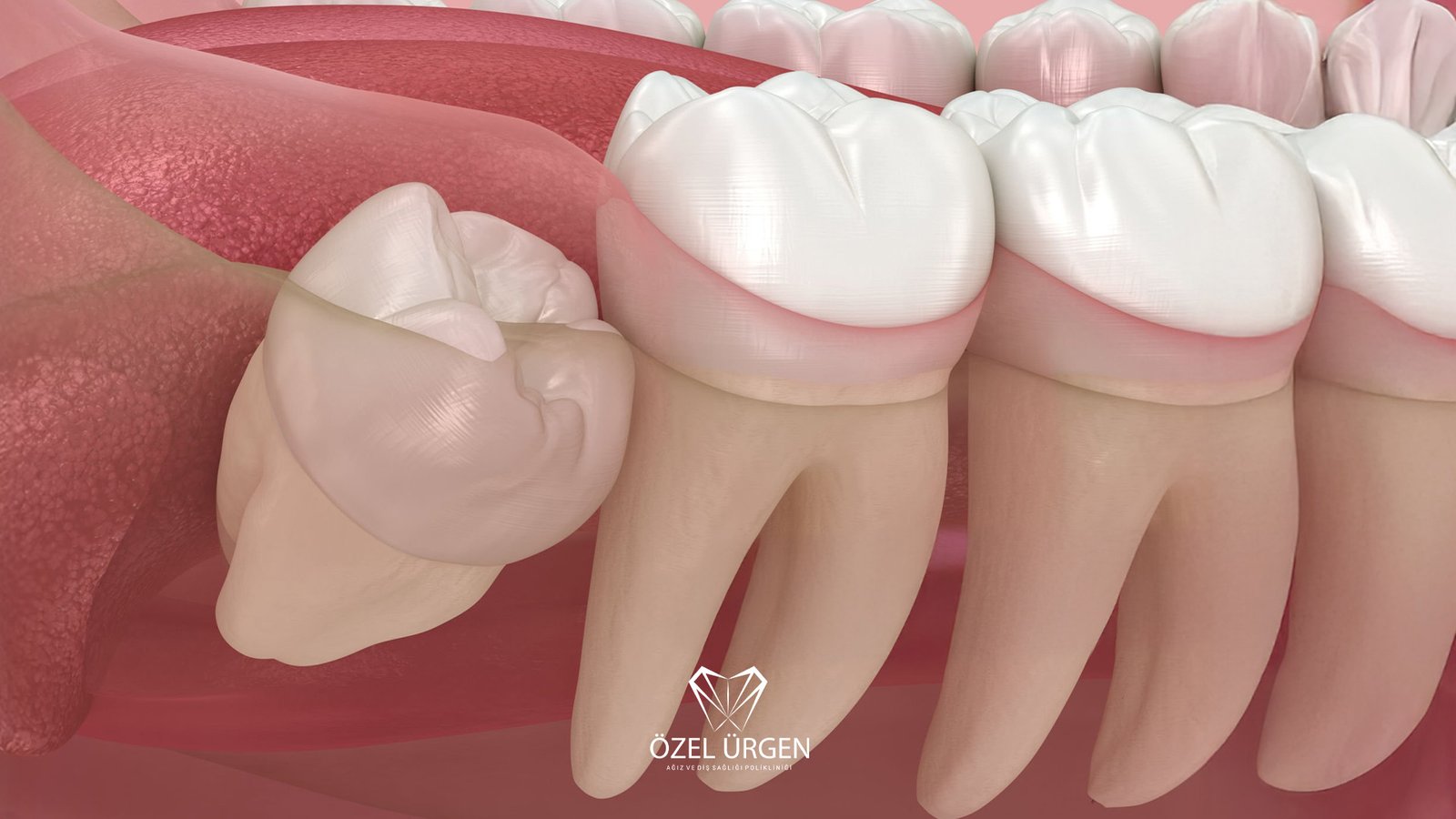
An impacted tooth is essentially a situation where a tooth that should have emerged gets stuck in the process. Normally, every tooth breaks through the gum tissue and enters the mouth after completing its development. However, sometimes this natural process is interrupted. A tooth becomes trapped within the jawbone or under the gum tissue and cannot emerge. In this case, the tooth is called an “impacted tooth.”
Empty teeth can sometimes remain completely hidden, meaning they are completely invisible in the mouth. Sometimes, a portion of the tooth emerges, but the rest remains beneath the gum tissue. In this case, the tooth becomes partially impacted, and this partially erupted state can occasionally cause pain, swelling, or infection.
The most common type of impacted tooth is the third molar, commonly known as “wisdom teeth.” This is because these teeth typically emerge at the very back of the jaw, and most people lack sufficient space in that area. It’s very common for these teeth to not erupt at the correct angle in people with narrow jaws. However, it’s not just wisdom teeth; canines and, sometimes, premolars can also become impacted.
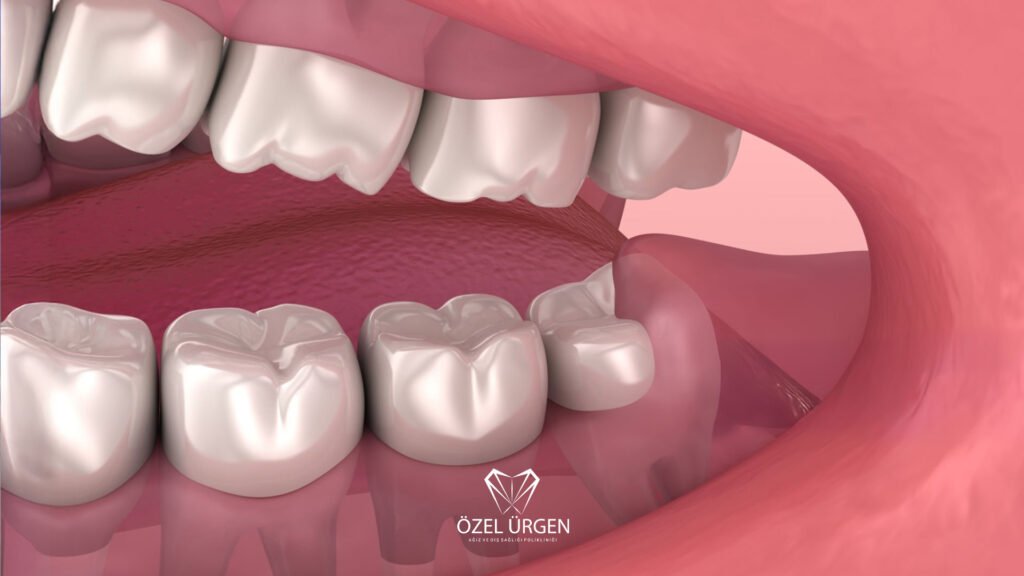
In some people, an impacted tooth can remain silent for years without causing any symptoms. However, sometimes it can cause discomfort such as gum pain, a feeling of pressure, and even swelling inside the cheek. Therefore, it is crucial to identify impacted teeth on panoramic X-rays taken during regular dental checkups. Over time, an unnoticed impacted tooth can disrupt the alignment of surrounding teeth or, over time, put pressure on the jawbone, leading to more serious problems.
What Causes Impacted Teeth?
There’s no single reason why a tooth becomes impacted. Sometimes congenital factors play a role, and sometimes subsequent changes in the oral cavity trigger this condition. So, the reasons can vary from person to person. But generally, there are several primary causes that lead to the emergence of impacted teeth:
Insufficient space in the jaw
This is the most common cause. Especially with wisdom teeth, the jawbone may not be wide enough for the tooth to emerge comfortably. While other teeth have already established themselves, the last wisdom tooth to emerge cannot find room and becomes trapped within the jaw.
Tooth Misalignment
Sometimes, a tooth doesn’t develop at the proper angle within the jawbone. If it’s positioned crookedly, horizontally, or upside down, it can’t find its natural path. In this case, it becomes trapped beneath the gum, becoming a “non-eruptible tooth.”
Delayed Fallout of Baby Teeth
It is crucial for baby teeth to fall out on time during childhood. If a baby tooth remains in place for too long, the permanent tooth that comes in won’t have enough space to grow in. In this case, the permanent tooth can become impacted.
Genetic Predisposition
In some individuals, the occurrence of impacted teeth can be entirely genetic. If a family member has experienced a similar condition, the same tendency may also occur in children. Therefore, genetic factors should not be ignored.
Impacted Tooth Symptoms
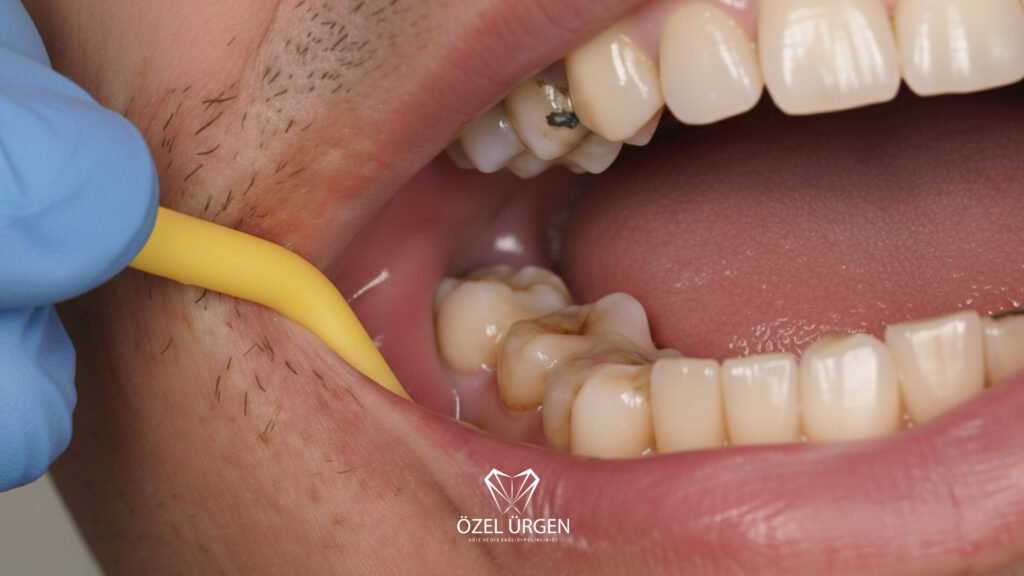
Impacted teeth can sometimes remain silently within the jawbone for long periods without causing any symptoms. A person may live for years without realizing they have an impacted tooth. However, most often, the body signals this. Discomfort begins to manifest, especially when a tooth tries to emerge or when the surrounding tissues are under pressure.
One of the most common complaints is pain or a feeling of fullness at the back of the jaw. This pain can sometimes radiate to the ear, head, or throat. Sometimes it becomes difficult to open the mouth fully, and sometimes a feeling of pressure is felt while chewing. This discomfort is particularly pronounced when wisdom teeth are impacted, especially when eating or brushing.
Mild swelling, redness, or a foul odor in the gum area can also be a sign of an impacted tooth. With partially erupted (semi-erupted) teeth, bacteria can easily infiltrate the space between the gum and the tooth. This can lead to inflammation, a foul taste, and tender gums over time. As the infection progresses, pain and pressure in the jawbone can increase, and sometimes even a fever can occur.
Another significant symptom is a change in the position of the teeth. The impacted tooth can put pressure on the surrounding teeth, causing them to become crowded or displaced. This can disrupt the alignment of the teeth over time and create an aesthetically unsightly appearance.
How is Impacted Tooth Treatment Performed?
Treatment for impacted teeth varies depending on the location of the tooth, its impact on surrounding tissues, and the patient’s general condition. Therefore, there is no single method that works for everyone. In some cases, the tooth needs to be removed, while in other cases, it can be preserved and allowed to erupt into the mouth.
Surgical Extraction (Impacted Tooth Surgery)
The most common method for impacted teeth is surgical extraction. If the tooth is completely or partially embedded in the gum, the oral surgeon removes it through a minor operation. This procedure is usually performed under local anesthesia, meaning the patient will feel no pain during the procedure, only slight pressure.
The procedure is very controlled. First, a small incision is made in the gum, and then the surrounding bone is carefully removed. In some cases, instead of removing the entire tooth, the tooth is removed in several pieces, which is particularly helpful for molars. The area is then cleaned, stitched, and the healing process begins.
While recovery time varies from person to person, relief generally occurs within a few days. You may experience mild swelling, bruising, or pain in the first few days, but these are normal and will quickly subside. Following your doctor’s care recommendations will make the process much more comfortable.
Orthodontic Removal (Removal of a Tooth)
In some cases, it’s possible to help a tooth grow in the correct direction instead of extracting it. This method is particularly preferred when impacted canines are present. The orthodontist attaches a small bracket to the tooth and gradually pulls it upward using special wires. This process requires patience, as it takes time for the tooth to shift position. However, it’s crucial for preserving the natural tooth.
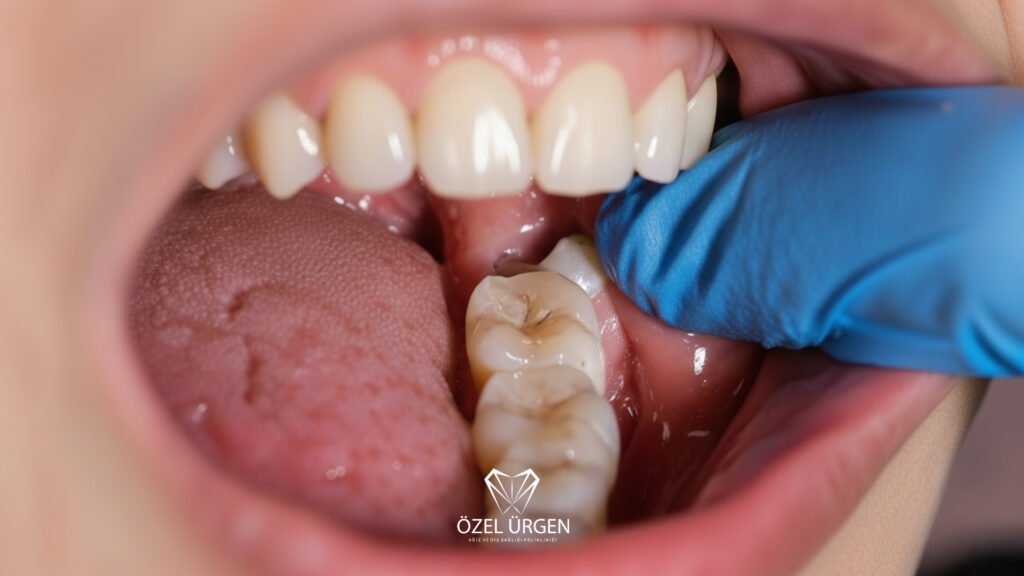
Orthodontic maintenance treatment doesn’t offer as rapid results as surgical extraction, but it’s a much more conservative option in the long run. Having the tooth repositioned in the mouth with its root provides a significant advantage in terms of both aesthetics and function.
What Happens If an Impacted Tooth Isn’t Extracted?
Many people may think, “If I’m not in pain, why should I have it extracted?” However, leaving an impacted tooth untreated can lead to unexpected problems over time. As the impacted tooth continues to grow silently within the jaw, it can put pressure on the roots of adjacent teeth, causing misalignment and displacement.
In some cases, a cyst or infection can develop around the tooth, which can become a serious condition that can spread to the jawbone. Furthermore, it’s easy for bacteria to accumulate around partially impacted teeth, leading to problems such as bad breath, gingivitis, and poor overall oral hygiene.
Comments are closed