



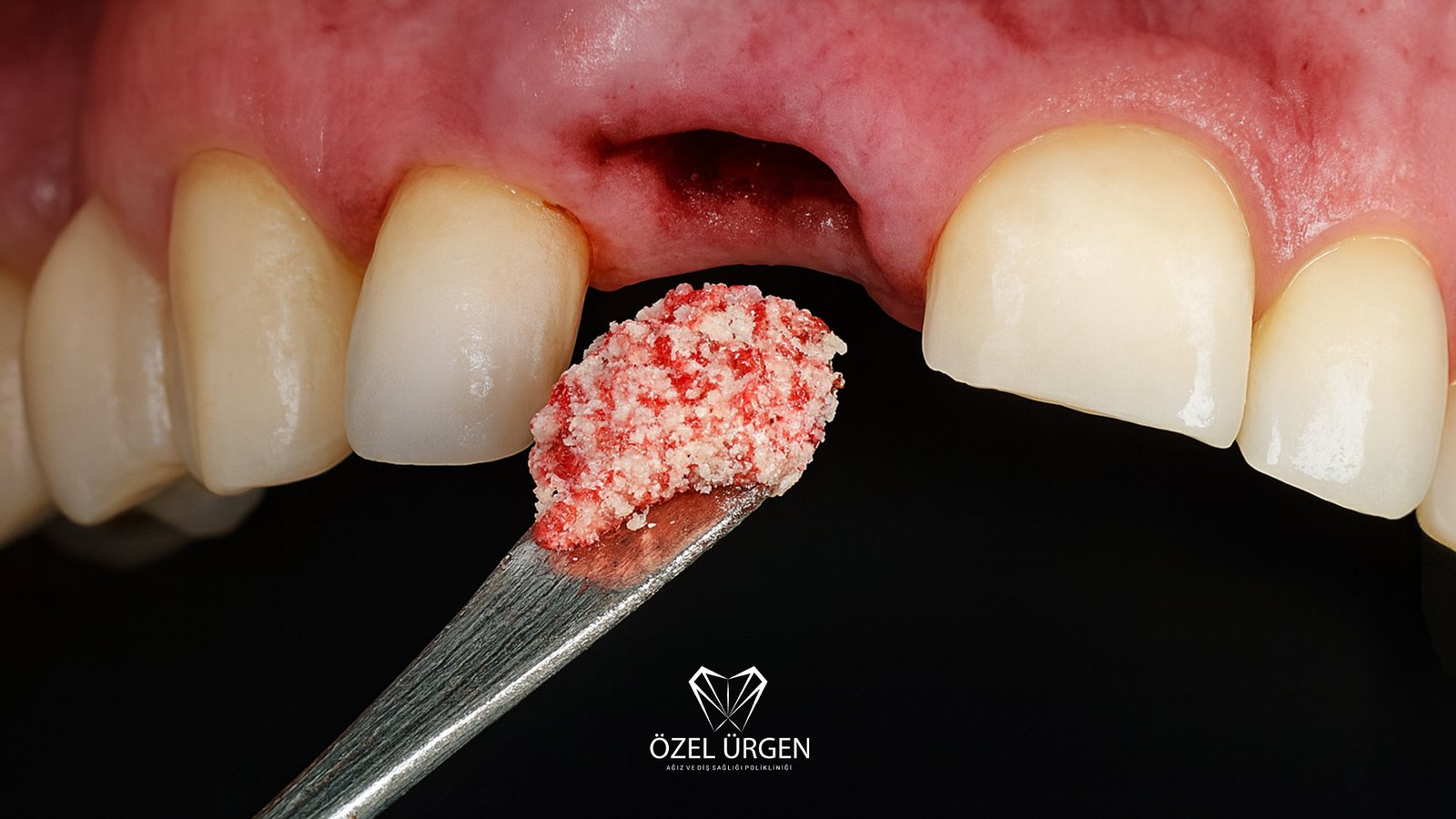
What Is Bone Graft (Bone Powder) Treatment?
When we think of dental treatments, similar images usually come to mind: a filling, maybe a root canal, or an implant that replaces a missing tooth… However, behind these procedures lie some important applications that form the foundation of long-lasting and healthy results, yet are rarely talked about. Bone graft treatment is exactly one of these. For many people, hearing this term for the first time may sound unfamiliar or even a little intimidating. Asking “Bone powder?” is completely natural. But the truth is that this treatment is one of the most logical, reliable, and commonly used supportive methods in modern dentistry.
Over time, in people who experience tooth loss, remain without teeth for long periods, or have bone resorption problems, the jawbone naturally becomes thinner and weaker. Sometimes this goes unnoticed, and sometimes it is discovered during implant planning. This is precisely where bone graft treatment comes into play. The goal is to support the bone tissue the body has lost, strengthen the jawbone, and create a solid foundation for future treatments. In simple terms, bone graft treatment is like “laying a strong foundation before placing a new tooth.” The stronger the foundation, the longer-lasting the result.
Contrary to what many people think, this treatment is not complicated or frightening. On the contrary, thanks to today’s technology, it is performed in a highly controlled, planned, and safe way. Moreover, bone graft material has a special structure that stimulates the body to produce new bone. The aim is not to place ready-made bone and leave it there, but to help the body regenerate its own bone tissue. In this sense, bone graft treatment supports a natural and harmonious healing process.
What Is Bone Graft Treatment?
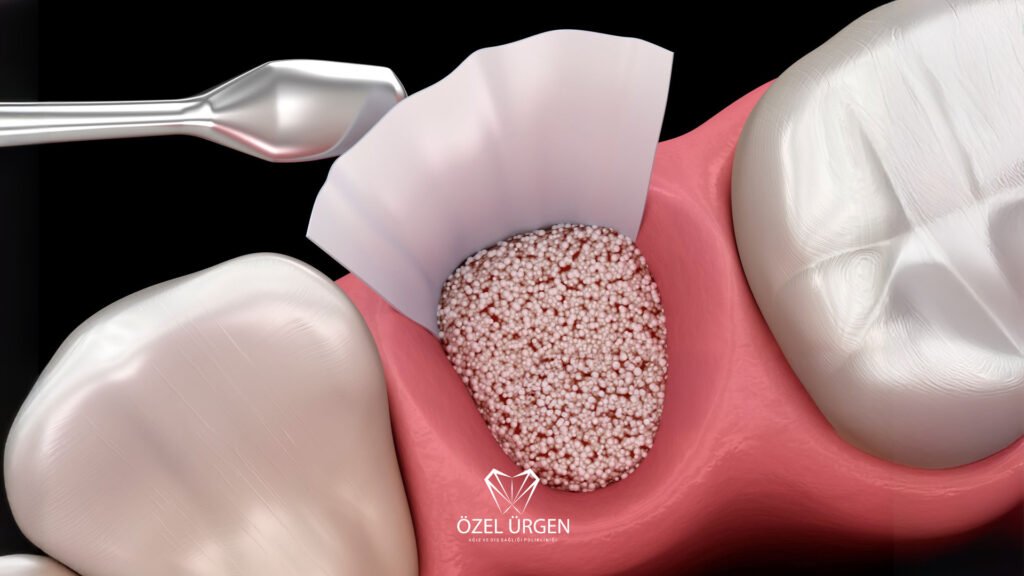
Bone graft treatment is a supportive procedure applied to compensate for bone loss that develops over time in the jawbone and to strengthen it again. After a tooth is extracted, when someone lives with missing teeth for a long time, or when gum disease progresses, the jawbone slowly begins to resorb. This can negatively affect both oral health and future dental treatments. The purpose of this treatment is to stop this loss and provide the bone with the support it needs to regenerate.
Although it is called “powder,” it is not a powder in the way you might imagine. This material is specially prepared, sterile, and fully compatible with the body. Its most important feature is that it mimics natural bone and encourages the body to produce new bone tissue. Over time, it integrates with the existing bone and turns into natural bone tissue, creating a strong and reliable foundation.
Why Does Bone Loss Occur?
To truly understand the treatment, it is important to first know why bone loss occurs. Bone loss in the jaw is much more common than many people realize and often progresses silently.
One of the most common causes is tooth extraction. Once a tooth is removed, the area where the root once was is no longer stimulated, so the bone begins to resorb over time. Similarly, living with missing teeth for a long period causes the bone to gradually lose volume. Because the empty area does not receive stimulation, the bone tissue weakens.
Advanced gum diseases are also major causes of bone loss. As these conditions progress, the bone that supports the teeth is damaged, and the teeth may begin to loosen. In addition, trauma to the jaw, accidents, ill-fitting dentures, or poorly planned implants can also accelerate bone loss.
Why Is Bone Graft Treatment Performed?
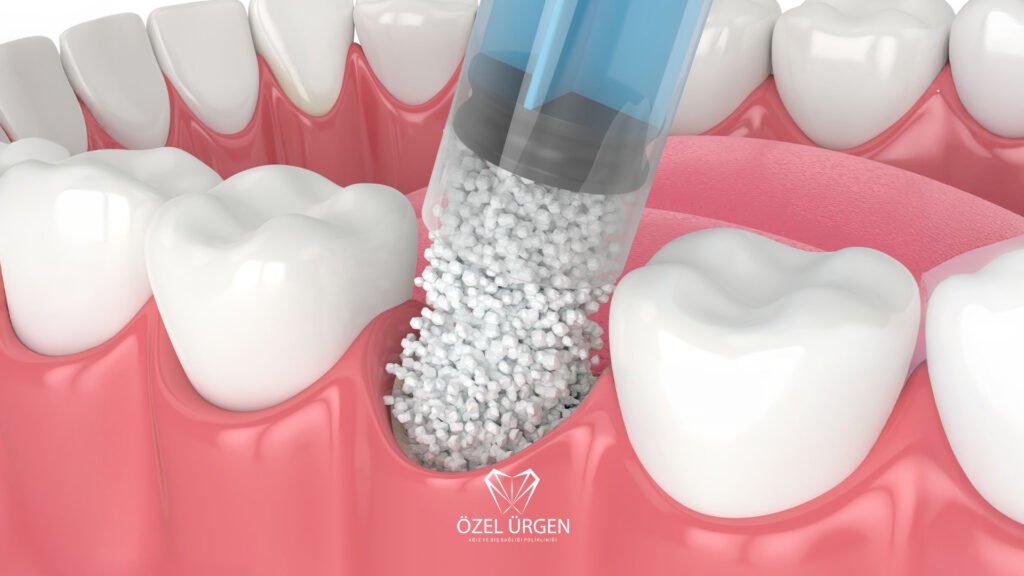
Bone graft treatment is performed to strengthen the jawbone and create a solid foundation for future dental procedures. One of the most common reasons is preparation before implant treatment. For an implant to integrate properly, sufficient bone volume is essential. If the bone is weak or insufficient, this deficiency can be corrected with bone graft material. When applied immediately after tooth extraction, it can also largely prevent bone resorption in that area.
In addition, bone graft treatment plays a supportive role in bone loss caused by gum disease. It helps preserve not only chewing function but also facial aesthetics. Especially in the front tooth area, bone loss can eventually lead to changes in facial contours. Bone graft treatment is an important support for maintaining both a healthy oral structure and a natural appearance.
What Are the Types of Bone Graft Materials?
Bone graft materials are not all the same. Depending on the patient’s condition, materials obtained from different sources may be used:
-
Bone graft taken from the patient’s own bone (autograft)
This is the most natural option, but it is not always preferred. -
Animal-derived bone graft (xenograft)
One of the most commonly used types. It is made completely safe through special processing. -
Human-derived bone graft (allograft)
Obtained from tissue banks. -
Synthetic bone grafts (alloplastic)
Produced in laboratory settings and are biocompatible.
The choice of treatment is determined based on the application area and evaluations made through imaging.
How Is Bone Graft Treatment Performed?
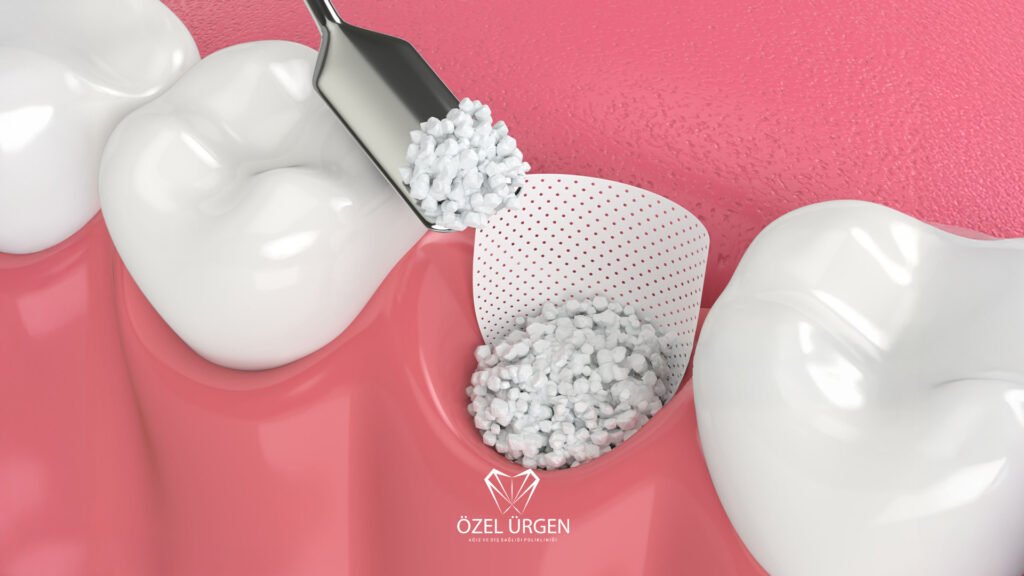
The procedure is not as difficult or painful as many people imagine. It is usually performed under local anesthesia, so the patient does not feel pain during the procedure. First, the treatment area is numbed, and if necessary, a tooth is extracted or the area is carefully opened.
Then, the bone graft material is placed into the area with missing bone. In some cases, a special protective membrane is used to keep the material stable. Finally, the area is closed with sutures. The entire procedure usually takes between 30 minutes and one hour, and the patient can return to daily life the same day.
Does Bone Graft Treatment Hurt?
One of the most frequently asked questions is about pain. Since the procedure is performed under local anesthesia, no pain is felt during the treatment. Afterwards, mild pain, swelling, or sensitivity may occur for a few days. However, these symptoms are usually easily controlled with simple painkillers. Many patients say the process is much more comfortable than they expected and that there is nothing to fear.
How Long Does the Healing Process Take?
After the treatment, the real process begins as the body adapts to the material and starts forming new bone tissue, which naturally takes some time. The healing period is not the same for everyone and can vary depending on general health, bone structure, and the scope of the procedure.
In general, the bone reaches sufficient maturity within 3 to 6 months, after which permanent treatments such as implants can be performed. At this stage, patience is very important, because a well-healed and strengthened bone is the key to a long-lasting and trouble-free treatment. For detailed information and appointments, feel free to contact us right away…
Comments are closed