



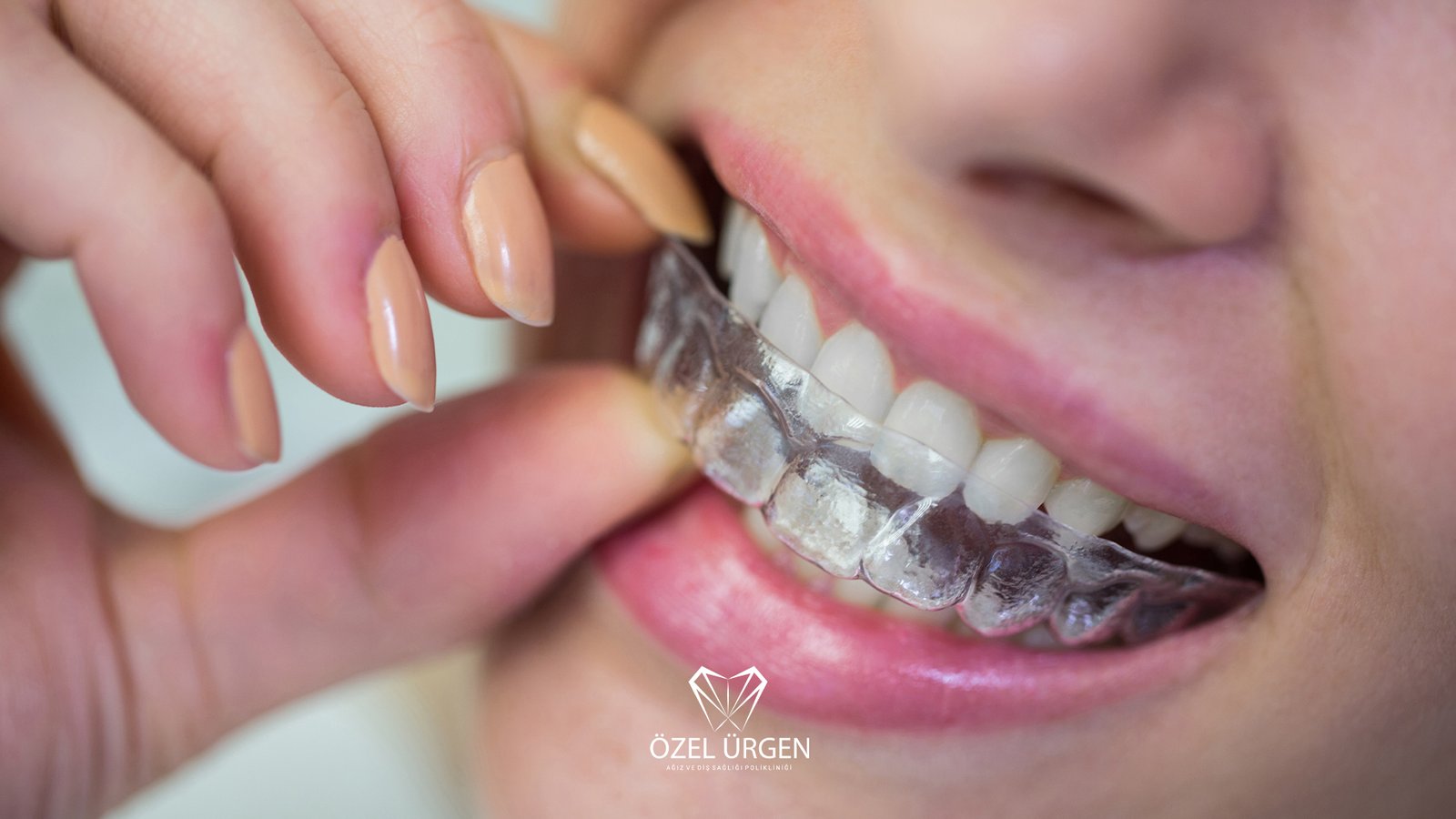
Clear Aligner Treatment
Do you have a slight crowding in your teeth but feel hesitant about wearing traditional braces? Maybe you’d love to see a straighter smile in the mirror, yet the thought of visible metal brackets makes you pause. Perhaps you’ve even found yourself thinking, “Isn’t there a more discreet option?” If so, you’re not alone. Many adults considering orthodontic treatment share the very same concern.
In recent years, clear aligner treatment has become increasingly popular among both teenagers and adults. It’s a modern and comfortable orthodontic solution designed to align teeth in a much more aesthetic way. Developed as an alternative to traditional braces, clear aligners help minimize appearance-related worries while allowing you to continue your daily life with confidence.
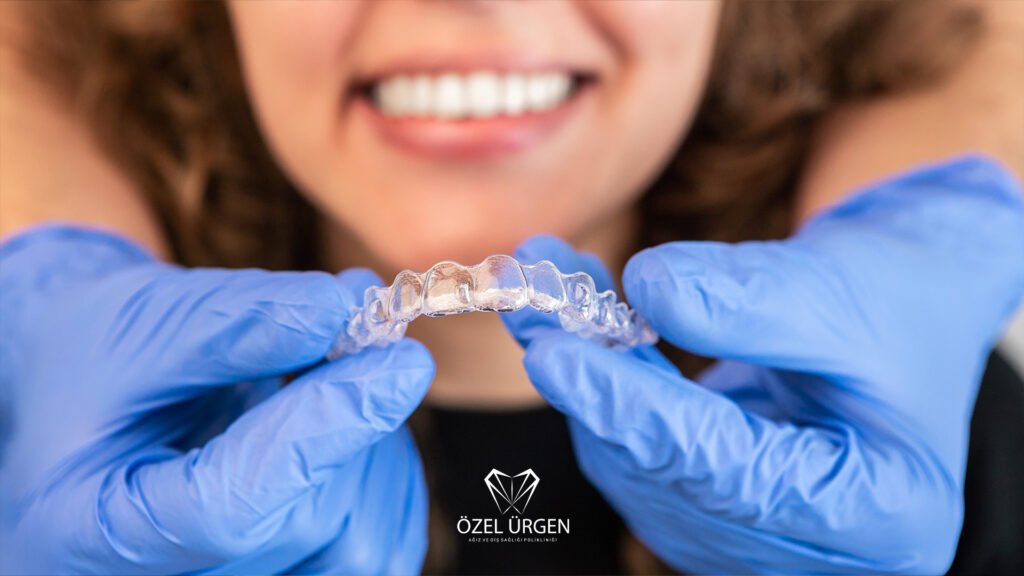
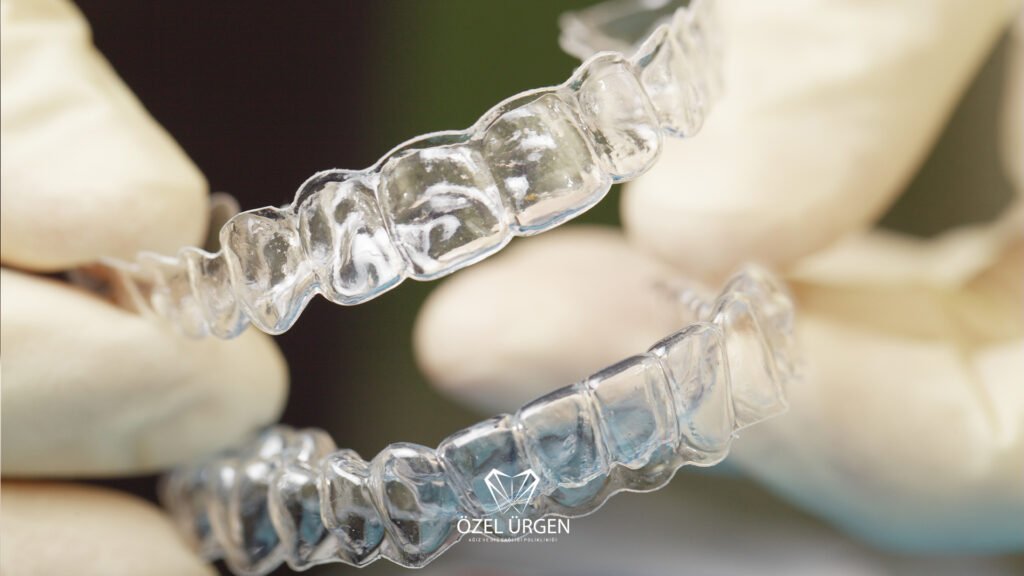
Clear aligners are custom-made, removable, transparent trays that fit snugly over your teeth. At first glance, they are barely noticeable. In fact, most people won’t even realize you’re undergoing treatment. That’s why they are especially appealing for individuals with active social lives, professionals attending meetings, or anyone who simply values a natural looking smile.
Imagine being in a meeting, enjoying coffee with friends, or giving an important presentation without wondering, “Are my braces showing?” Being able to smile and speak freely without that lingering thought brings a unique sense of comfort. Clear aligner treatment is designed to offer exactly that kind of ease.

And this treatment is about much more than aesthetics. Mild to moderate crowding, gaps between teeth, or minor bite issues can gradually make oral hygiene more difficult and may negatively affect your gum and overall dental health. Properly aligned teeth don’t just create a more attractive smile they also support a healthier mouth.
Another important advantage is comfort. Unlike fixed braces with brackets and wires, clear aligners are removable. You can take them out while eating or brushing your teeth, making daily cleaning much easier and reducing the stress of worrying about something breaking or getting stuck. Of course, consistency is key but when used properly, clear aligners can deliver highly effective results.
How Do Clear Aligners Work?
When you first hear about clear aligners, you might wonder, “Can something so thin and transparent really move teeth?” The real magic lies in the detailed digital planning behind each tray.
The process begins with a thorough evaluation by your dentist or orthodontist. In the past, taking impressions meant biting into thick, putty-like material and waiting patiently. Today, most clinics use digital scanners instead. A small handheld device captures precise images of your teeth, and within minutes, a three-dimensional model appears on the screen. Seeing your own teeth in 3D is often a fascinating experience.
From there, advanced software analyzes your current tooth positions and maps out the ideal alignment step by step. This isn’t guesswork each tooth’s direction, distance, and timing of movement are carefully calculated. It’s a highly detailed digital process designed to ensure controlled and predictable results.
Each aligner is created to move your teeth by a very small amount. Rather than making sudden or dramatic changes, the treatment focuses on gradual, precise adjustments. Typically, you switch to a new aligner every one to two weeks. With each new tray, your teeth move one step closer to their ideal position. The transformation happens slowly but when you look in the mirror over time, the difference becomes clear.
You may feel slight pressure when wearing a new aligner. This is completely normal and actually a positive sign that your teeth are shifting as planned. The sensation is usually mild and temporary, and most people adapt within a few days.
One of the most reassuring aspects of clear aligner treatment is its predictability. Thanks to digital planning, you can often see a preview of how your smile is expected to look at the end of treatment. That means the question, “What will my teeth look like?” can be answered right from the start.
When Are Clear Aligners Used?
Clear aligners can be used in more situations than many people realize. They are not limited to very minor issues. With proper case selection and planning, they can effectively treat many mild to moderate orthodontic concerns.
For example, if you have small gaps between your teeth especially in the front clear aligners can gradually close those spaces. If one or more front teeth are slightly crowded or misaligned, aligners can gently guide them into a better position over time.
If your upper and lower teeth don’t come together properly meaning there are mild bite issues clear aligners may also help. Proper alignment is important not only for aesthetics but also for comfortable chewing and long-term oral health.
They are also a great option for individuals who previously had braces but experienced shifting over the years. Minor relapses can often be corrected effectively with clear aligners.
However, not every case is suitable for this method. Severe jaw discrepancies or complex skeletal problems may require traditional orthodontic treatment. The best way to determine whether clear aligners are right for you is through a detailed evaluation by an orthodontic specialist, who can recommend the most appropriate and long-lasting solution for your specific needs.
What Is the Difference Between Clear Aligners and Braces?
This is one of the most frequently asked questions: “Should I choose braces or clear aligners?” The truth is, both treatments aim for the same goal moving your teeth into their ideal position. The difference lies in the method and overall experience.
In terms of appearance: Clear aligners are nearly invisible when worn. Braces, especially metal ones, are more noticeable particularly on the front teeth. For many adults, this aesthetic difference plays a significant role in their decision.
In terms of comfort: Clear aligners have smooth surfaces and do not involve wires that may irritate the inside of your cheeks. Braces can sometimes cause minor irritation, especially at the beginning of treatment.
In terms of hygiene: Aligners can be removed while eating and brushing, allowing you to maintain your usual oral care routine. With braces, cleaning around brackets and wires requires more attention and additional tools.
In terms of discipline
Comments are closed