

What Is a Gummy Smile?

Gummy Smile Nedir

What Is a Gummy Smile? The Role of Gums in Smile Aesthetics

Smiling is one of the most natural ways to express our feelings without needing words. A sincere smile creates a warm connection with others and helps us feel more confident, relaxed, and happy. Whether in photos, conversations, or everyday life, smiling is a small yet powerful detail that reflects who we are.

However, not everyone feels equally comfortable when they smile. Some people tend to hide their smile because their gums are more visible than their teeth when they laugh. Covering the mouth with a hand, smiling less in photos, or unintentionally adopting a tense expression can gradually become habits. Known in dentistry as a “gummy smile,” this condition may seem like a purely aesthetic concern, but it can directly affect a person’s self confidence and comfort in social life.

A gummy smile is actually more common than many people think, and even those who experience it may not fully understand its causes or possible solutions. Thanks to modern dentistry, however, the underlying reasons can be accurately identified and treated with personalized, effective, and comfortable approaches. In this article, we will explore what a gummy smile is, why it occurs, and which methods can help achieve a more natural and balanced smile. Because everyone deserves to feel free and good when they smile.

What Is a Gummy Smile?

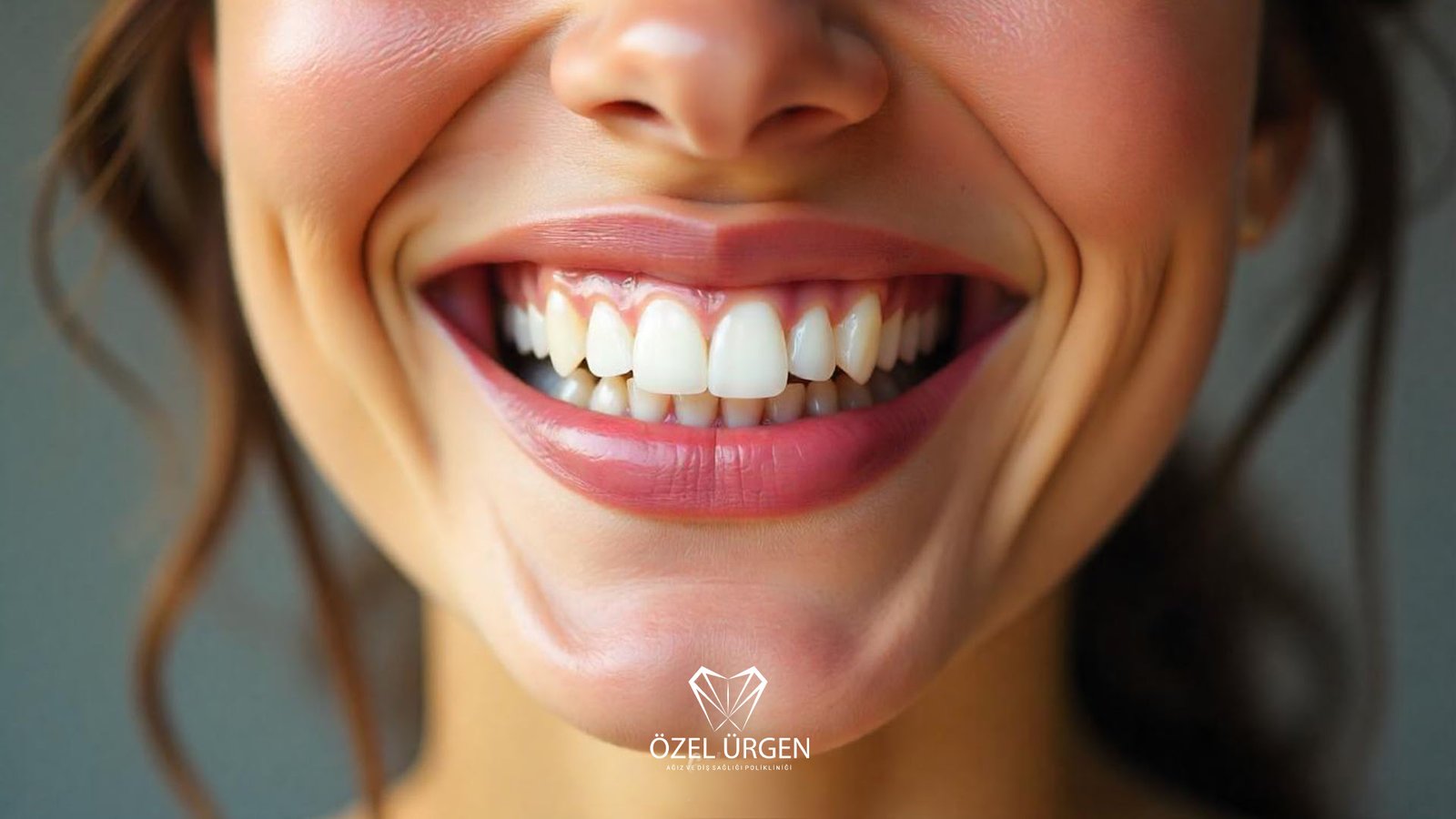
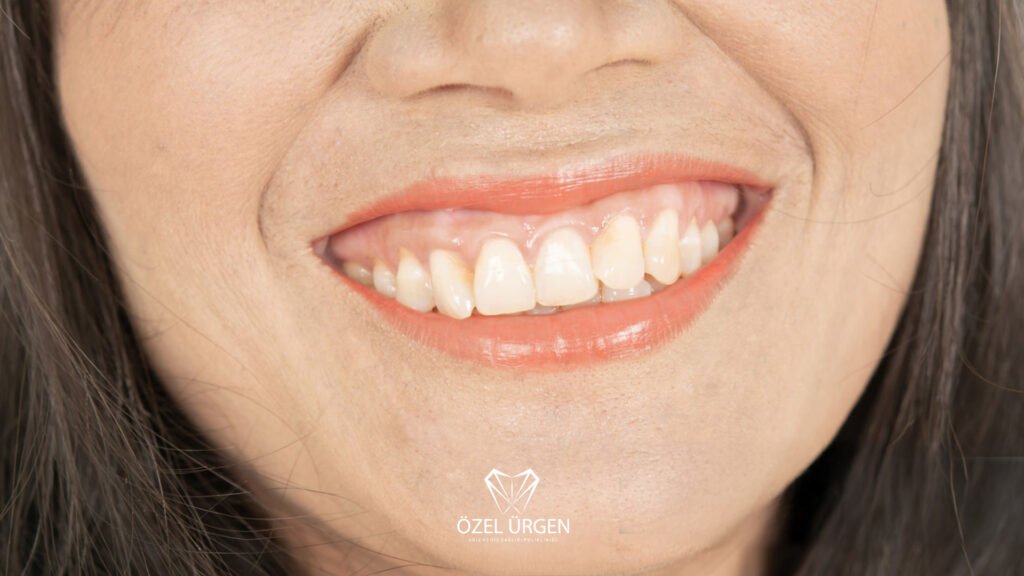
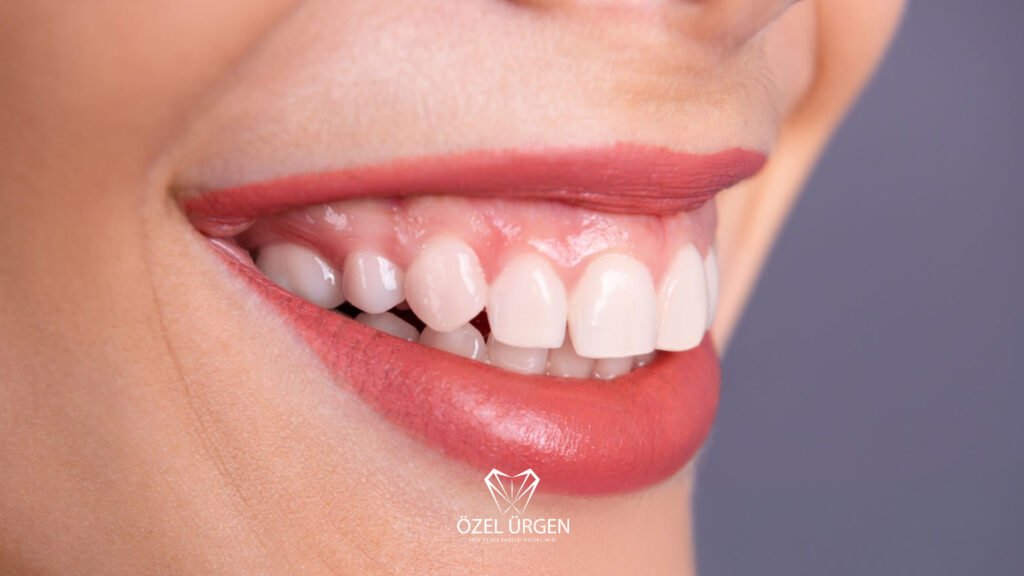
A gummy smile refers to a condition where the upper gums are more visible than normal when smiling. In general, if more than 2–3 millimeters of gum tissue is visible during a smile, it is defined as a gummy smile in dentistry. Even if the teeth are healthy, white, and well-aligned, excessive gum visibility can disrupt smile harmony and cause aesthetic concerns.

Although this may seem like a “small aesthetic detail,” its impact can go far beyond that. Many people with a gummy smile unconsciously begin to limit their smile. Smiling more cautiously in photos, covering the mouth while laughing, or deliberately pressing the lips while speaking are just a few common behaviors. Over time, this can lead to feeling more reserved when expressing oneself.

What Is a Gummy Smile

What’s important to understand is that a gummy smile is usually not caused by the teeth themselves. The source is often related to the position of the gums, the movement of the upper lip, or overall facial structure. So even with a healthy mouth, this situation can occur. Fortunately, with proper evaluation and a personalized approach, a gummy smile can be successfully corrected. The key is to see it not as a “flaw,” but as an aesthetic difference with effective solutions.

Why Does a Gummy Smile Occur?

There isn’t a single cause behind a gummy smile. In most cases, several factors come together, leading to excessive gum visibility when smiling. In some individuals, the gums cover more of the teeth than normal, making the teeth appear shorter or smaller and pushing the gums into the foreground. Even when teeth are healthy and ideally sized, the position of the gums can affect smile balance.

Another common reason is related to lip and facial structure. If the upper lip muscles are overly active, the lip may lift higher than normal when smiling, exposing more gum tissue. The structure of the upper jaw also plays a role. An upper jaw that has developed too far forward or downward can cause the gums to appear more prominent when smiling. These cases are usually skeletal in nature and require a more detailed evaluation.

Genetic factors also play a significant role in the development of a gummy smile. If similar smile characteristics are present among family members, it’s quite natural to experience the same situation. In other words, a gummy smile is often not something that develops later in life, but rather a natural part of one’s facial and oral structure. The most important step is identifying the cause correctly and planning an appropriate, individualized approach.

Is a Gummy Smile a Health Problem?

A gummy smile is generally not considered a direct health issue. Having this condition does not necessarily mean that the teeth or gums are unhealthy. It is mostly seen as an aesthetic difference related to the appearance of the smile. For many people, the main concern is how they feel when they look in the mirror or smile.

However, in some cases, excessive gum tissue can make oral hygiene more difficult. Difficulty cleaning around the teeth may lead to plaque buildup and gum sensitivity over time, increasing the risk of gum inflammation. Although this doesn’t happen in every case, it’s something to keep in mind, especially when gum overgrowth is more pronounced.

For this reason, a gummy smile should be evaluated not only from an aesthetic perspective but also with overall oral health in mind.
What Is a Gummy Smile,

Can a Gummy Smile Be Treated??

Yes, a gummy smile can be treated successfully today. The key point is identifying why the gums appear so prominent when smiling, as the cause can differ from person to person. In some cases, the gums cover too much of the teeth; in others, the upper lip lifts higher than normal, or the position of the teeth and jaw creates this appearance. For this reason, treatment is always planned individually.

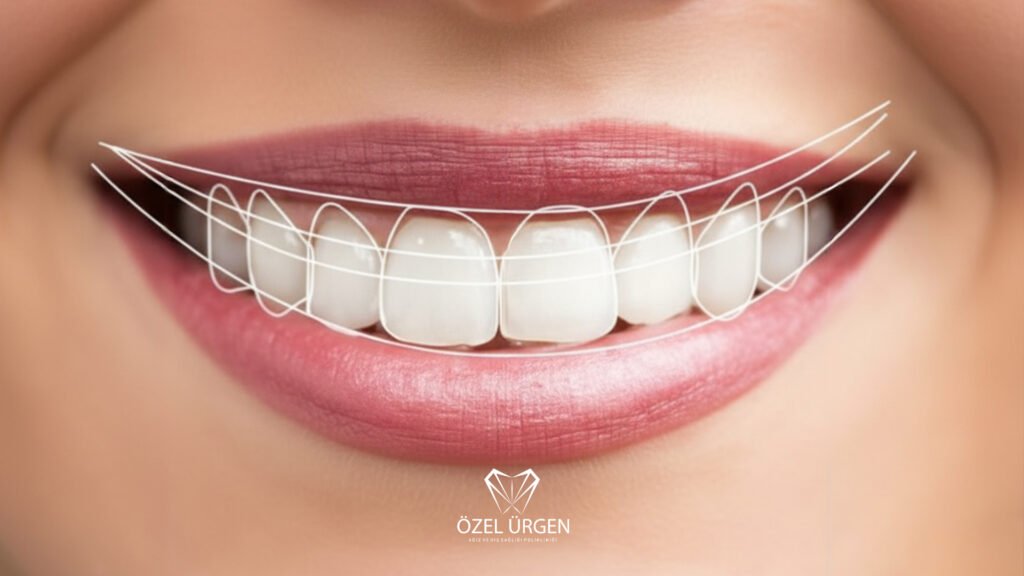
The methods used are generally comfortable and deliver satisfying results. In some cases, reshaping the gums allows the teeth to appear more balanced, while in others, even small adjustments can completely transform the expression of a smile. When necessary, treatments targeting tooth alignment or jaw structure can provide more permanent solutions. The ultimate goal is to achieve a natural looking smile where the person feels comfortable and confident.

Is Gummy Smile Treatment Painful?

One of the most common questions from people considering gummy smile treatment is whether the procedure is painful, and this concern is completely understandable. Thanks to modern techniques, the process is usually much more comfortable than expected. Treatments are performed under local anesthesia, so no pain is felt during the procedure. Many patients are pleasantly surprised by how easy the experience is.

After the procedure, there may be mild sensitivity or a feeling of fullness, but this typically subsides quickly. Significant pain that interferes with daily life is not expected, and with simple aftercare recommendations, the healing process is usually smooth.
What Is a Gummy Smile

What Changes After Gummy Smile Treatment?

The most noticeable change after treatment is seen in the smile itself. Teeth appear more proportionate, longer, and more harmonious with the face. The gums no longer dominate the smile, and facial expression becomes more balanced and natural. Many people realize that they no longer feel the need to hold back when smiling and feel much more at ease.

In fact, the change goes beyond aesthetics. The way one looks in the mirror, poses for photos, and even carries themselves in social settings often improves. Smiling becomes spontaneous and sincere rather than something consciously controlled, which directly boosts self confidence.

Is Gummy Smile Treatment Suitable for Everyone?

Although gummy smile treatment is suitable for many people, each patient should be evaluated individually. Everyone’s oral structure, gum condition, and aesthetic expectations are different. The most appropriate approach is determined by considering gum health, oral hygiene, and overall health.

For this reason, instead of a “one-size-fits-all” solution, the principle of the right treatment for the right person is adopted. A detailed examination by an experienced dentist is the most important step toward achieving a healthy and natural looking result.

Dentist Ali Ürgen

Comments are closed

Do you need help?