



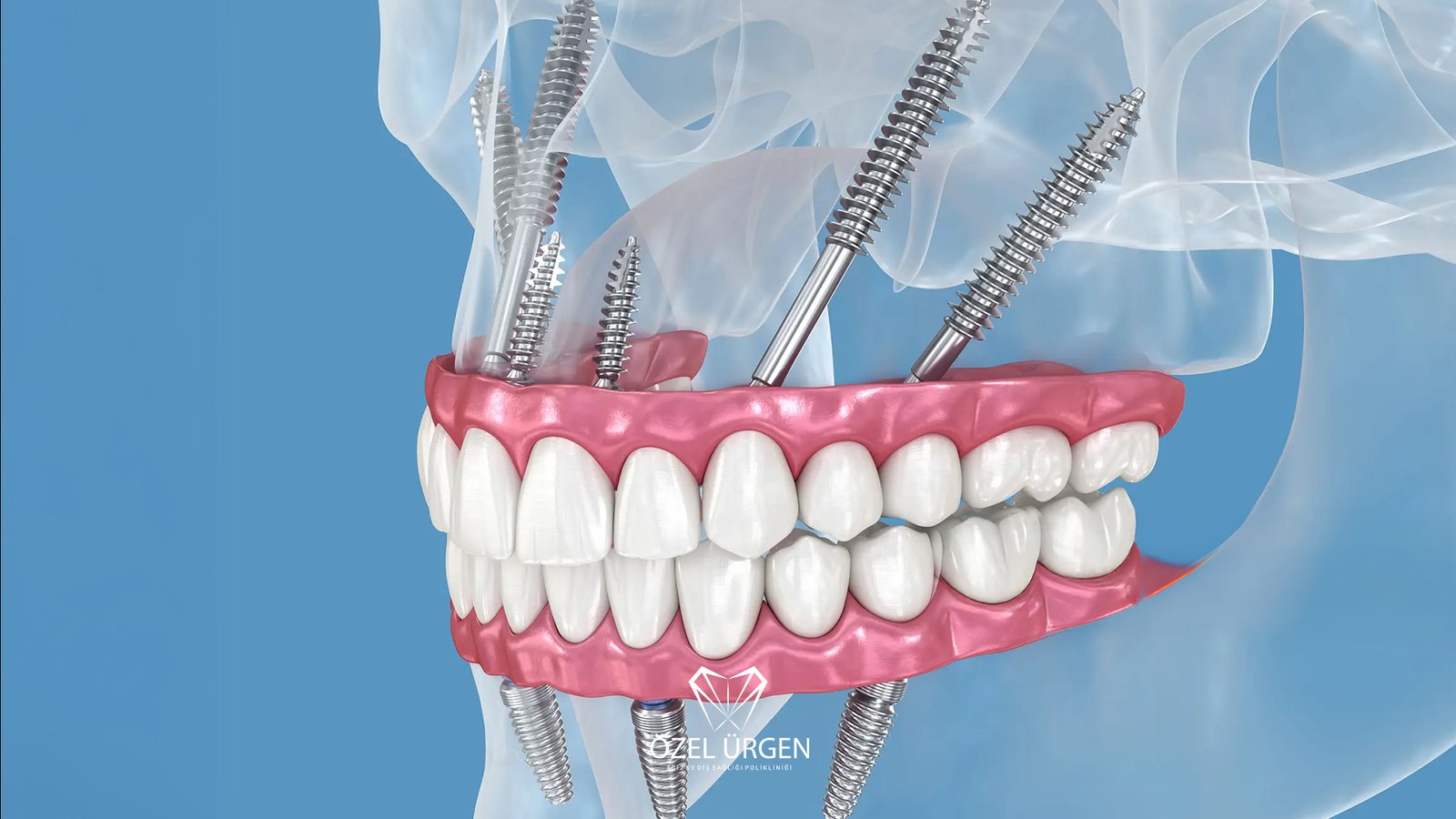
What Is a Zygoma Implant?
Missing teeth are often seen as nothing more than “just a missing tooth.” In reality, it goes much deeper than that. Difficulty chewing, stumbling over certain words while speaking, instinctively covering your mouth when you smile… Over time, this can affect both daily comfort and self-confidence. And there’s also the part you can’t see: bone loss. Especially in people who have been without teeth in the upper jaw for many years, bone resorption can progress to a point where there is no longer enough bone for conventional implant treatments.
Named after the cheekbone (zygomatic bone), this special implant technique was developed as a strong and effective solution for patients with advanced bone loss. In other words, it offers real hope for people who have spent years believing they had no option other than removable dentures due to insufficient bone.
In this article, I will explain what a zygoma implant is, who it is suitable for, how the procedure is performed, and most importantly, what it can offer patients all in a clear and easy to understand way. If you think you can’t have implants because of bone loss in your upper jaw, keep reading. You may have more options than you realize.
What Is a Zygoma Implant?
For many people, the term “zygoma implant” sounds unfamiliar at first. But the logic behind it is actually quite simple. Conventional dental implants are placed into the jawbone. However, in some patients especially those who have been missing teeth in the upper jaw for many years the bone gradually resorbs and becomes unable to support standard implants. So the issue isn’t the implant itself, but the lack of sufficient bone to hold it.
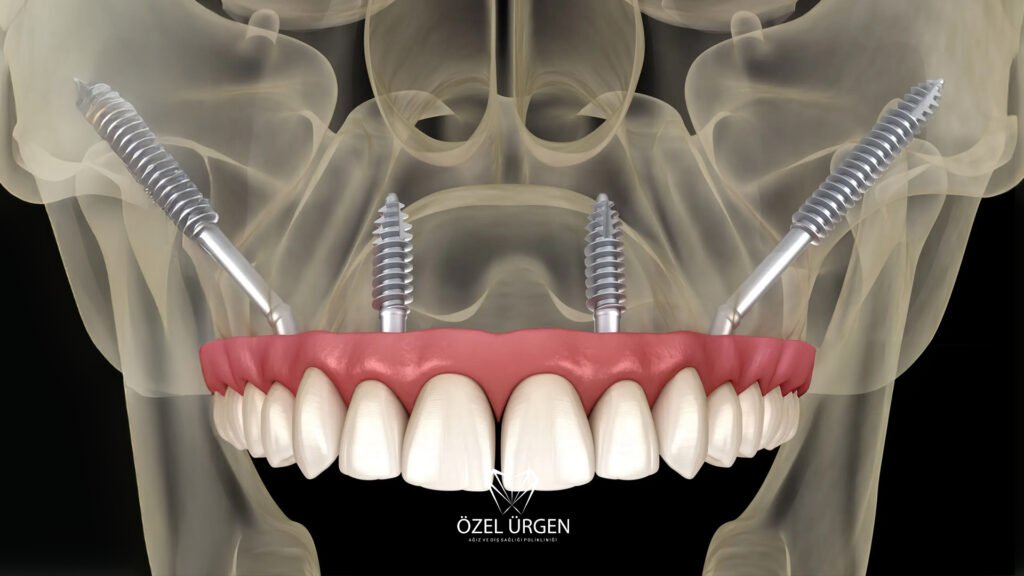
This is exactly where zygoma implants come into play. In this method, implants are placed not into the upper jawbone, but into the cheekbone. The cheekbone (zygomatic bone) is one of the densest and strongest bones in the body. Compared to the upper jaw, it provides a much more solid foundation, making it a reliable and long-lasting anchorage point for patients with severe bone loss.
With standard implants, bone grafting procedures are sometimes required, which can prolong treatment time and mean additional surgery for the patient. Zygoma implants, on the other hand, often make it possible to reach solid bone without the need for these extra procedures. In this sense, they offer a true second chance for many patients who were once told, “Implants aren’t an option for you.”
Who Is It Suitable For?
Zygoma implants are not a routine treatment applied to every patient with missing teeth. They are mainly preferred in special cases where conventional implant options are insufficient. While often perceived as a “last resort,” they can be an extremely powerful and rewarding solution when used for the right patient.
Patients with advanced bone loss in the upper jaw are among the primary candidates for zygoma implants. In people who have worn removable dentures for many years, the bone gradually becomes thinner and weaker. This not only reduces denture stability but also makes standard implant treatments more difficult.
Zygoma implants are also a significant advantage for patients who do not want bone grafting or feel hesitant about additional surgical procedures. Since this technique often does not require bone augmentation, it can offer a more straightforward path to fixed teeth. It may also provide renewed hope for patients who have previously undergone unsuccessful implant treatments.
Additionally, patients with complete tooth loss in the upper jaw who no longer want to live with removable dentures can gain remarkable comfort from this treatment. For those who have spent years wishing for fixed teeth and feeling their dentures move while eating or smiling, zygoma implants can genuinely transform quality of life.
Why Does Bone Loss Occur?
Understanding bone loss is key to truly understanding zygoma implants, because this treatment usually becomes relevant as the result of a long-term process rather than a sudden problem.
When a tooth is extracted, many people feel relieved the pain is gone and the problem seems solved. But an invisible process begins immediately afterward. The jawbone stays healthy and maintains its volume thanks to the pressure transmitted through tooth roots. Chewing forces stimulate the bone and keep it active. When a tooth is missing, this stimulation disappears. Much like an unused muscle that weakens over time, the bone gradually begins to lose volume.
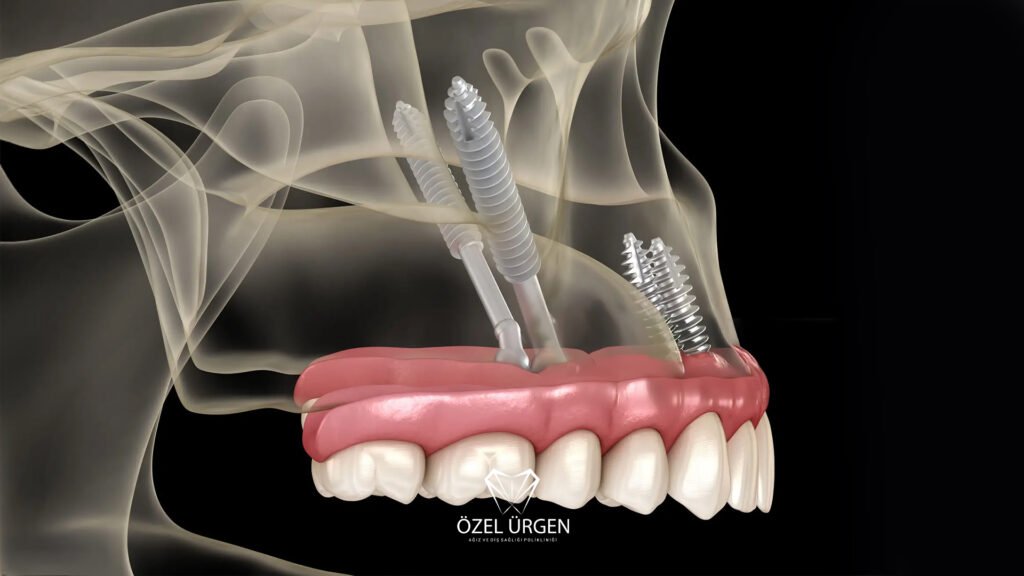
This process is even more pronounced in the upper jaw, where the sinus cavities are located. As the bone resorbs, the sinus floor expands downward, reducing the vertical bone height needed for implant placement. Over the years, this loss can increase to the point where there is no longer enough bone for standard implants.
In such cases, additional surgical procedures like sinus lifting or bone grafting are often considered. However, not every patient wants these treatments, and in some cases they may not be sufficient. By utilizing the strength of the cheekbone, zygoma implants can often provide a solution without the need for additional bone procedures.
How Is a Zygoma Implant Performed?
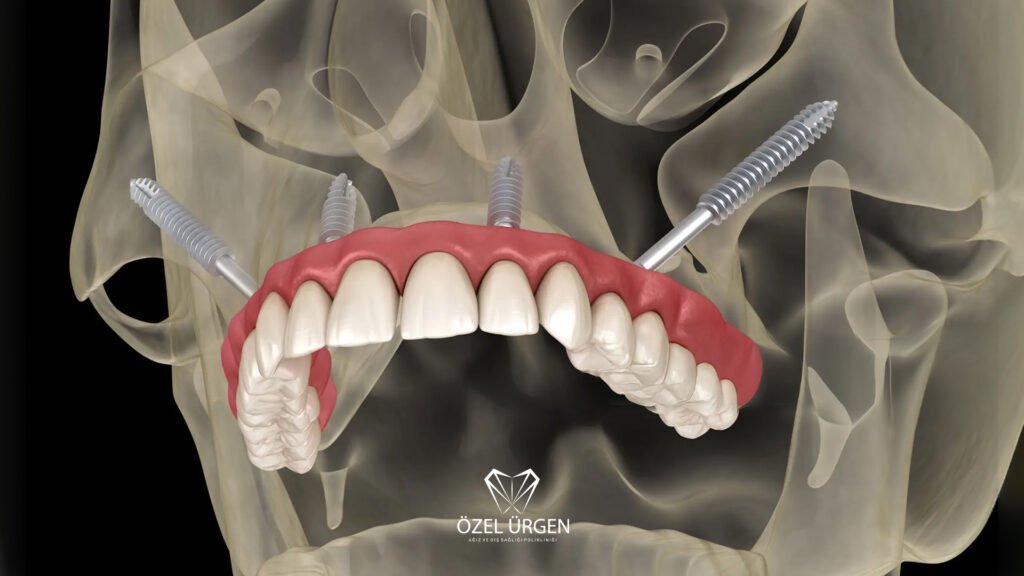
Zygoma implants are longer and specially designed compared to conventional implants. They are usually between 30 and 50 mm in length and are placed through the upper jaw into the cheekbone, where they are firmly anchored. The goal is to rely on the dense and strong cheekbone instead of the resorbed jawbone. Because this technique requires advanced surgical expertise, it is typically performed under general anesthesia or sedation, ensuring the patient remains comfortable and pain free.
Before treatment, a detailed CT scan is taken and the bone structure is carefully analyzed using digital planning. The implants are placed at precise angles, and in many cases, temporary fixed teeth can be attached on the same day. Yes many patients walk into the clinic without teeth and leave with fixed ones. This makes a significant difference both aesthetically and emotionally, as patients often experience the confidence of smiling with fixed teeth for the first time in years.
Advantages of Zygoma Implants and Important Considerations
The greatest advantage of zygoma implants is that they can offer fixed teeth even to patients with severe bone loss. Situations where patients were once told, “You don’t have enough bone for implants,” can often be resolved with this method. In most cases, bone grafting is not required, which shortens treatment time and makes the process more comfortable. When properly planned and performed, zygoma implants can be used safely for many years. Most importantly, they allow patients to say goodbye to removable dentures no more shifting while eating, fear of movement during speech, or reliance on denture adhesives. Fixed teeth bring back comfort, freedom, and a noticeable improvement in quality of life.
Of course, like any surgical procedure, zygoma implants also require careful consideration. The technique demands advanced surgical experience and precise planning due to its proximity to the sinus area. For this reason, it may not be offered at every clinic. However, when performed by an experienced oral and maxillofacial surgeon with proper case selection, the risks can be kept well under control.
Zygoma Implant Recovery Process
The recovery period after zygoma implant surgery can vary from person to person, but for most patients it is more manageable than expected. Mild swelling, a feeling of fullness, or tenderness may occur in the first few days, which is completely normal. Taking prescribed medications as directed and maintaining good oral hygiene help make the healing process much smoother. Most patients can return to daily life within a few days.
If temporary fixed teeth are placed on the same day, patients can continue their lives without being toothless, which offers a major psychological and functional benefit. During the first few weeks, it is still important to avoid putting excessive pressure on the teeth and to follow a soft-food diet as recommended. Over time, the tissues heal, the mouth adapts, and everything begins to feel more natural.
Healing is typically completed within 3 to 6 months, after which the permanent prosthetics are placed. At the end of this process, patients gain fixed teeth they can rely on for many years. If you believe bone loss has prevented you from getting implants, be sure to consult an experienced specialist.
Comments are closed