




Why Do Our Teeth Turn Yellow?
A smile can sometimes convey more than words; it reveals a person’s inner joy, warmth, and sincerity in a single moment. However, when we look at our smile in the mirror and realize our teeth aren’t as white as they used to be, it can feel a little sad. It’s only natural to ask, “I take good care of my teeth, so why are they still yellowing?” Most of us don’t realize that teeth discoloration can occur so easily. However, teeth discoloration is actually a completely different story, a part of life.
Many factors, from the cup of coffee we drink throughout the day to the natural thinning of enamel as we age, can slowly alter the tone of our smile. Sometimes it’s due to habits we can completely control, and other times it’s simply one of our bodies’ natural cycles. Therefore, contrary to what many people think, yellowing of teeth isn’t a defect; it’s simply a reflection of the normal course of life.
The Basis for Tooth Discoloration
To understand why teeth change color, it’s first necessary to understand their structure. While most of us think of teeth as naturally bright white, the truth is far from it. Enamel, the outermost layer of the tooth, isn’t as opaque as it appears. In fact, it has a slightly translucent structure, so the hue of the underlying dentin is noticeable from the outside. Dentin, on the other hand, naturally has a yellower hue.
Therefore, what we sometimes think of as “my teeth are yellowing” is actually a slight increase in the tooth’s natural color. Especially over time, as the enamel begins to thin, the dentin color becomes more visible, giving the tooth the appearance of having acquired a yellowish appearance. Some people’s teeth are born with a predominance of dentin; this is a completely genetic condition and doesn’t indicate any health problems.
Traces Left by Our Consumption
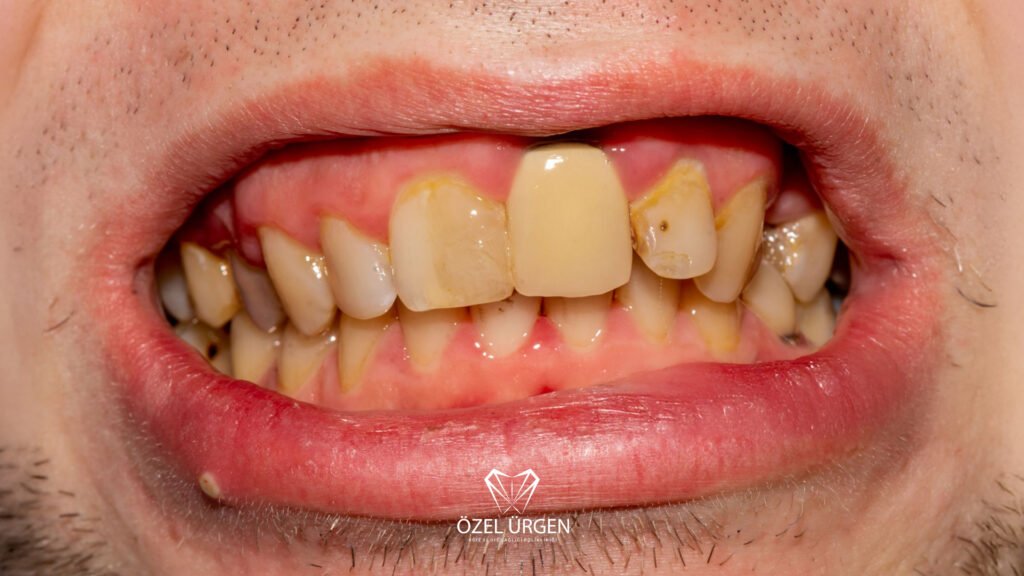
Throughout the day, our hands constantly reach for a cup without even realizing it: the morning coffee to wake us up, the afternoon tea break, the glass of tea prepared for pleasure after dinner… They’re all an integral part of our daily rhythm. However, we often overlook the fact that these habits leave more visible marks on our teeth than we realize.
The intense pigments in coffee, tea, and other dark-colored beverages adhere to the enamel surface like thin paint. Consuming these beverages, usually hot, softens the enamel for a brief moment, allowing the pigments to settle more easily. These small deposits, initially unnoticeable, accumulate over time, causing tooth yellowing.
Cigarettes and Tobacco Products
Cigarettes and other tobacco products, unfortunately, top the list when it comes to tooth discoloration. The nicotine and tar in tobacco adhere so quickly and strongly to the surface of the teeth that, over time, yellowish stains can progress to dark brown. It’s no surprise, therefore, that smokers often complain, “No matter how much I brush, they won’t go away.”
Because these stains don’t just remain on the surface; they penetrate into the smallest pores of the enamel, effectively embedding themselves there. Therefore, it’s perfectly normal for them not to be completely removed with a simple brushing. This is precisely why tobacco use leaves such a lasting mark.
Certainly, quitting smoking is one of the greatest things you can do for both your oral health and your overall health.
Inadequate Oral Care
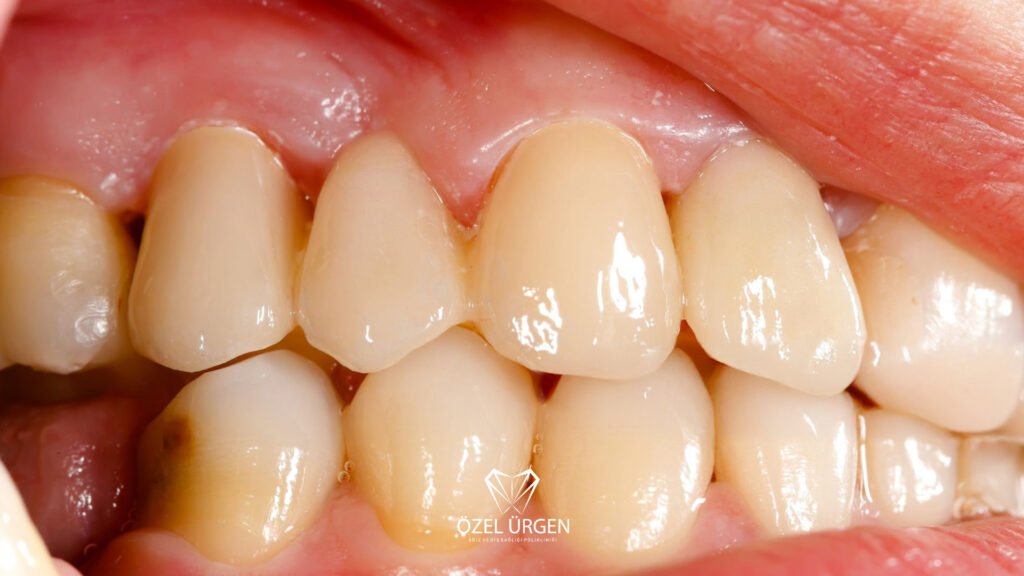
One of the most common causes of yellowing teeth is oral care habits, which may seem simple but are often neglected. Residues from the food we eat throughout the day, acids in drinks, and bacteria in our mouths cling to the surface of our teeth, even if we don’t notice them. If regular cleaning isn’t performed, this buildup first forms plaque, then hardens over time and turns into tartar. Tartar not only makes our teeth appear darker than they actually are, but also creates an environment that threatens oral health.
Therefore, a daily care routine is even more important than we think. Gently brushing your teeth at least twice a day, flossing to remove any trapped debris, and supplementing your oral care with a mouthwash if necessary will significantly reduce yellowing and help keep your teeth healthier in the long run. Don’t be fooled by the seemingly minor habit of regular oral care; the results are directly reflected in your smile.
Genetic Factors
Although it’s unpleasant to admit, tooth yellowing isn’t always related to our habits; sometimes it’s simply a matter of innate characteristics. Everyone’s teeth are unique. Some people have whiter enamel, while others’ teeth may appear slightly more yellow, even naturally. This is entirely a genetic predisposition.
Also, not everyone’s enamel thickness is the same. Some people have thinner enamel, and as this thinness increases, the color of the underlying layer, called dentin, becomes more pronounced. Because dentin already has a yellowish hue, while teeth may appear yellowed from the outside, this is actually the teeth’s natural shade.
While a “miracle” solution isn’t possible in such cases, whitening treatments can often produce more satisfying and noticeable results. While we can’t change our genetic makeup, it’s important to remember that we do have effective options to brighten our smiles.
How to Prevent Yellowing of Teeth
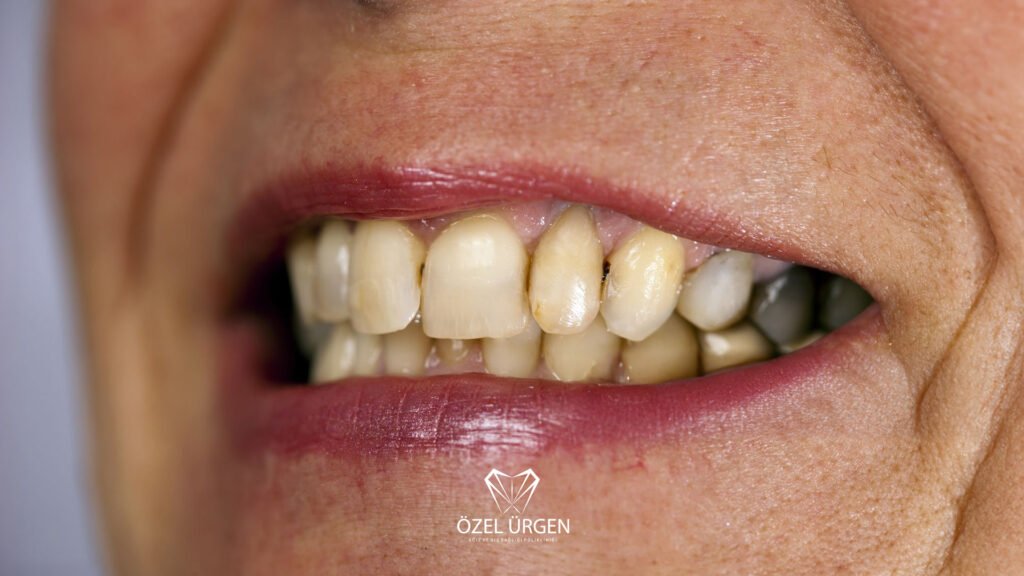
While yellowing of teeth is a natural part of life, it’s much easier to control than we think. Paying attention to daily oral hygiene, rinsing your mouth with water after tea or coffee, being more cautious about consuming acidic beverages, and getting professional cleanings several times a year can significantly preserve the tone of your smile. Regular checkups and whitening procedures, when necessary, are particularly effective in restoring the natural shine of your teeth. In short, while we may not be able to prevent it completely, achieving a whiter smile is much closer than you think.
Do your smile a little favor now and start by reviewing your oral care routine today.
Comments are closed