



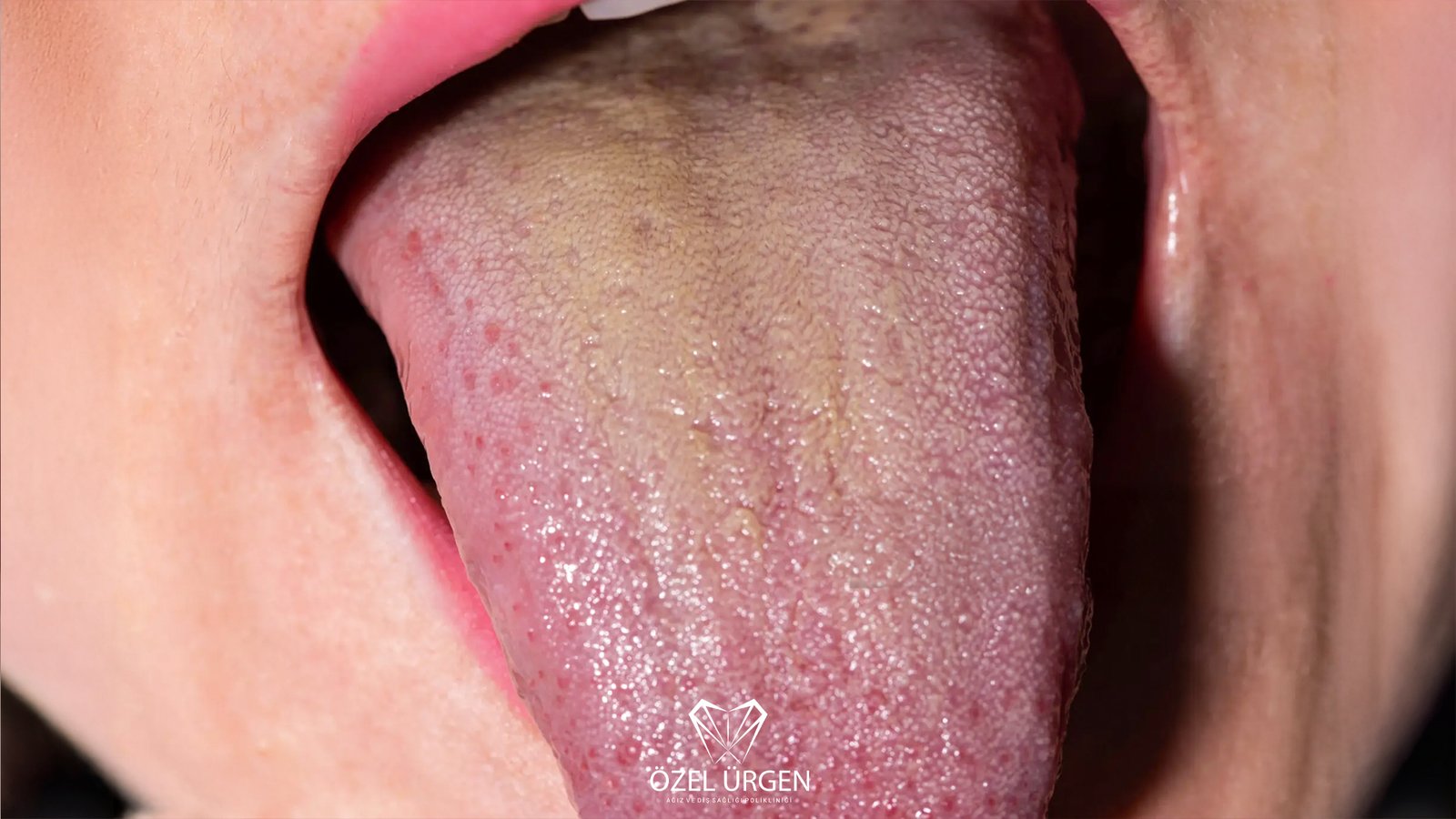
Tongue Yellowing
The moment you notice in the mirror that your tongue looks more yellow than usual, a lot of questions naturally start running through your mind. “Is something wrong?”, “Why did this happen?”, “Will it go away on its own?” these thoughts are completely normal. Because even the smallest change we see inside the mouth can make a person feel uneasy. But it’s important to know that tongue yellowing is not as unusual as it might seem. In fact, in many cases, it can be caused by small daily habits we don’t even notice.
The tongue is not just an organ that helps us speak or taste food. It also acts like one of the small signals our body gives us. Things like lack of sleep, not drinking enough water, smoking, poor oral hygiene, or heavy coffee and tea consumption can sometimes cause changes in the tongue’s color. So while tongue yellowing can sometimes come from simple reasons, it can also give us small hints about our lifestyle.
Many people panic when they first notice tongue yellowing, but in most cases, improving oral hygiene and changing a few habits can reduce this appearance over time. Especially neglecting tongue cleaning, experiencing dry mouth, or not drinking enough water for a long time can lead to a layer forming on the tongue’s surface. This can gradually create a yellowish appearance. Of course, if the condition lasts a long time or is accompanied by other symptoms, consulting a specialist is always the best step.
Why Does Tongue Yellowing Happen?
There are many different causes of tongue yellowing. One of the most common reasons is poor oral hygiene. Throughout the day, food particles, bacteria, and dead cells can accumulate on the tongue’s surface. If the tongue is not cleaned, this layer can eventually create a yellow appearance.
Especially only brushing the teeth and not cleaning the tongue is a very common habit. However, the tongue surface can hold just as many bacteria as the teeth.
Another common reason is smoking. Smoking disrupts the bacterial balance in the mouth and can cause discoloration on the tongue surface. Especially in long term smokers, a yellow or even brownish tongue appearance can develop.
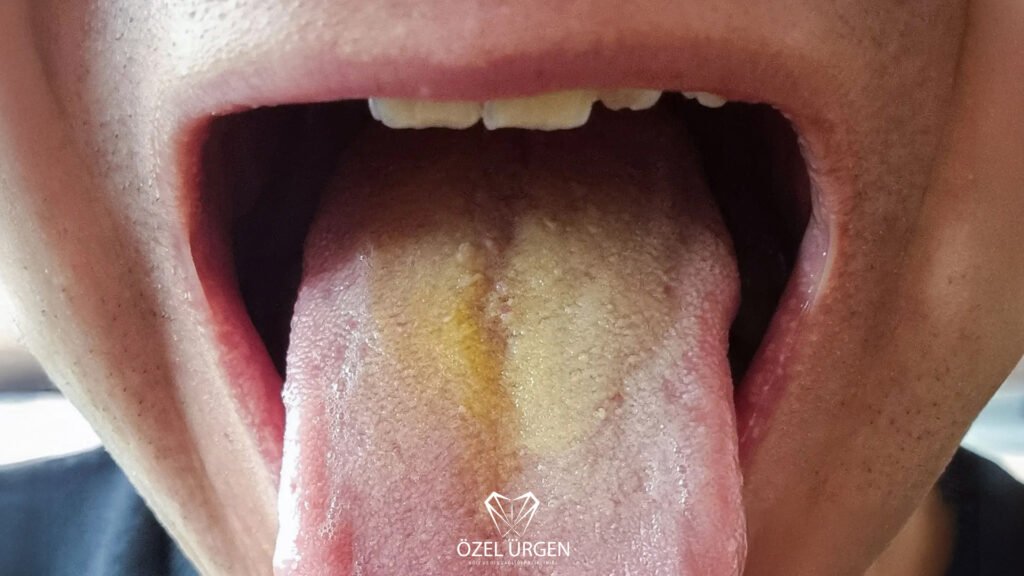
In addition, excessive tea and coffee consumption can also affect the color of the tongue. Drinking coffee frequently throughout the day or consuming dark tea can gradually cause staining on the tongue surface. This becomes more noticeable especially when there is also dry mouth.
Speaking of dry mouth, this is also an important factor. Not drinking enough water reduces the mouth’s natural cleansing mechanism. Saliva is actually a natural protector for oral health. When the mouth is dry, bacteria multiply more easily, and a yellow layer may form on the tongue.
Some stomach problems can also cause tongue yellowing. Especially in people with reflux, stomach acid reaching the mouth can lead to changes in tongue color.
How Does Tongue Yellowing Go Away?
Most people who notice tongue yellowing panic right away, but in many cases the solution is not as difficult as it seems. Usually, even small changes in daily habits can make a visible difference over time. The most important thing here is regular oral care. Brushing teeth alone is not enough; tongue cleaning is also an important part of oral hygiene.
Many people skip tongue cleaning because they don’t realize how important it is. However, bacteria, food debris, and various deposits can build up on the tongue throughout the day. That’s why the tongue should also be cleaned gently. Special tongue scrapers can be used, but a soft bristled toothbrush is often enough. The key point is not to irritate the tongue. Gentle and regular cleaning usually gives better results.
Water consumption is much more important than most people think. When a person does not drink enough water, dry mouth can increase, making it easier for bacteria to multiply. Drinking water regularly during the day helps keep the mouth fresher and maintain natural balance.
Smoking can cause tongue yellowing more frequently. Because smoking negatively affects not only the color of the tongue but also overall oral health. Bad breath, gum problems, and staining can also accompany it. Therefore, reducing smoking or quitting completely is a very important step for oral health.
Eating habits can also have a stronger impact than we think. Especially when consuming too much coffee, tea, or acidic drinks, color changes can appear on the tongue surface. Reducing these even slightly can gradually lead to a cleaner and healthier appearance.
Some methods found online can sometimes do more harm than good. Applying lemon directly to the tongue, overusing baking soda, or scraping the tongue too harshly can cause irritation.
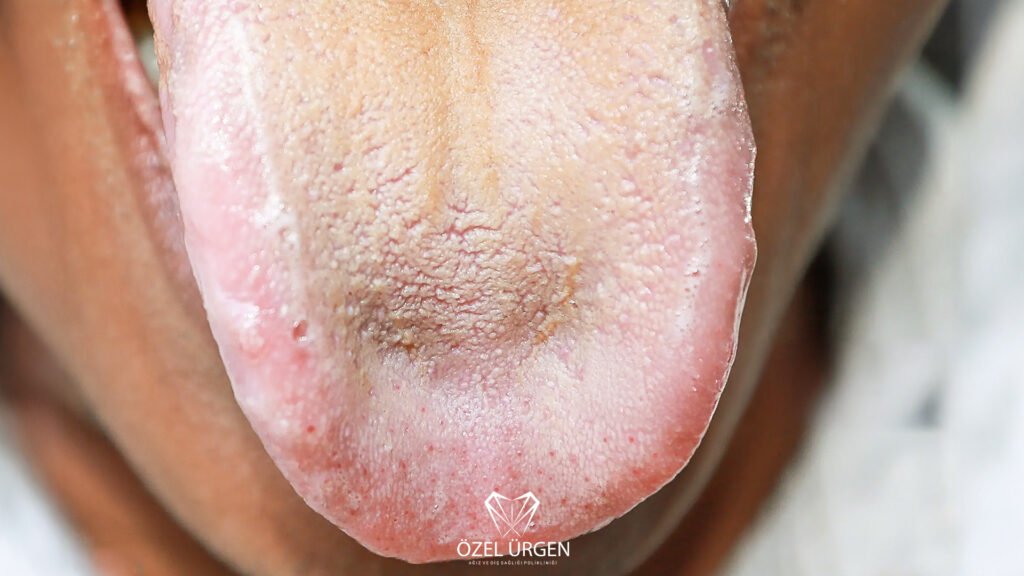
Can There Be Other Symptoms Along With Tongue Yellowing?
Tongue yellowing does not appear the same way in everyone. While some people only notice the color change in the mirror, others may experience additional complaints. Especially some symptoms inside the mouth can give small clues about the underlying cause.
One of the most common issues is bad breath. Sometimes, no matter how much a person brushes their teeth, they may feel that the unpleasant smell in the mouth does not fully go away. This is often caused by bacteria accumulating on the tongue surface. When the layer on the back of the tongue is not cleaned, bacteria can multiply over time, leading to both a yellow appearance and bad breath.
Some people may notice a thick coating on their tongue. A bad taste in the mouth after waking up in the morning may also accompany this. Sometimes people even report that they cannot taste food as clearly as before. This usually happens when the buildup on the tongue surface increases.
Dry mouth is another common symptom. Not drinking enough water, smoking, certain medications, or excessive coffee consumption can cause dryness in the mouth. When the mouth is dry, bacteria multiply more easily, making tongue yellowing more noticeable. People may feel the need to drink water constantly or wake up with a dry mouth.
Is Tongue Cleaning Really Important?
Many people think tongue cleaning is unnecessary, but it is actually an important part of oral care. Because most bacteria can accumulate on the tongue surface.
The bad taste or strong odor in the mouth when waking up is often related to bacteria on the tongue. With regular tongue cleaning, the mouth feels fresher and bad breath can be reduced.
In addition, a clean tongue can even positively affect the sense of taste. Especially people with heavy coating often notice a clear difference after cleaning.
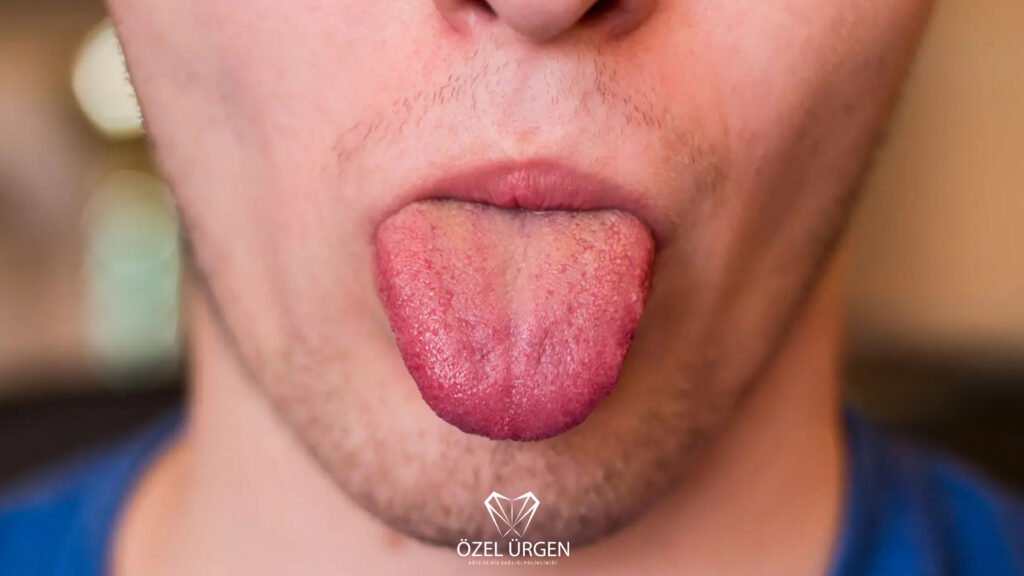
What Should Be Considered in Daily Life?
In fact, small things done to maintain oral health can make a much bigger difference than expected over time. Most people think brushing teeth alone is enough, but oral care is a more holistic topic. Tongue cleaning, water intake, and daily habits are just as important as brushing teeth.
For example, brushing teeth at least twice a day helps reduce bacterial buildup in the mouth. But tongue cleaning should not be neglected. Because throughout the day, many deposits can form on the tongue without noticing. Regular and gentle tongue cleaning creates a fresher feeling in the mouth and helps reduce the unpleasant appearance.
Drinking water is also more important than many people think. When a person does not consume enough water during the day, the mouth can become dry, allowing bacteria to multiply more easily. Sometimes simply increasing water intake can noticeably improve comfort in the mouth.
Smoking is one of the habits that most negatively affects oral health. It not only changes tongue color but can also lead to bad breath, gum problems, and tooth staining. Therefore, reducing smoking or quitting completely is a very important step for oral health.
Diet also plays a role. Especially consuming too many sugary and acidic foods can disrupt the balance in the mouth. A more balanced diet and regular oral care can gradually create a visible improvement in oral health..