



What Causes a Sore on the Roof of the Mouth?
Even a small sore inside the mouth can become much more uncomfortable than we expect during the day. Sores that develop on the sensitive tissue of the roof of the mouth can make eating, drinking hot or cold beverages, speaking, and sometimes even swallowing quite painful. Although they may seem like a minor problem at first, these sores can significantly affect daily comfort. Many people choose to wait, assuming the sore will heal on its own within a few days. While this is often the case, sores that last longer than expected, recur frequently, or become increasingly painful may indicate an underlying issue that should not be ignored.
Sores on the roof of the mouth are among the most common oral health problems and can affect people of all ages. They may result from something as simple as a burn caused by hot food, or they can develop due to stress, changes in the immune system, vitamin and mineral deficiencies, poor oral hygiene, or other health conditions. For this reason, not every sore should be evaluated in the same way. Factors such as accompanying symptoms, how long the sore has been present, and how often it returns are important for determining the underlying cause.
Sores on the roof of the mouth that last longer than a week, continue to grow, bleed, fail to heal, or recur frequently should not be ignored. Seeking advice from a dentist at an early stage can help relieve discomfort while also identifying any underlying cause before it progresses. In some cases, changes in the tissues inside the mouth can provide important clues about overall health.
What Is a Sore on the Roof of the Mouth?
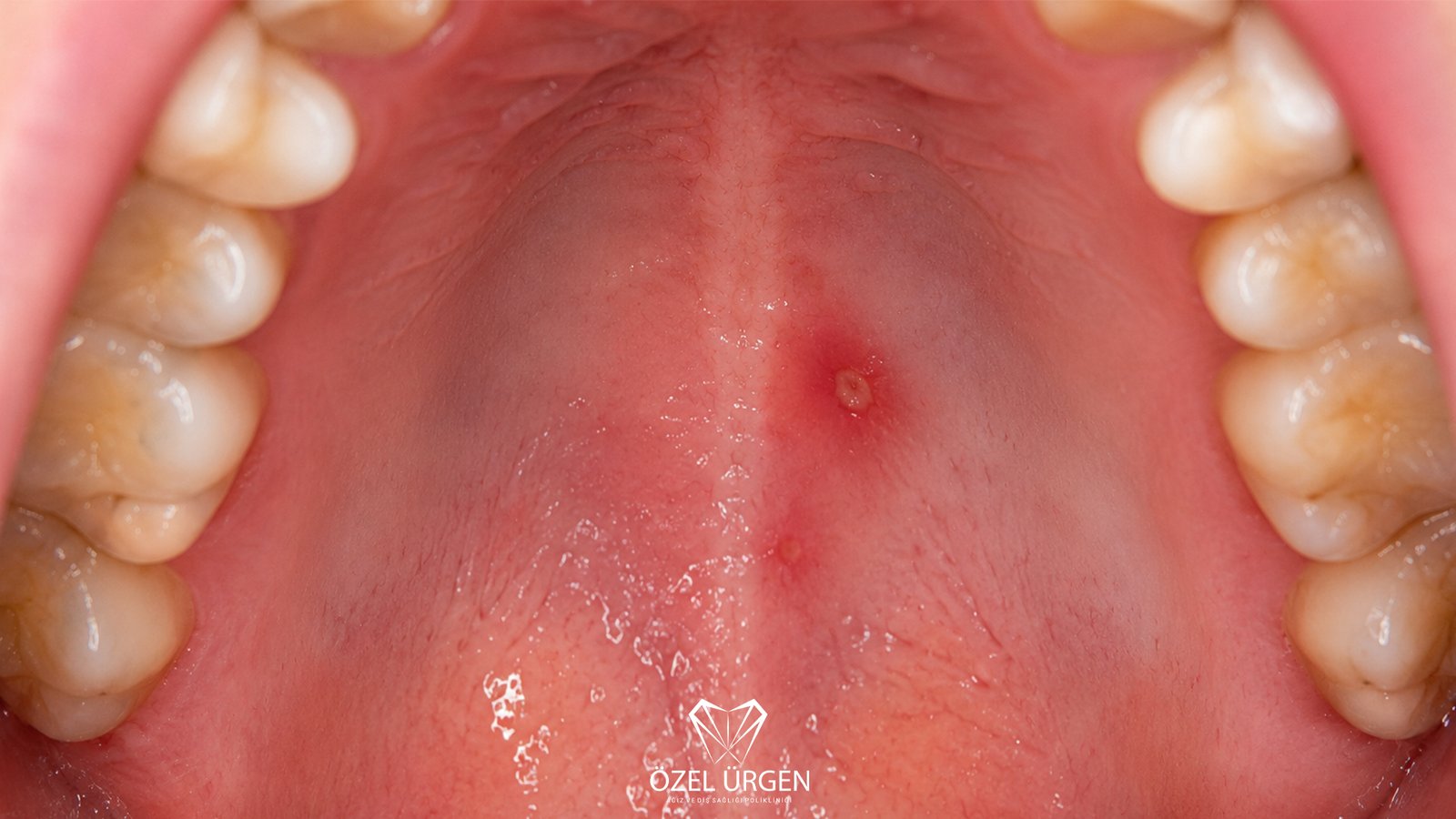
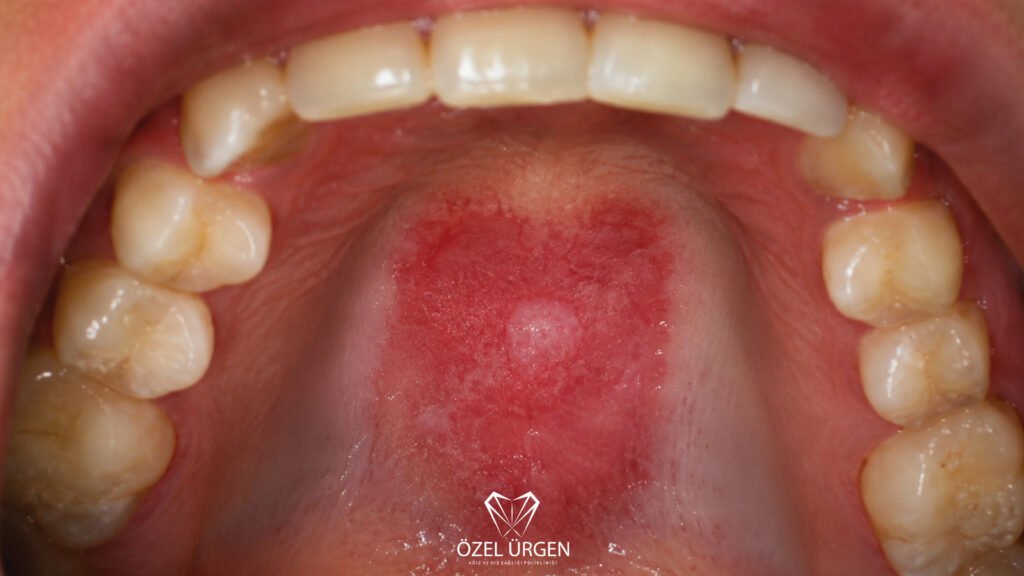
A sore on the roof of the mouth is a small lesion caused by irritation, tissue damage, or loss of tissue affecting either the hard or soft palate. It may appear as a small white or yellow sore surrounded by redness, or it may simply cause redness, tenderness, and a burning sensation. Although these sores are often small, their location can make everyday activities much more uncomfortable.
Especially while eating, drinking hot or cold beverages, consuming spicy foods, or speaking, the affected area may become even more sensitive. Some sores heal on their own within a few days, while others may take longer and remain painful throughout the healing process.
What Causes Sores on the Roof of the Mouth?
Sores on the roof of the mouth do not have a single cause. Sometimes they develop because of everyday habits we hardly notice, while in other cases they may be a sign that the body is responding to an underlying condition. Some of the most common causes include:
Hot food and beverages
Almost everyone has experienced burning the roof of their mouth after taking a sip of hot tea or biting into freshly baked pizza. This type of burn can quickly lead to tenderness and eventually develop into a sore. Although it usually heals within a few days, eating can be uncomfortable during the recovery period.
Hard and sharp foods
Foods such as chips, crackers, toasted bread, or hard nuts can scratch or irritate the delicate tissue of the palate. These small injuries often heal on their own, but repeated irritation to the same area may delay the healing process.
Canker sores
Although canker sores are commonly associated with the inside of the cheeks, they can also develop on the roof of the mouth. They are more likely to appear when the immune system is weakened and may cause pain and tenderness for several days.
Vitamin and mineral deficiencies
Deficiencies in nutrients such as vitamin B12, iron, folic acid, and zinc can reduce the mouth’s ability to repair itself. As a result, sores may develop more easily and take longer to heal.
Stress and a busy lifestyle
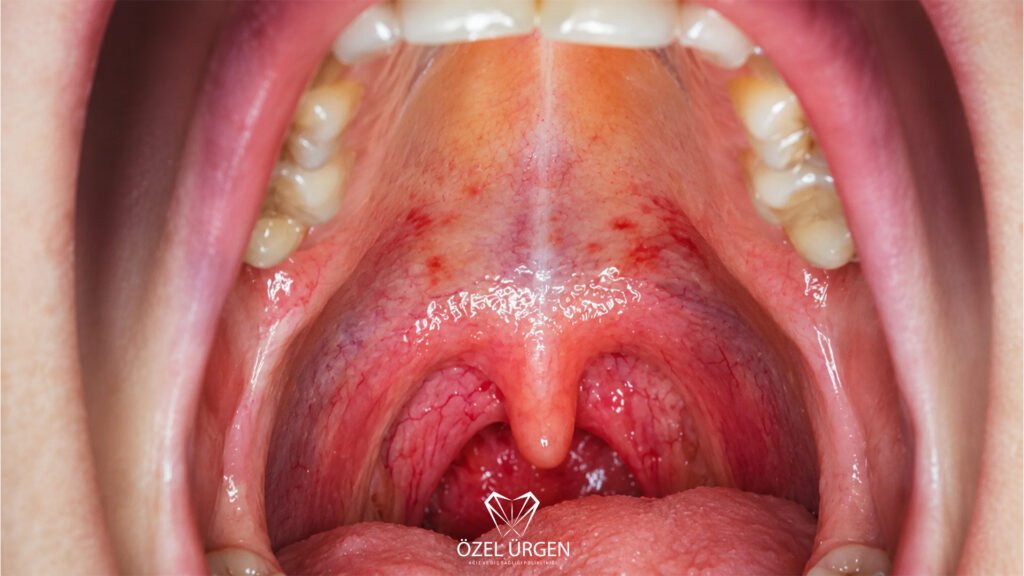
During stressful periods, our bodies can react in many different ways, and mouth sores are one of them. Long-term stress and poor sleep quality may increase the likelihood of developing sores on the roof of the mouth.
Smoking and tobacco use
Smoking and other tobacco products constantly irritate the tissues inside the mouth. They can also slow down the healing process, causing sores to last longer. Long-term tobacco use may further increase the risk of developing other oral lesions.
What Are the Symptoms of Sores on the Roof of the Mouth?
The symptoms of sores on the roof of the mouth can vary from person to person. Some people experience only mild tenderness, while others may have pain severe enough to make eating and speaking difficult. The severity of the symptoms often depends on the cause and size of the sore.
The most common symptoms include:
- White, yellow, or red sores on the roof of the mouth
- A burning sensation while eating or drinking
- Discomfort or tenderness when speaking
- Sensitivity to hot, cold, or spicy foods
- Pain when the sore is touched
- Mild swelling in the palate
- Bad breath in some cases
How Can a Sore on the Roof of the Mouth Heal?
The treatment for a sore on the roof of the mouth depends primarily on its underlying cause. Sores caused by minor irritation often heal on their own within a few days. During this time, following a few simple recommendations can help support the healing process and reduce discomfort.
Maintain good oral hygiene
Keeping your mouth clean without further irritating the affected area is essential. Brushing your teeth regularly and using a soft-bristled toothbrush can help promote healing.
Rinse with warm salt water
Rinsing your mouth with warm salt water a few times a day can help keep the area clean. It may also soothe the affected tissue and relieve discomfort.
Avoid foods that may cause irritation
Very hot, spicy, acidic, or hard foods can further irritate the sore. Choosing softer, lukewarm foods during the healing process can make eating much more comfortable.
Stay well hydrated
Keeping your mouth moist helps the tissues repair themselves more effectively. Make sure to drink enough water throughout the day to support the healing process.
Avoid smoking
Smoking can slow down the healing of the tissues inside the mouth and cause the sore to last longer. If possible, avoid smoking until the sore has completely healed.
Comments are closed