



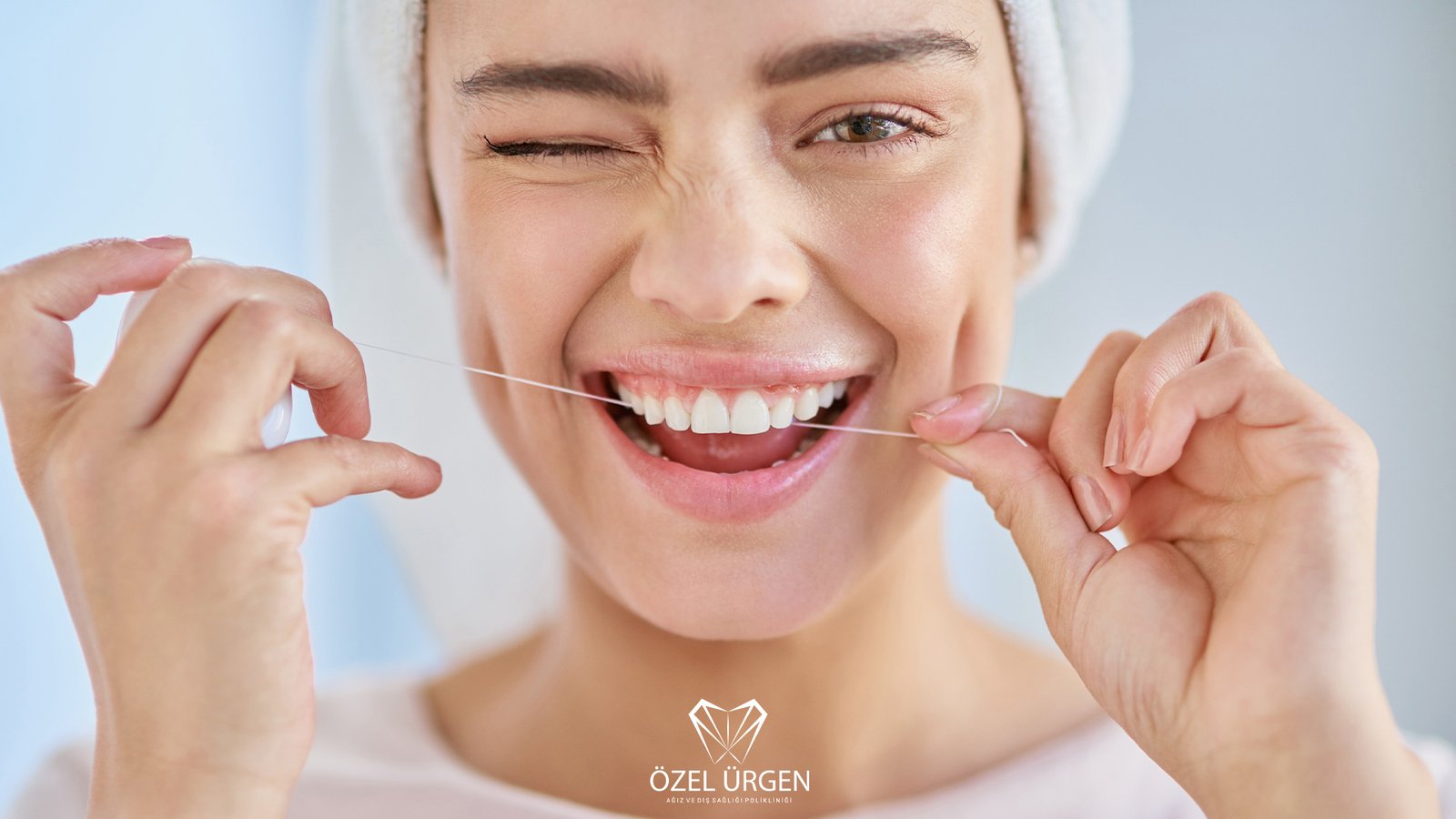
How to Use Dental Floss
Brushing your teeth is one of the most basic and well known steps of oral care. From a young age, we are all told that we should brush our teeth regularly. We brush our teeth when we start the day and before going to bed, and most of the time we think, “Okay, my oral care is done.” Of course, brushing is essential for oral and dental health. However, there is an important point that many people overlook: brushing alone may not always be enough.
This is because a toothbrush is quite effective at cleaning the visible surfaces of the teeth, but it cannot fully reach the narrow spaces between them. Food particles, plaque, and bacteria often collect in these hard to reach areas. From the outside, the teeth may look clean and the mouth may feel fresh; however, small particles left between the teeth can, over time, create a suitable environment for gum problems, tooth decay, and bad breath. That is why oral care should not be seen as brushing alone.
In fact, many people know that dental floss is useful, but they struggle to make it a regular habit. Some think, “My teeth are too tight, the floss does not go in,” while others get worried when their gums bleed and stop using it. For some people, using floss may feel tiring or time consuming. However, when used with the right technique and on a regular basis, dental floss is a very important part of oral care.
Dental floss helps clean food particles and plaque buildup from areas that a toothbrush cannot reach. In this way, the spaces between the teeth are cleaned more effectively, and gum health is supported. With regular use, it may also help reduce complaints of bad breath and contribute to a cleaner feeling in the mouth. In short, dental floss is a small habit in oral care, but its effect can be quite significant.
Why Is Dental Floss Used?
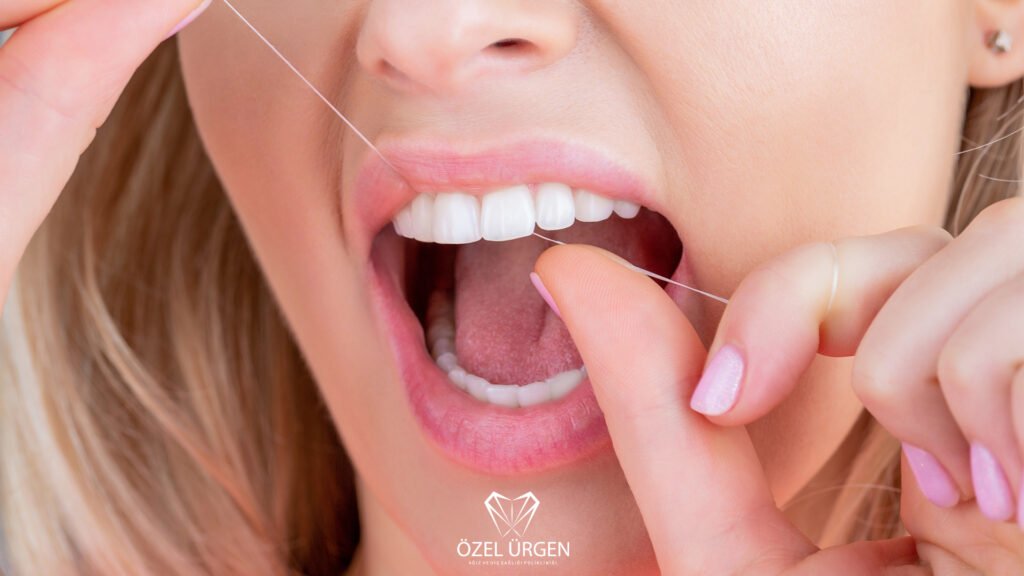
There are tiny spaces between our teeth that are often not very noticeable. During the day, foods such as meat, bread, fibrous vegetables, nuts, or sticky foods can easily get stuck in these spaces. Sometimes we feel it right away and it bothers us; other times, we may not even notice it. However, even if we do not notice them, these small particles left between the teeth can create a suitable environment for bacterial plaque buildup over time.
A toothbrush is quite effective at cleaning the front, back, and chewing surfaces of the teeth. However, it is difficult for it to fully reach the narrow areas where the teeth touch each other. For this reason, brushing alone does not always mean that every part of the mouth has been cleaned well enough. Plaque and food particles that collect between the teeth may contribute to tooth decay, gum sensitivity, bad breath, and tartar buildup over time.
The purpose of using it is exactly to help clean these hard to reach areas. Dental floss reaches the narrow spaces that a toothbrush cannot enter and supports the cleaning of food particles and plaque buildup between the teeth. When used regularly, it can help create a cleaner and fresher feeling in the mouth.
When Should Dental Floss Be Used?
The best time is usually in the evening. Especially after everything we eat during the day, cleaning the particles left between the teeth makes oral care feel more complete. You can use the floss before or after brushing your teeth. What matters most here is not the order, but being able to turn it into a regular habit.
Some people find it more comfortable to use floss before brushing. This is because food particles and plaque removed from between the teeth can then be cleaned away more easily during brushing. Others prefer to use dental floss after brushing their teeth to complete their oral care routine. This may also give a cleaner and fresher feeling.
How to Use Dental Floss?
The most important thing to remember when using dental floss is to be gentle. Pressing the floss hard against the gums or forcing it quickly between the teeth may irritate the gums. That is why it should be used slowly, carefully, and with gentle movements.
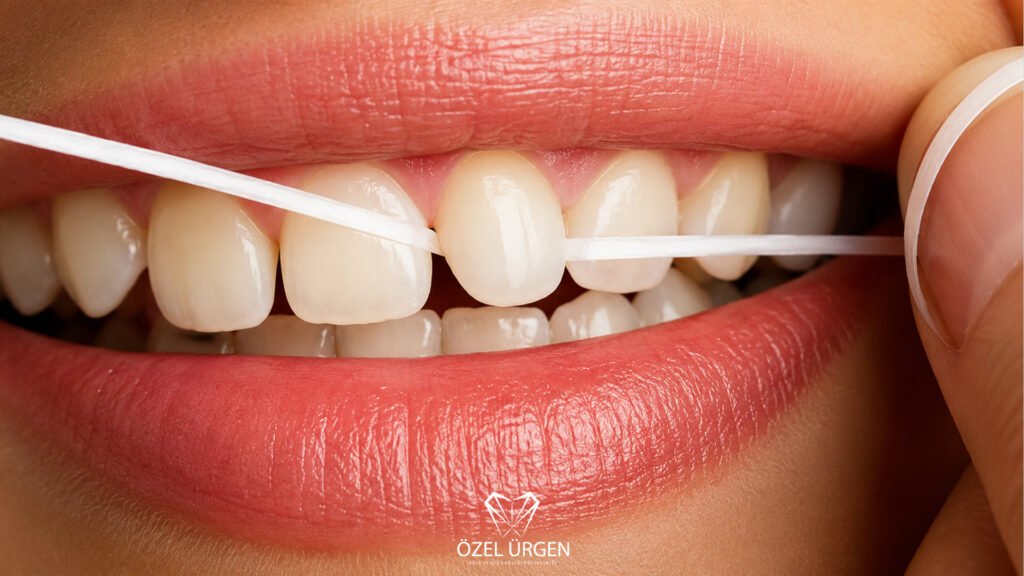
First, take a piece of dental floss about 40–45 cm long. This length may seem too much at first, but since you will wrap part of the floss around your fingers, it allows for easier use. Wrap most of the floss around the middle finger of one hand and the remaining part around the middle finger of the other hand. Leave a few centimeters of space between them. Control this part with your thumb and index fingers and place it between the teeth.
Gently guide the floss between two teeth. One of the most common mistakes here is pressing the floss straight down all at once. This movement may harm the gum tissue. Instead, move the floss gently back and forth as you guide it between the teeth. When you get close to the gumline, curve the floss against the side of the tooth to form a “C” shape. Then move it gently up and down along the tooth surface.
Repeat the same process for each space between the teeth. Try to use a clean section of the floss for each area. This helps prevent plaque from one area being carried to another. It may feel a little difficult at first, but after a few days, your hands will get used to it and the process will become much easier.
Common Mistakes Made While Using Dental Floss
Although it may seem simple to use, dental floss may not provide the expected benefit when used incorrectly. In some cases, it may even cause sensitivity or irritation in the gums. That is why it is important not only to use dental floss, but also to use it correctly.
One of the most common mistakes when using dental floss is pressing it too hard against the gums. Dental floss should be placed gently between the teeth and used with controlled movements. Pressing it down quickly or snapping it against the gums may cause pain, bleeding, and irritation. For this reason, it is better to use dental floss slowly and gently, without rushing.
Another common mistake is using the same section of floss between all the teeth. As dental floss is used between each tooth, plaque and food particles may collect on it. That is why it is better to move to a clean section of the floss during cleaning. This helps prevent particles cleaned from one area from being carried to another space between the teeth.
Some people use dental floss only when they feel that food is stuck between their teeth. Of course, dental floss is very helpful for removing something stuck between the teeth; however, this is not its only purpose. Plaque buildup that cannot be seen with the naked eye may also form between the teeth. For this reason, not only the areas that feel uncomfortable, but all spaces between the teeth should be cleaned regularly.
Using the floss too quickly is also one of the common mistakes. Rushing through oral care often reduces the quality of cleaning. In fact, using dental floss only takes a few minutes. Setting aside this short amount of time regularly helps clean the spaces between the teeth more effectively and supports oral health. The important thing is to use dental floss not in a hard and rushed way, but as a gentle, careful, and regular habit.
Can Using Dental Floss Help Reduce Bad Breath?
Since dental floss helps clean these narrow areas that a toothbrush cannot reach, it may support the reduction of bad breath. Especially when regular brushing, tongue cleaning, and flossing are done together, they can help create a cleaner and fresher feeling in the mouth. However, the important point here is to use dental floss not just occasionally, but as a regular part of your oral care routine.
Of course, bad breath is not always caused only by food particles left between the teeth. If bad breath continues despite regular oral care, there may be gum disease, tooth decay, or another health related reason behind it. For this reason, persistent bad breath should not be ignored and should definitely be evaluated by a dentist.
Remember, oral and dental health is protected through small daily habits. By adding dental floss to your daily care routine along with brushing, you can achieve a cleaner, healthier, and fresher feeling in your mouth. If you have questions about bad breath, gum sensitivity, or cleaning between the teeth, the person who can guide you in the most accurate way is your dentist. Do not neglect your regular check ups; take a small but effective step for your oral health today.
Comments are closed