



Tooth loss can affect not only aesthetic appearance but also chewing function, speech, and overall oral health. One of the modern treatment options available for replacing missing teeth is implant treatment. Today, dental implants can be considered for various situations ranging from a single missing tooth to multiple tooth loss, with the aim of providing suitable patients with a function and appearance close to natural teeth.
So, how is implant treatment performed? Rather than being a simple procedure completed in a single session, implant treatment is a carefully planned process that generally consists of examination, radiological evaluation, surgical placement, a healing period, and prosthetic restoration.
In this article prepared by Ürgen Oral and Dental Health Polyclinic, we will discuss in detail what implant treatment is, the stages involved, what should be considered before the procedure, what patients can expect afterward, and many other commonly asked questions about dental implants.
Table of Contents
- What Is Implant Treatment?
- Stages of Implant Treatment
- How Long Does Implant Treatment Take?
- Who Is Suitable for Implant Treatment?
- Care After Implant Treatment
- Possible Risks
- Frequently Asked Questions
What Is Implant Treatment?
Implant treatment is a dental treatment method based on placing artificial tooth roots into the jawbone and restoring missing teeth with prosthetic teeth placed on top of these implants.
Dental implants are generally manufactured from highly biocompatible materials and are inserted into the jawbone to support fixed or removable prosthetic restorations.
The primary goal of implant treatment is to restore the function and aesthetic appearance of the area where teeth are missing as much as possible.
A natural tooth consists of three main parts:
- Tooth root
- Crown, which is the visible part of the tooth inside the mouth
- Surrounding bone and gum tissues
In implant treatment, the implant placed into the jawbone performs a function similar to that of a natural tooth root. After the healing process is completed, a prosthetic tooth is placed on top of the implant.
Representative model showing the relationship between the implant, jawbone, and prosthetic tooth.
How Is Implant Treatment Performed?
The answer to the question “How is implant treatment performed?” may vary depending on the patient’s oral and jaw structure. However, the treatment process generally consists of several basic stages.
The main stages of implant treatment are:
- Initial examination and evaluation
- X-ray and three-dimensional imaging
- Treatment planning
- Placement of the implant into the jawbone
- Healing and integration with the bone
- Taking dental impressions
- Preparation of the prosthetic tooth
- Placement of the prosthetic tooth on the implant
- Follow-up and maintenance
Since every patient’s bone structure, gum condition, and number of missing teeth are different, treatment should be planned individually.
1. Examination Before Implant Treatment
One of the first steps for successful implant treatment is a detailed oral and dental examination.
During the examination, the dentist evaluates:
- Areas where teeth are missing
- Gum health
- Condition of the jawbone
- Health of the remaining teeth
- Bite and occlusion
- Oral hygiene
It is also important to obtain information about the patient’s general health condition. Medications being used, previous illnesses, or ongoing systemic conditions may influence the treatment plan.
Suitability for dental implants is not determined solely by the presence of missing teeth. The dentist must also evaluate whether the jawbone has sufficient structure and quality to support an implant.
2. Panoramic X-Ray and Dental Tomography
Imaging methods play an important role in implant planning.
A panoramic X-ray can be used to evaluate:
- General condition of the teeth
- Structure of the jawbone
- Impacted teeth
- Bone loss
- Tooth roots
In some cases, three-dimensional dental tomography may also be required.
Dental tomography makes it possible to evaluate the bone in the planned implant area in greater detail in terms of:
- Height
- Width
- Density
The position of important anatomical structures is also taken into consideration. These include nerves in the lower jaw and sinus cavities in the upper jaw.
For this reason, appropriate imaging before implant treatment contributes to more accurate and carefully planned implant placement.
3. Personalized Implant Planning
Not every implant procedure is the same.
One patient may have only one missing tooth, while another may have several missing teeth or may have lost all of their teeth.
Therefore, several factors are considered together when planning implant treatment.
These may include:
- Number of missing teeth
- Location of missing teeth
- Amount of available jawbone
- Patient’s age
- Gum health
- Aesthetic expectations
- Chewing habits
- Condition of existing teeth
Once the treatment plan has been established, the dentist determines how many implants may be required and which type of prosthesis will be used.
4. Placement of the Implant Into the Jawbone
The surgical stage is usually one of the most frequently asked aspects of the question, “How is implant treatment performed?”
Dental implant placement is generally performed under local anesthesia. The goal is to numb the area where the procedure will be carried out.
During the procedure, a controlled surgical area is prepared in the region where the implant will be placed.
An area corresponding to the dimensions of the implant is then prepared in the jawbone, and the implant is inserted into the bone.
If necessary, the surgical area may be closed with sutures after implant placement.
The duration of the procedure may vary depending on the number of implants being placed and whether additional surgical procedures are required.
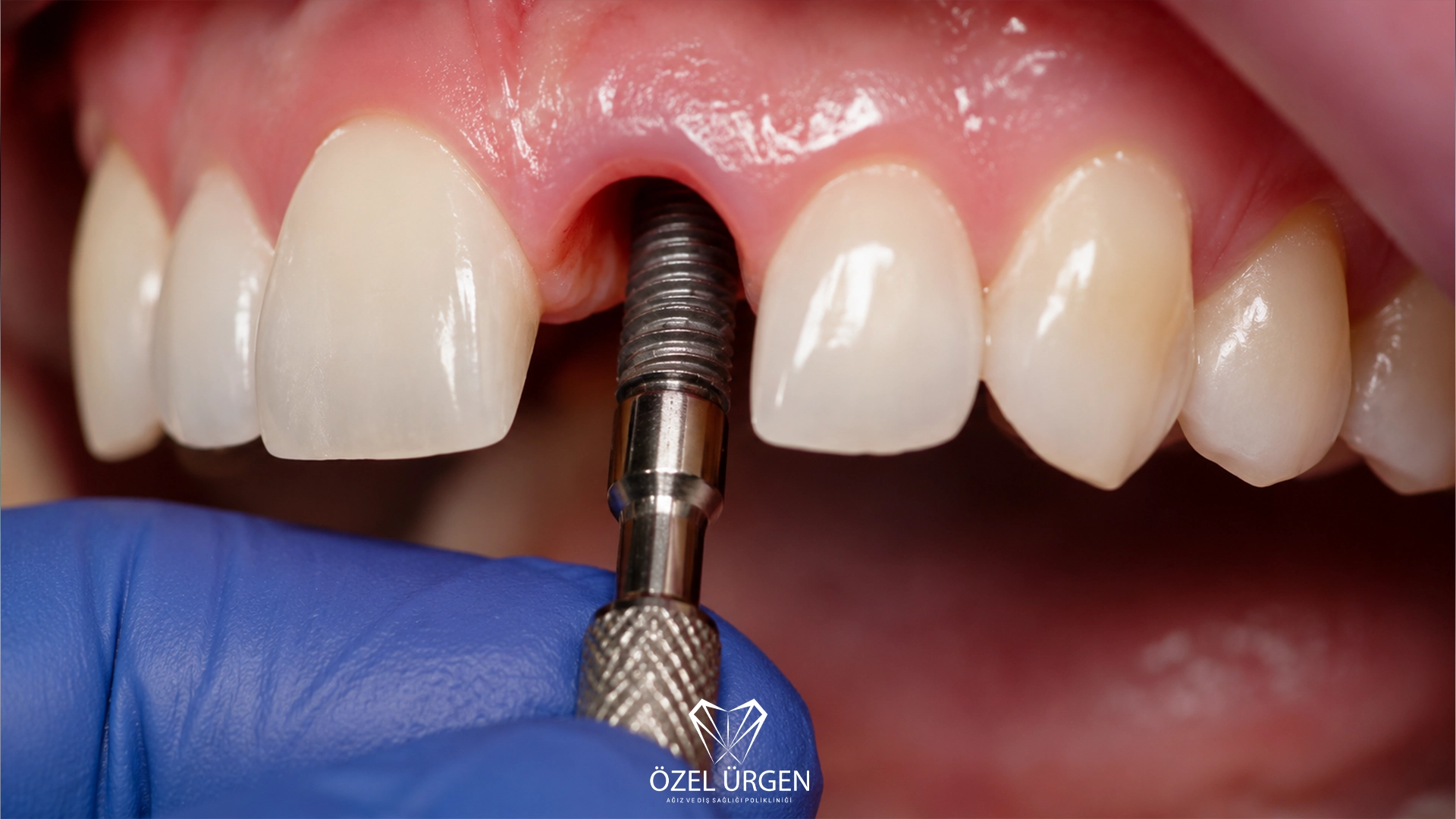
Dental implant visible at gum level before placement of the prosthetic tooth
The appearance of a dental implant inside the mouth before the prosthetic stage.

Is Dental Implant Placement Painful?
Dental implant procedures are generally performed under local anesthesia, so the aim is to prevent pain during the procedure.
After the effect of anesthesia wears off, patients may experience:
- Mild pain
- Tenderness
- Swelling
- A feeling of pressure
The intensity of these symptoms may vary from person to person.
Following the dentist’s aftercare recommendations can help patients experience a more comfortable healing period.
5. Implant Integration With the Jawbone
One of the most important stages following implant placement is the healing process.
During this period, a biological connection is expected to form between the dental implant and the jawbone. This process is called osseointegration.
The duration of osseointegration may vary depending on the patient and the area where the implant has been placed.
Factors such as:
- Jawbone density
- Implant location
- Individual healing capacity
can influence the healing period.
Healing may take several months or longer. The FDA’s information about dental implants also notes that healing time and the long-term use of dental implants can be influenced by individual factors such as general health.
After this process has been completed, the permanent prosthetic tooth can be planned for placement on the implant.
How Long Does Implant Treatment Take?
The duration of implant treatment is not the same for every patient.
Factors that may influence the total treatment time include:
- Number of implants
- Condition of the jawbone
- Whether bone grafting is required
- Whether a sinus lift is necessary
- Healing rate
- Type of prosthesis to be used
Although the surgical placement of an implant itself may be completed within a relatively short period, a longer healing period may be required for the implant to integrate with the jawbone.
Therefore, the total duration of implant treatment can only be estimated more accurately after an individualized treatment plan has been created.
6. Placement of the Healing Abutment
After the implant has sufficiently integrated with the jawbone, the prosthetic stage begins.
In some implant systems, a component known as a healing abutment may be placed on top of the implant.
The purpose of this component is to help shape the gum tissue appropriately for the future prosthetic tooth.
Once the gum tissue has achieved the desired form, the impression stage begins.
7. Taking Impressions for the Implant-Supported Prosthesis
Dental impressions are required to prepare the prosthetic tooth that will be placed on top of the implant.
Today, this process may be performed using:
- Traditional impression materials
or
- Digital intraoral scanners
The impressions or digital scans are then sent to the dental laboratory.
The prosthesis is prepared by considering factors such as:
- Natural tooth color
- Tooth shape
- Bite relationship
8. Placement of the Prosthetic Tooth on the Implant
One of the final stages of implant treatment is the placement of the implant-supported prosthetic tooth.
The prepared prosthesis is first tried inside the patient’s mouth.
At this stage, the following factors are checked:
- Tooth color
- Shape of the teeth
- Bite relationship
- Speech
- Aesthetic appearance
After the necessary adjustments have been completed, the prosthetic tooth is secured to the implant.
The functional stage of implant treatment is then considered complete.
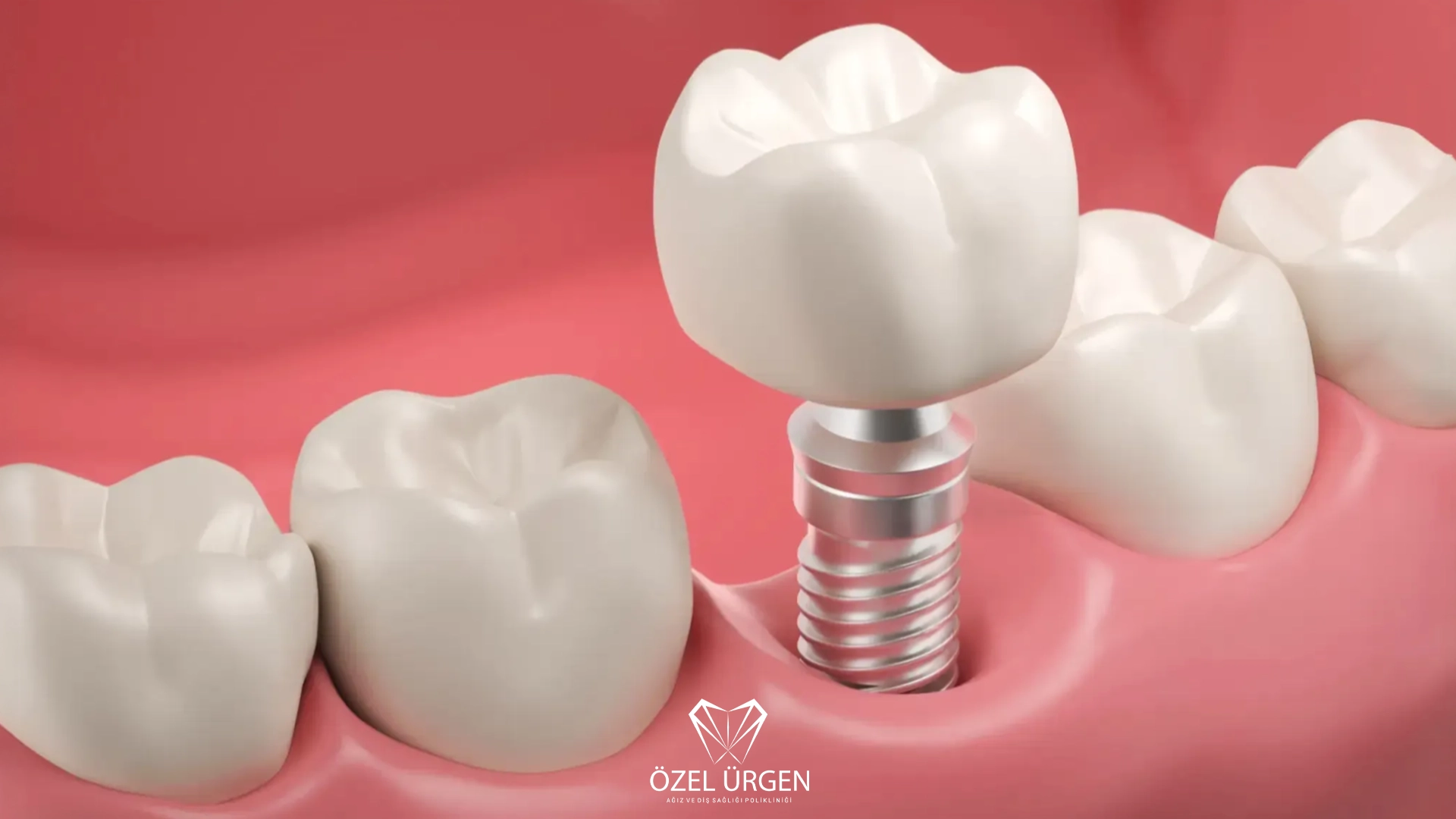
Three-dimensional illustration showing a prosthetic tooth placed on a dental implant
Representative illustration of an implant and the prosthetic tooth placed on top of it.
Who Is Suitable for Implant Treatment?
Implant treatment may be considered for many adult patients. However, it should not automatically be assumed to be suitable for everyone.
Before an implant can be placed, several factors are evaluated, including:
- Sufficient jawbone
- Healthy gum tissue
- Adequate oral hygiene
- General health suitable for treatment
Patients with certain medical conditions or those using particular medications may require more detailed evaluation.
For this reason, the decision to proceed with implant treatment should be made by a dentist after evaluating both the patient’s general health and oral health.
Can Dental Implants Be Placed If There Is Insufficient Jawbone?
In some patients, long-term tooth loss may lead to loss or resorption of jawbone.
In such cases, the amount of bone available for implant placement may be insufficient.
However, insufficient bone does not always mean that implant treatment cannot be performed.
Depending on the individual case, additional surgical procedures may be considered, such as:
- Bone grafting
- Bone augmentation procedures
- Sinus lift surgery
Whether these procedures are necessary is determined through clinical examination and dental tomography.
What Is a Sinus Lift?
After teeth are lost in the posterior area of the upper jaw, bone height may decrease.
In addition, the sinus cavity located in the upper jaw may limit the available area for dental implant placement.
In these situations, a surgical procedure called a sinus lift may be considered.
A sinus lift is intended to create or increase the amount of bone available for implant placement.
However, this procedure is not necessary for every implant patient.
Can a Dental Implant Be Used for a Single Missing Tooth?
Yes. Implant treatment is one of the options that can be considered when a patient has a single missing tooth.
In a single-tooth implant procedure, an implant is placed in the area of the missing tooth, and a crown designed to replace the missing tooth is placed on top of the implant.
One of the major advantages of this method is that, in suitable cases, the missing tooth can be replaced without reducing or cutting adjacent healthy teeth.
Implant Treatment for Multiple Missing Teeth
When several teeth are missing, it is not always necessary to place one implant for every missing tooth.
In some situations, a bridge may be supported by several dental implants.
The number of implants required depends on factors such as:
- Number of missing teeth
- Condition of the jawbone
- Bite forces
- Design of the prosthesis
Implant Treatment for Patients Who Have Lost All Their Teeth
Implant-supported prosthetic options may also be considered for patients who have lost all of their natural teeth.
Dental implants can support:
- Fixed prostheses
or
- Removable prostheses
The design of an implant-supported prosthesis is planned according to the condition of the jawbone and the individual needs of the patient.
What Should Be Considered After Implant Treatment?
Post-operative care is an important part of implant treatment.
Patients should carefully follow the personalized instructions provided by their dentist.
In general, after dental implant placement, patients may be advised to:
- Avoid very hot foods and drinks during the first hours
- Protect the surgical area from trauma
- Maintain good oral hygiene
- Avoid smoking
- Use prescribed medications as instructed
- Attend follow-up appointments
Mild swelling may occur in the surgical area during the first few days following the procedure.
However, patients should contact their dentist if they experience unexpected severe pain, uncontrolled bleeding, or significant swelling.
What Should You Eat After Implant Treatment?
During the first few days after dental implant placement, a diet that helps protect the surgical area may be recommended.
Depending on your dentist’s advice, you may prefer:
- Soft foods
- Lukewarm foods
- Foods that are easy to chew
Very hard or excessively hot foods, as well as foods that may irritate the surgical area, may need to be avoided for a certain period.
The most appropriate dietary recommendations should be determined by your dentist according to the extent of the surgical procedure performed.
How Should Dental Implants Be Maintained?
Oral hygiene should not be neglected after implant treatment has been completed.
Just like natural teeth, plaque and bacteria can accumulate around dental implants.
For this reason:
- Teeth should be brushed regularly
- Interdental areas should be cleaned
- Dental floss or suitable interdental cleaning products should be used
- Regular dental check-ups should not be neglected
Protecting the gum tissue and bone surrounding dental implants is extremely important for their long-term health.
Are Dental Implants Permanent?
The lifespan of dental implants depends on many different factors.
Factors that may influence how long implants can remain functional include:
- Oral hygiene
- Gum health
- Bone structure
- Smoking
- Regular dental examinations
- General health of the patient
- Proper use of the prosthesis
For this reason, it would not be accurate to say that dental implants can last a lifetime without requiring any maintenance or professional monitoring.
Regular oral care and dental check-ups play an important role in the long-term success of implant treatment.
What Are the Advantages of Implant Treatment?
In suitable patients, implant treatment may provide several advantages.
Some of these include:
Natural-Looking Appearance
Prosthetic teeth placed on implants can be designed to match the patient’s natural tooth color and oral structure.
Supporting Chewing Function
Replacing missing teeth is intended to improve and support chewing function.
Protecting Adjacent Teeth
When a single tooth is missing, dental implant treatment may make it possible to replace the missing tooth without reducing adjacent healthy teeth in suitable cases.
Improving Prosthesis Stability
In patients with complete tooth loss, implant-supported prostheses may help improve the stability and retention of removable dentures.
Aesthetic Appearance
Particularly in the front tooth region, properly planned implant-supported restorations may contribute to restoring an aesthetically pleasing appearance.
Is Implant Treatment Risky?
As with every surgical procedure, dental implant placement may involve certain risks.
Possible complications may include:
- Infection
- Failure of the implant to properly integrate with the jawbone
- Gum problems
- Proximity to nerve structures
- Problems involving the sinus area
However, detailed examination, appropriate imaging, accurate surgical planning, and regular follow-up play an important role in managing these risks.
Is There an Age Limit for Implant Treatment?
When it comes to dental implants, the patient’s general health and bone condition are generally more important than a strict upper age limit.
However, in younger individuals whose bone development has not yet been completed, implant placement is generally considered after growth and development have finished.
For older adults, implant treatment may be considered when general health and oral conditions are appropriate.
The final decision should always be made following a clinical examination.
Can Smokers Have Dental Implants?
Smoking is one of the factors that can negatively affect the healing of oral tissues.
In particular, smoking after a surgical procedure may interfere with healing and can create additional risks for the tissues surrounding a dental implant.
Patients considering implant treatment should therefore inform their dentist about their smoking habits.
What Should Be Considered Before Implant Treatment?
Before treatment, patients should:
- Inform the dentist about medications they use
- Share information about chronic diseases
- Mention any significant previous surgical procedures
- Inform the dentist if they smoke
- Maintain proper oral hygiene
If gum disease or an active infection is present, these conditions may need to be treated before implant therapy begins.
Factors Affecting the Success of Implant Treatment
The success of implant treatment does not depend only on the implant itself.
Several important factors may affect treatment success.
Accurate Diagnosis and Planning
Planning the implant with the appropriate diameter, length, and position is important.
Jawbone Quality
The structure and quality of the bone supporting the implant are important factors in treatment.
Oral Hygiene
Regular oral care is essential for maintaining the health of the tissues surrounding a dental implant.
Regular Dental Check-Ups
Routine dental examinations should continue after implant treatment has been completed.
General Health of the Patient
Certain systemic conditions and medications may influence implant treatment planning.
Frequently Asked Questions About Implant Treatment
How Many Appointments Are Required for Implant Treatment?
The number of appointments varies depending on the patient’s individual needs.
Examination, surgical placement, healing checks, impressions, and prosthetic procedures may be performed during separate appointments.
Can a Tooth Be Placed Immediately After the Implant?
In certain suitable cases, temporary restorations or immediate/early loading options may be considered.
However, not every patient is suitable for this type of treatment.
Does a Dental Implant Look Like a Natural Tooth?
The prosthetic tooth placed on a dental implant can be prepared in a color and shape that matches the patient’s natural teeth.
Is Dental Implant Surgery a Difficult Procedure?
The complexity of the procedure depends on the number of implants and the patient’s jawbone structure.
The process of placing a single implant is different from more extensive treatment requiring procedures such as bone grafting.
Can I Return to Work After Dental Implant Surgery?
Some people may be able to return to their daily activities relatively quickly, while patients undergoing more extensive surgical procedures may require a longer period of rest.
The dentist’s personalized recommendations should always be followed.
Why Is Proper Planning Important for Implant Treatment?
Implant treatment involves much more than simply placing an implant into the jawbone.
During treatment planning, several factors should be evaluated together, including:
- Implant position
- Shape of the prosthesis
- Gum aesthetics
- Condition of the jawbone
- Chewing function
Particularly in aesthetically important areas, correct positioning of the implant can directly influence the final prosthetic result.
For this reason, implant treatment requires a multidisciplinary and personalized approach.

Implant Treatment at Ürgen Oral and Dental Health Polyclinic
If you are considering dental implant treatment because of missing teeth, the first step is a detailed examination by a dentist.
At Ürgen Oral and Dental Health Polyclinic, implant treatment planning involves evaluating the patient’s oral structure, jawbone condition, gum health, and prosthetic needs together.
The goal is not simply to replace a missing tooth, but to create an individualized treatment plan that considers function, aesthetics, and overall oral health.
Whether dental implants are suitable for you, how many implants may be required, and which stages your treatment will involve can only be determined after a clinical examination and the necessary radiological assessments.
Conclusion: How Is Implant Treatment Performed?
To briefly answer the question “How is implant treatment performed?”, the process begins with a detailed examination and diagnostic imaging.
The implant is then placed in an appropriate area of the jawbone, and a healing period is allowed for the implant to integrate with the bone.
Once healing has been completed, a custom-made prosthetic tooth is placed on top of the implant.
For successful implant treatment, accurate diagnosis, detailed planning, appropriate surgical application, and regular oral care after treatment are extremely important.
Because every patient’s oral and jaw structure is different, the duration and method of implant treatment may vary from person to person.
For this reason, general information available online should not replace an individualized dental examination and treatment plan.
Following a detailed evaluation at Ürgen Oral and Dental Health Polyclinic, you can receive information about treatment options suitable for your missing teeth and have a personalized treatment plan created for your needs.