



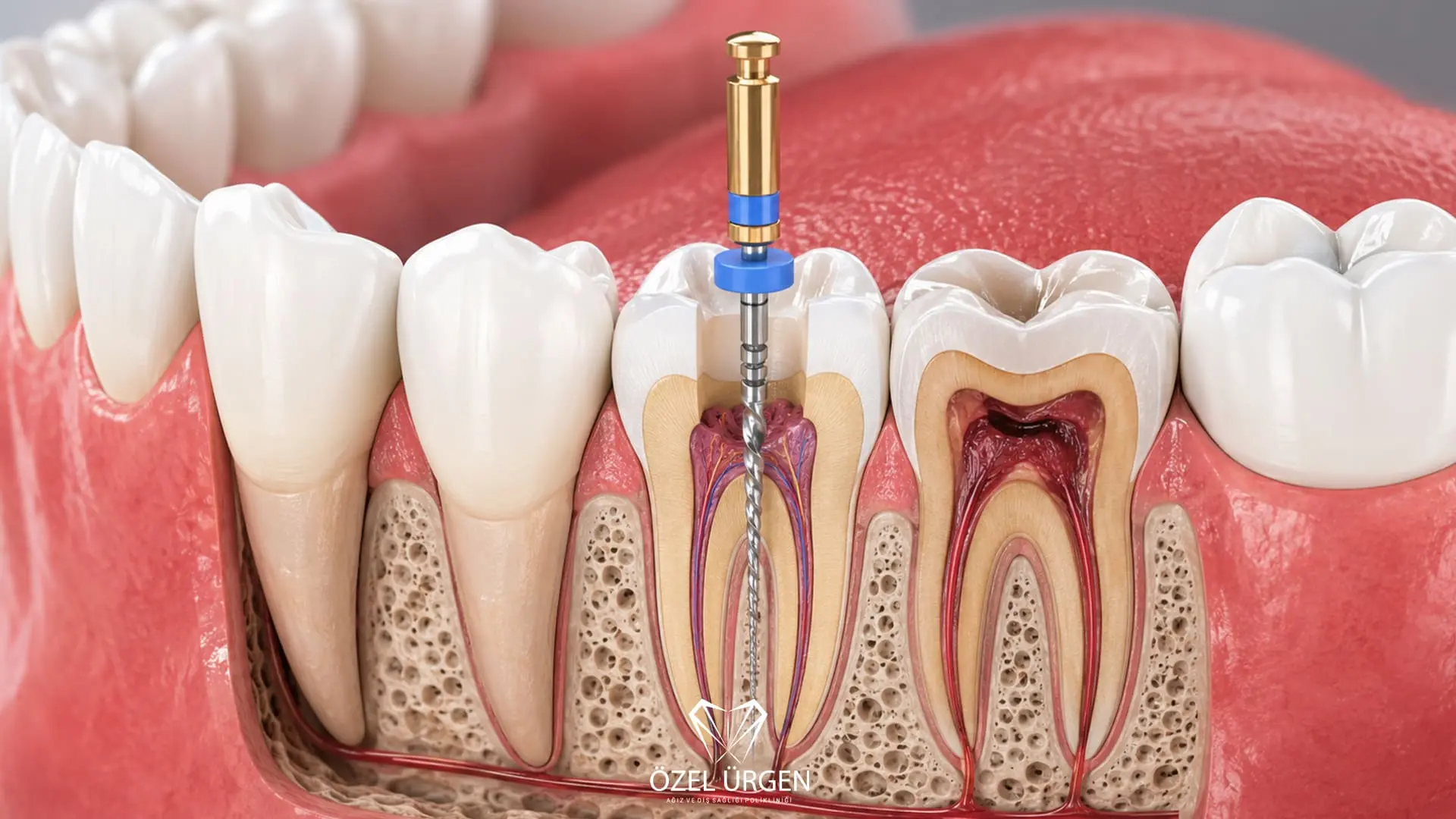
What Is Root Canal Treatment? Symptoms, Stages, and Treatment Process
Symptoms such as toothache, prolonged sensitivity to hot and cold, discomfort while chewing, or swelling in the gums may indicate a problem affecting the internal tissues of the tooth. When the living tissue located at the center of the tooth, known as the pulp, becomes infected or irreversibly damaged, one of the treatments used to preserve the tooth in the mouth is root canal treatment.
One of the primary goals of modern dentistry is to preserve natural teeth whenever possible. Therefore, depending on the severity of the infection or damage, instead of extracting the tooth directly, infected tissues inside the tooth may be removed in suitable cases to allow the tooth to continue functioning. Root canal treatment is based on cleaning, shaping, disinfecting, and sealing the root canals of the tooth with special filling materials.
So, what is root canal treatment, when is it necessary, what happens during the procedure, and what should patients pay attention to afterward? In this guide, we explain the main topics related to root canal treatment in detail.
What Is Root Canal Treatment?
Root canal treatment is a dental procedure in which the pulp tissue inside the tooth is removed due to infection, inflammation, or severe damage, and the root canals are then cleaned and filled. Also known as endodontic treatment, this procedure can help preserve the natural tooth, particularly in advanced conditions affecting the internal tissues of the tooth.
Beneath the hard outer structure of the tooth lies the dentin layer, and deeper inside is the pulp. The pulp is a living tissue consisting of nerves, blood vessels, and connective tissue. Deep cavities, cracks, fractures, or trauma can allow bacteria to reach the pulp.
When damage to the pulp tissue reaches a certain level, the tissue may no longer be able to heal itself. The multiplication of bacteria inside the root canals may eventually cause the infection to spread to the tissues surrounding the tooth root.
The purpose of treatment is not only to relieve pain. The main goal is to remove infected or damaged tissue, clean the root canal system, and seal the areas where bacteria could potentially multiply again.
Why Is Root Canal Treatment Performed?
There are several reasons why the pulp tissue of a tooth may become damaged. One of the most common causes is deep tooth decay that progresses without treatment.
In its early stages, decay may only affect the tooth enamel. As it progresses over time, it may reach the dentin layer and eventually the pulp tissue. When bacteria reach the pulp, inflammation and infection may develop.
However, the situations that may require root canal treatment are not limited to tooth decay. Severe trauma to the tooth, fractures or cracks, extensive previous restorative procedures, and certain gum problems may also affect pulp health.
Following a clinical examination and any necessary imaging procedures, the dentist evaluates the condition of the pulp and determines the most appropriate treatment method.
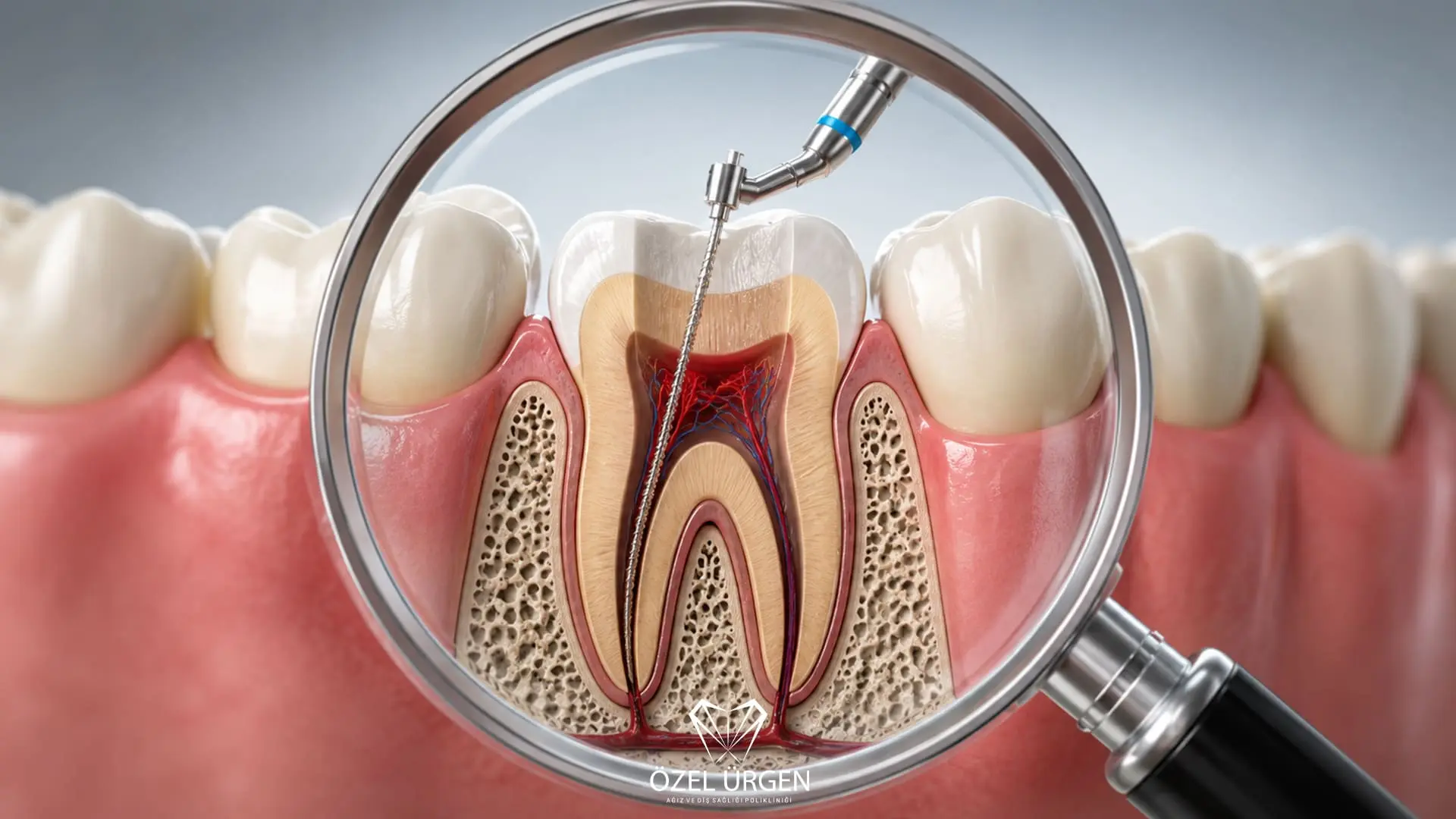
What Are the Symptoms That May Require Root Canal Treatment?
Not every toothache means that root canal treatment is necessary. Tooth sensitivity or pain may result from cavities, gum problems, teeth grinding, a cracked tooth, or various other oral and dental health conditions.
However, certain symptoms may indicate that the pulp tissue has been affected.
One of the most significant symptoms is spontaneous tooth pain that begins without an obvious trigger and continues for an extended period. Prolonged sensitivity after consuming hot or cold foods and beverages may also occur when the pulp is affected.
Pain while chewing or biting, swelling of the gums, changes in tooth color, and tenderness around the tooth root are also symptoms that should be evaluated.
In some cases, when the pulp completely loses its vitality, the pain may decrease or disappear. Therefore, the disappearance of pain does not always mean that the underlying problem has been resolved.
If symptoms such as swelling around the tooth, noticeable facial swelling, fever, or rapidly increasing pain occur, dental evaluation should not be delayed.
How Is Root Canal Treatment Performed?
Before performing root canal treatment, the dentist listens to the patient’s complaints and examines the affected tooth. When necessary, X-rays may be used to assess the tooth roots, surrounding tissues, and the condition of any existing infection.
Although the treatment process may vary depending on the individual case, it generally consists of several main stages.
1. Examination and Diagnosis
In the first stage, the general condition of the tooth is evaluated. Identifying the source of the pain is one of the most important parts of treatment planning.
The dentist may use hot and cold tests, percussion tests, pulp vitality tests, and radiographic examinations. Based on these evaluations, it is determined whether the tooth requires root canal treatment.
2. Administration of Local Anesthesia
Before beginning the procedure, local anesthesia is generally administered to the area being treated. The purpose is to increase patient comfort during the procedure.
One of the most common concerns patients have regarding root canal treatment is pain. Thanks to modern local anesthesia techniques, the procedure can usually be carried out in a controlled and comfortable manner.
3. Accessing the Interior of the Tooth
An appropriate access opening is created in the upper part of the tooth to reach the pulp chamber and root canals.
The number of roots and canals may vary depending on the anatomy of the tooth. Front teeth and molars do not have the same canal structures, and anatomical differences may also occur from one person to another.
4. Removal of Infected Tissue
Damaged or infected pulp tissue is removed using specialized endodontic instruments. The objective is to remove as much organic tissue and microorganisms as possible from inside the root canals.
This stage is extremely important for the success of the treatment because infected tissue remaining inside the canals may contribute to the development of future problems.
5. Shaping and Disinfection of the Root Canals
After the pulp tissue has been removed, the root canals are shaped using specialized instruments. At the same time, various irrigation solutions are used to clean the canal system and reduce the number of microorganisms.
The structure of root canals is not always straight or simple. Canals may be narrow, curved, or have different anatomical configurations. Therefore, the duration and difficulty of the procedure may vary from one tooth to another.
6. Filling the Root Canals
Once cleaning and shaping have been completed, the root canals are filled using suitable materials. A material known as gutta-percha is commonly used for this purpose in endodontic treatments.
The aim is to seal the cleaned root canal system as effectively as possible and reduce the risk of microorganisms entering or multiplying within the canals again.
7. Restoring the Upper Structure of the Tooth
After the root canal procedures have been completed, the visible part of the tooth must also be appropriately restored. Depending on the amount of tooth structure that has been lost, different restorative options such as fillings, onlays, or crowns may be considered.
Particularly in posterior teeth with significant loss of tooth structure, protective restorations recommended by the dentist may be used to reduce the risk of fracture.
How Many Sessions Does Root Canal Treatment Take?
The number of appointments required to complete root canal treatment is not the same for every patient or every tooth. In some cases, the procedure may be completed in a single session, while other cases may require multiple appointments.
Factors that may affect the number of sessions include the anatomy of the tooth roots and canals, the severity of the existing infection, whether the tooth has previously undergone root canal treatment, and the condition of the tissues surrounding the tooth.
The process may be more complex, particularly in teeth that have previously undergone root canal treatment and require retreatment.
For this reason, there is no single answer to the question, “How many sessions does root canal treatment take?” that applies to everyone. The most accurate estimate can be provided following a clinical and radiographic examination.
Is Root Canal Treatment Painful?
One of the most frequently asked questions about root canal treatment is whether the procedure is painful.
Because local anesthesia is generally administered before the procedure, the aim is to control pain during treatment. However, factors such as the severity of the infection, the patient’s individual pain threshold, and the extent of the procedure may affect the overall experience.
After treatment, mild to moderate sensitivity may occur, particularly during the first few days. Sensitivity while biting is also one of the possible experiences following the procedure.
If these symptoms become more severe, continue for an extended period, or are accompanied by additional symptoms such as swelling, the dentist who performed the treatment should be contacted.
What Should You Pay Attention to After Root Canal Treatment?
Following the dentist’s recommendations after treatment is important for both patient comfort and the protection of the treated tooth.
Particular care should be taken when eating before the effects of anesthesia have completely worn off. While the area remains numb, patients may accidentally bite their cheek, lip, or tongue.
If the permanent restoration of the treated tooth has not yet been completed, it may be necessary to avoid chewing hard foods directly with that tooth. Teeth with significant loss of structure may have an increased risk of fracture.
Maintaining good oral hygiene is also important. Teeth should be brushed regularly, the spaces between the teeth should be cleaned using appropriate methods, and follow-up appointments recommended by the dentist should not be neglected.
Having undergone root canal treatment does not mean that the treated tooth will never experience another problem. The health of the gums and supporting tissues surrounding the tooth must also be maintained.
How Long Can a Root Canal-Treated Tooth Last?
A successfully treated and properly restored tooth may remain functional in the mouth for many years. However, successful root canal therapy alone is not enough to ensure long-term survival.
After treatment, it is important that the final restoration is completed correctly, oral hygiene is maintained regularly, and routine dental examinations are continued.
The risk of fracture should be evaluated, particularly in teeth that have lost a significant amount of their natural structure. If necessary, the dentist may recommend a protective restoration depending on the structure and location of the tooth.
Patients who grind or clench their teeth may also place increased pressure on treated teeth. Therefore, the long-term success of the tooth depends on several different factors.
What Happens If Root Canal Treatment Is Not Performed?
Delaying treatment for a tooth that has been determined to require root canal treatment may allow the infection to progress.
An infection that begins in the pulp tissue may gradually spread to the root tip and surrounding tissues. As a result, problems such as abscess formation, swelling, pain while chewing, and damage to surrounding tissues may develop.
As the infection progresses, the possibility of preserving the tooth may also be affected. In some advanced cases, extraction of the tooth may become necessary.
For this reason, early dental evaluation is particularly important when symptoms such as prolonged toothache, swelling, or sensitivity to hot and cold are present.
Root Canal Treatment or Tooth Extraction?
When a tooth has a serious infection or extensive damage, patients often wonder whether the tooth should be treated or extracted.
When preserving the natural tooth is possible, maintaining the tooth in the mouth is generally an important goal. A natural tooth contributes to maintaining chewing function, tooth alignment, and the overall structure of the mouth.
However, not every tooth can be saved with root canal treatment. Severe fractures, extensive loss of tooth structure that cannot be restored, certain periodontal problems, or other clinical conditions may make extraction necessary.
This decision should not be made based solely on symptoms. The clinical condition of the tooth, X-ray findings, restorability of the tooth, and surrounding tissues should all be evaluated together.
Can a Tooth Hurt Again After Root Canal Treatment?
Short-term sensitivity may occur after treatment. Particularly when infection or inflammation was present around the root before treatment, sensitivity while chewing may continue for several days.
However, pain that lasts for an extended period, gradually becomes more severe, or occurs together with swelling should be evaluated by a dentist.
In rare cases, complex anatomical structures within the root canal system, missed canals, new infections, or problems associated with the restoration may cause a previously treated tooth to develop symptoms again.
In such situations, root canal retreatment, endodontic surgery, or other treatment options may be considered depending on the condition of the tooth.
Is a Crown Necessary After Root Canal Treatment?
It would not be correct to say that every tooth undergoing root canal treatment must receive a crown. The decision should be based on the location of the tooth and the amount of healthy tooth structure remaining.
For some front teeth with sufficient healthy tooth structure, different restorative approaches may be preferred. However, posterior teeth that have lost a significant amount of structure may require greater protection against fracture.
The dentist evaluates the remaining tooth structure, chewing forces, risk of cracking, and existing restorations to determine whether a filling, onlay, crown, or another restoration is the most appropriate option.
Factors That Affect the Success of Root Canal Treatment
The success of root canal treatment is not determined by a single factor. Many elements, ranging from the anatomical structure of the tooth to the restoration performed after treatment, can influence the long-term outcome.
Correctly identifying the root canals, providing adequate cleaning and disinfection, properly filling the canals, and sealing the upper part of the tooth with an effective restoration are among the most important factors.
The patient’s oral hygiene habits and regular dental check-ups also play an important role in long-term treatment outcomes.
In addition, the severity of the infection before treatment and the condition of the tissues surrounding the tooth may affect the treatment process. Therefore, every case should be evaluated according to its individual clinical characteristics.
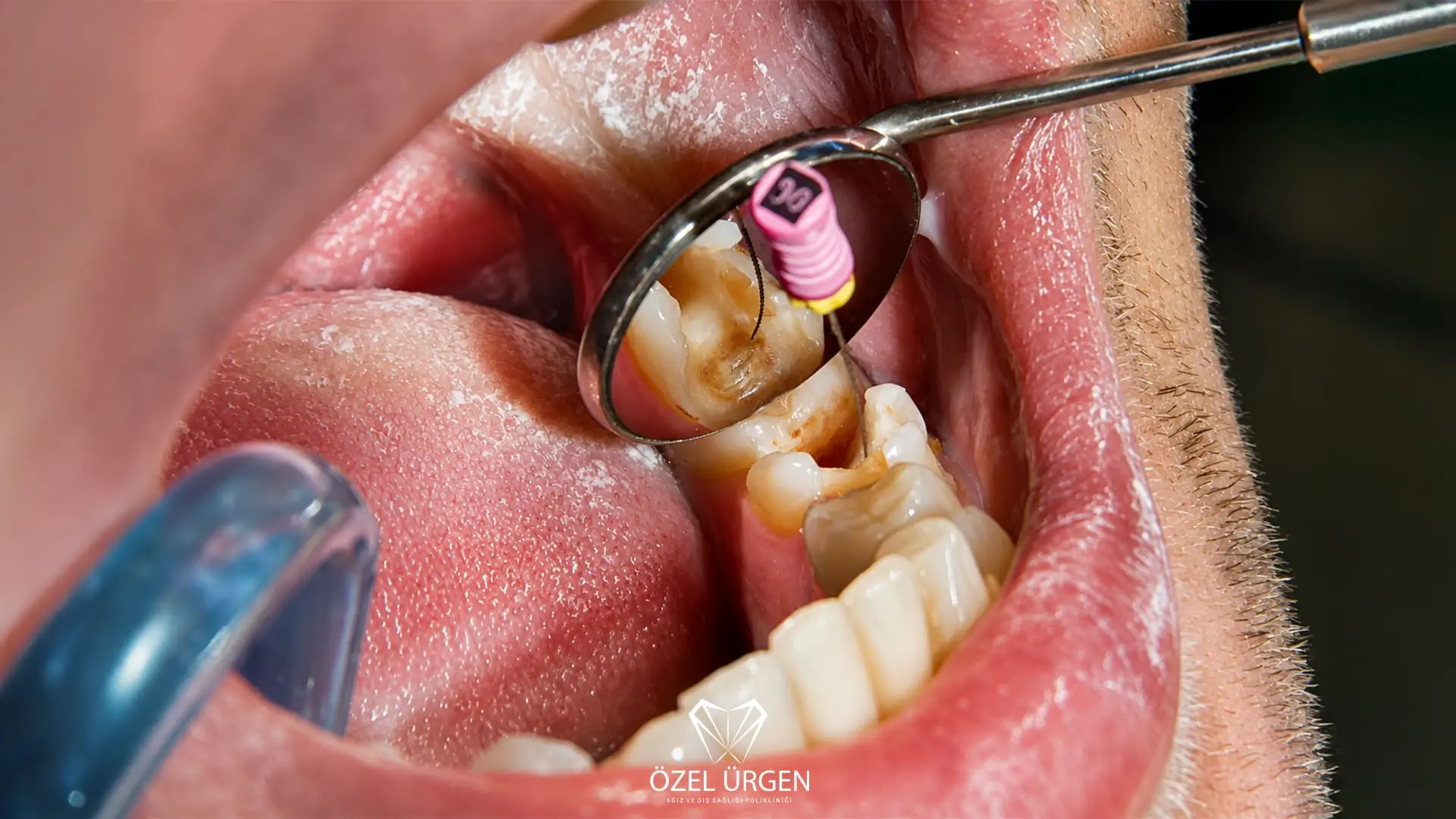
Frequently Asked Questions About Root Canal Treatment
Does a Tooth Die After Root Canal Treatment?
During treatment, the pulp tissue containing the nerves and blood vessels is removed. However, the tooth can continue to function in the mouth because it is supported by the surrounding tissues. Therefore, when properly restored, a tooth that has undergone root canal treatment can continue to perform its chewing function.
Can You Eat After Root Canal Treatment?
Unless the dentist gives different instructions, eating is generally possible. However, if local anesthesia has been used, care should be taken until the numbness has completely disappeared.
Hard foods may need to be avoided if the tooth has a temporary filling or if its permanent restoration has not yet been completed.
Is Pain Normal After Root Canal Treatment?
Mild sensitivity may occur during the first few days. However, if severe pain, increasing swelling, or symptoms that continue for a prolonged period develop, a dentist should be consulted.
Can Root Canal Treatment Be Repeated?
In some cases, a tooth that has previously undergone root canal treatment can be treated again. This procedure is known as endodontic retreatment or root canal retreatment.
Whether retreatment is possible depends on the current condition of the tooth.
Can Root Canal Treatment Change the Color of the Tooth?
Some root canal-treated teeth may develop discoloration over time. If this discoloration creates an aesthetic concern, particularly in front teeth, the dentist may evaluate appropriate treatment options.
Can Root Canal Treatment Be Performed on Every Tooth?
No. The structure of the tooth roots, the severity of any fracture, the condition of the surrounding bone and gum tissues, and whether the tooth can be successfully restored must all be evaluated.
If the tooth cannot be preserved, alternative treatment options may need to be considered.
Why Is Early Diagnosis Important in Root Canal Treatment?
Detecting dental problems at an early stage can significantly affect the extent of the treatment required. While a small cavity may be treated with a relatively simple restoration when detected early, decay that progresses into the pulp tissue may require more extensive treatment.
For this reason, regular dental examinations are important rather than waiting for pain to develop. Some cavities and dental problems may not cause noticeable pain during their early stages.
Early diagnosis may help preserve as much natural tooth structure as possible and control dental problems before they progress.
Conclusion: Is It Possible to Preserve a Natural Tooth With Root Canal Treatment?
Root canal treatment is an important endodontic procedure designed to preserve a natural tooth when the pulp tissue has become irreversibly damaged or infected in suitable cases.
During treatment, infected or damaged pulp tissue is removed, the root canals are cleaned and shaped, and the canals are filled using appropriate materials. The upper portion of the tooth is then restored according to the amount of remaining tooth structure.
Accurate diagnosis, effective cleaning of the root canal system, an appropriate final restoration, and long-term oral hygiene all play important roles in the success of the treatment.
If symptoms such as prolonged toothache, sensitivity to hot or cold, pain while chewing, or swelling around the tooth are present, a dental examination is necessary to determine the underlying cause. Since not every toothache requires root canal treatment, the appropriate treatment should be individually determined based on clinical and radiographic evaluation.
Comments are closed