



Can Root Canal Treatment Be Performed on Baby Teeth?
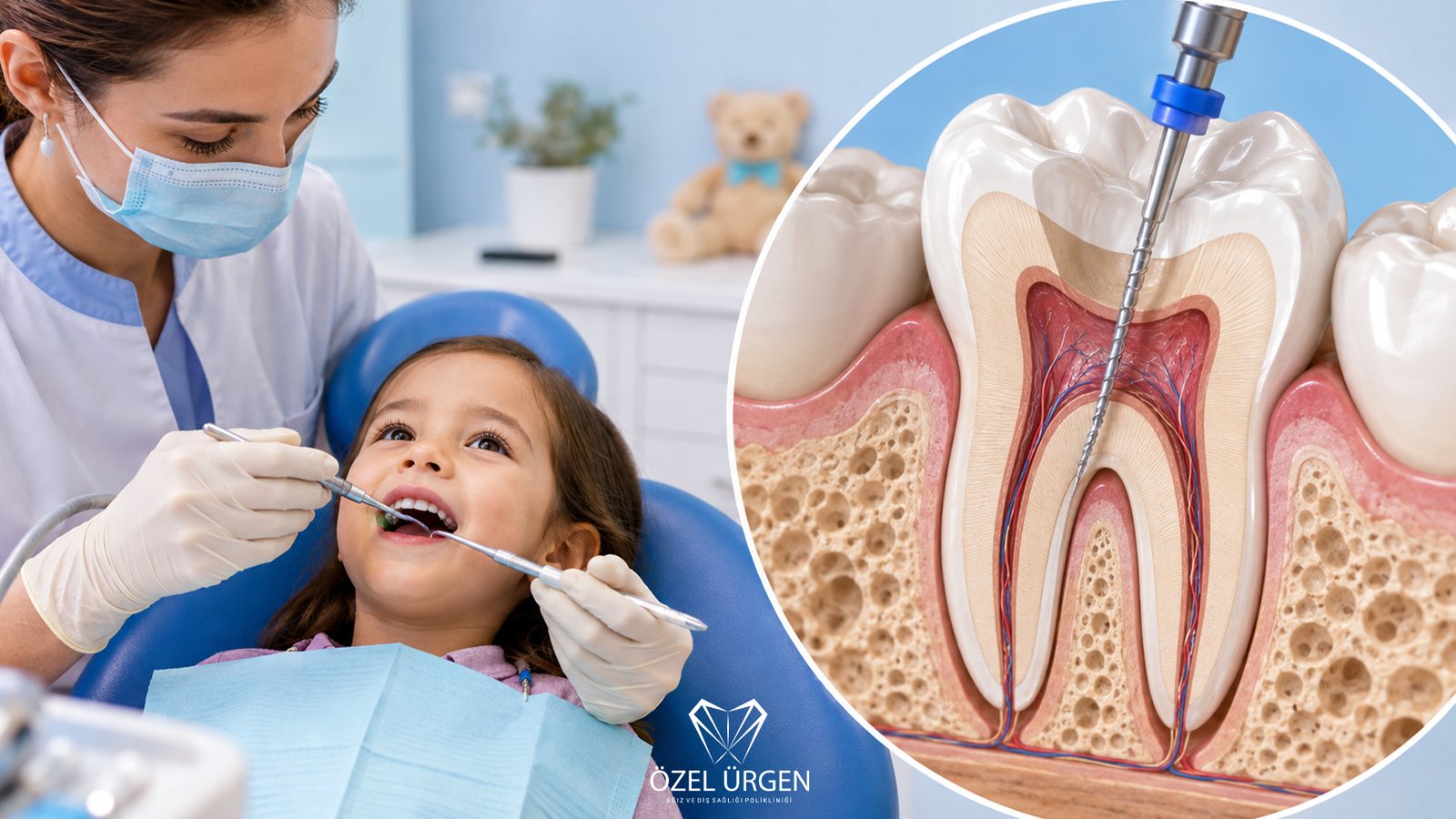
One of the most common questions parents ask after deep tooth decay develops in children is “Can root canal treatment be performed on baby teeth?” Since baby teeth naturally fall out in later years, it may be assumed that they do not require root canal treatment. However, baby teeth can also be affected by decay or trauma, and in some cases, pulp treatments may be necessary to preserve the tooth in the mouth in a healthy condition.
To answer briefly: Yes, root canal treatment can be performed on baby teeth when necessary. However, the type of treatment applied to baby teeth is not always the same as conventional root canal treatment performed on adult teeth. Different treatment methods may be preferred depending on the depth of the decay, the condition of the nerve tissue, whether an infection is present, how long the tooth is expected to remain in the mouth, and the condition of the roots.
The American Academy of Pediatric Dentistry (AAPD) states that pulpotomy, pulpectomy, and various vital pulp therapies may be performed on baby teeth depending on the condition of the pulp tissue. The choice of treatment is based on the vitality of the tooth, the presence of infection, and whether the tooth can be restored.
Why Are Baby Teeth Treated If They Will Eventually Fall Out?
The fact that baby teeth are temporary does not mean they are unimportant. Baby teeth play an important role in maintaining a child’s chewing function, supporting speech development, and preserving the existing dental arrangement until the permanent teeth erupt.
For this reason, leaving a deeply decayed tooth untreated simply because “it will fall out anyway” is not an appropriate approach. As tooth decay progresses, it can reach the pulp, which contains the blood vessels and nerve tissue inside the tooth. In such cases, the child may experience pain, sensitivity, swelling around the gums, or infection.
Untreated advanced dental infections may lead to pain, abscess formation, and swelling in the facial area.
Therefore, the decision on whether a baby tooth should be treated should not be based solely on the fact that it will eventually fall out. Instead, the child’s age, the current condition of the tooth, the extent of the infection, and the estimated time until the tooth naturally falls out should all be evaluated together.
When Is Root Canal Treatment Performed on Baby Teeth?
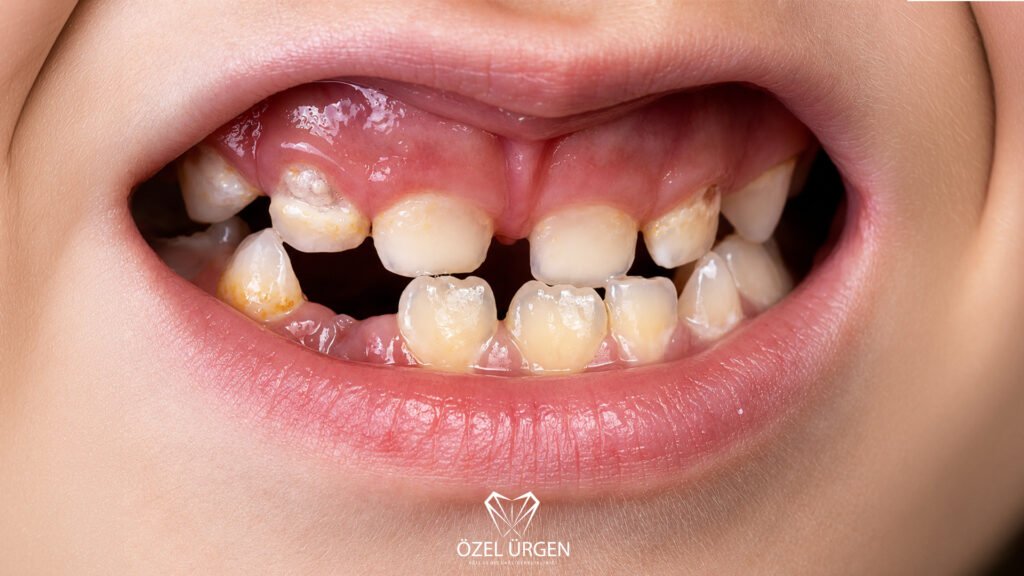
Not every decayed baby tooth requires root canal treatment. If the decay is at an early or moderate stage, a filling or other preventive treatments may be sufficient. However, when the decay reaches the pulp tissue of the tooth, pulp treatments may need to be considered.
Root canal or pulp treatment for baby teeth may particularly be considered in the following situations:
- Deep decay reaching the nerve tissue of the tooth,
- Inflammation developing in the pulp tissue,
- Spontaneous or persistent tooth pain,
- Damage to the nerve tissue of the tooth due to trauma,
- Loss of vitality in the pulp tissue,
- When preserving the tooth in the mouth is considered necessary for the child.
However, the presence of any of these signs does not automatically mean that root canal treatment will be performed. The final treatment plan is determined by a pediatric dentist following a clinical examination and, when necessary, radiographic evaluation.
What Is Pulpotomy in Baby Teeth?
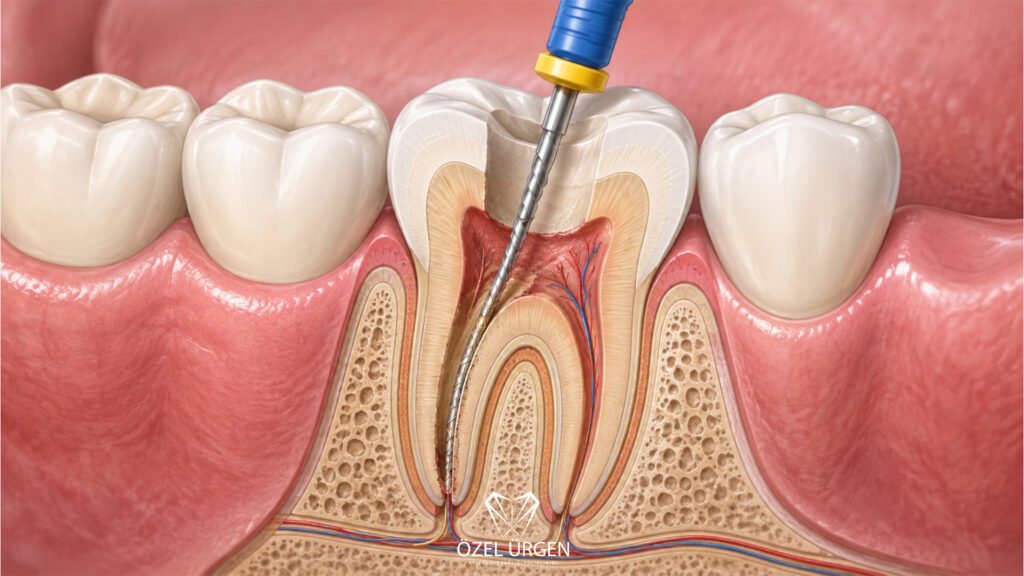
One of the treatments performed on baby teeth is a pulpotomy. A pulpotomy involves removing the affected pulp tissue located in the crown portion of the tooth while preserving the healthy pulp tissue within the roots.
In other words, a pulpotomy does not involve removing all of the nerve tissue inside the tooth. If the problem is limited to the pulp tissue in the upper portion of the tooth and the tissue within the roots can still be preserved, this treatment may be considered.
Current AAPD guidelines state that treatments such as indirect pulp therapy or pulpotomy using appropriate materials may be performed on vital baby teeth with deep decay, depending on the condition of the pulp.
For this reason, not every procedure commonly referred to as “root canal treatment for a baby tooth” is actually a complete root canal treatment. In some children, a pulpotomy alone may be sufficient.
How Is Root Canal Treatment Performed on a Baby Tooth?
The way root canal treatment is performed on a baby tooth may vary depending on the selected treatment method. In general, the pediatric dentist first examines the tooth and may use X rays when necessary.
During treatment, the relevant area is numbed with local anesthesia. The decayed tissue is then removed to access the pulp chamber of the tooth. If a pulpotomy is performed, only the affected pulp tissue is removed. If a pulpectomy is required, infected or damaged tissue within the root canals is cleaned out.
The inside of the tooth is then sealed or filled with appropriate materials, and the upper portion of the tooth is restored. Depending on the amount of remaining tooth structure and the clinical condition, different restorative options may be considered for primary molars.
Whether the treatment is completed in a single appointment or requires multiple appointments depends on the condition of the tooth and the treatment method used. Therefore, it is not possible to specify the same treatment duration for every child.
Root Canal Treatment or Extraction for a Baby Tooth?
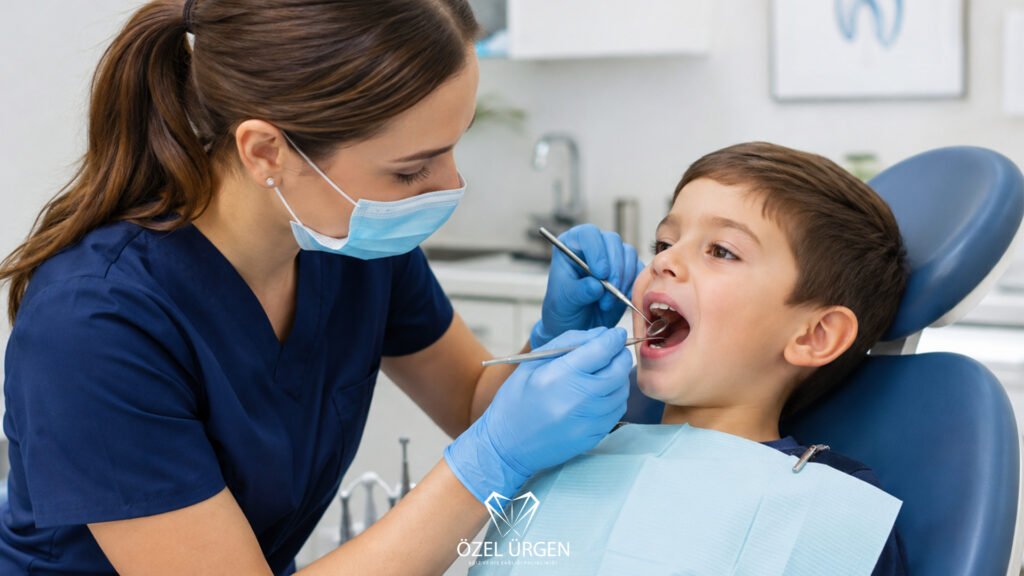
When a baby tooth has deep decay, root canal treatment is not always necessary, but extracting the tooth is not always the correct option either.
When making this decision, the child’s age, how long remains until the tooth is expected to fall out naturally, the condition of the roots, the degree of physiological root resorption, the extent of the infection, the amount of healthy tooth structure remaining, and whether the tooth can be restored are all taken into consideration.
If the tooth is expected to remain in the mouth for a considerable period and can be properly restored, treatments aimed at preserving the tooth may be considered. On the other hand, if the tooth is very close to its natural shedding time, if there are significant changes in the root structure, or if the tooth cannot be restored in a healthy manner, extraction may be considered.
The AAPD also states that treatment planning should take into account not only the condition of the pulp but also the importance of the tooth in the mouth, its restorability, and alternative treatment options.
For this reason, there is no single answer that applies to every child when asking “Is root canal treatment or extraction the better option?”
Can Root Canal Treatment on a Baby Tooth Harm the Permanent Tooth?
It is understandable for parents to be concerned about this issue because permanent teeth continue to develop beneath baby teeth. When planning treatment for baby teeth, the development of the permanent tooth underneath and the current condition of the baby tooth roots are taken into consideration.
The most important point is to determine a treatment method that is appropriate for the current condition of the tooth. Leaving a baby tooth with deep decay or infection untreated for an extended period may also cause problems in the surrounding tissues.
For this reason, if a baby tooth has deep decay, recurring pain, or suspected infection, an early evaluation by a pediatric dentist is important.
What Should Be Considered After Root Canal Treatment on a Baby Tooth?
It is important to follow the dentist’s recommendations after treatment. Until the effect of the local anesthesia has completely worn off, it should be kept in mind that children may accidentally bite their lips, cheeks, or tongue without realizing it.
The child should continue their oral care routine, brush their teeth regularly in an age-appropriate manner, and attend follow-up appointments without interruption. Regular check-ups of a baby tooth that has undergone root canal or pulp treatment allow the treated tooth and surrounding tissues to be monitored.
How Many Sessions Does Root Canal Treatment on a Baby Tooth Take?
The number of sessions may vary depending on the type of treatment and the condition of the tooth. While some pulp treatments can be completed in a single session, additional sessions or follow-up appointments may be required in some cases.
Is There Pain After Root Canal Treatment on a Baby Tooth?
Short-term sensitivity may occur after treatment. However, if severe or increasing pain, noticeable swelling, or any other unusual problem develops, the dentist should be contacted.
What Happens If a Decayed Baby Tooth Is Extracted?
The outcome depends on the child’s age and which tooth has been extracted. If a tooth is lost much earlier than its normal shedding time, the area may need to be monitored, and additional treatments such as a space maintainer may be considered for some children.
Should a Baby Tooth Be Filled or Treated with a Root Canal?
If the decay has not yet reached the pulp tissue, a filling or more conservative treatments may be sufficient. If the pulp has been affected, treatments such as pulpotomy or pulpectomy may be considered. The final decision is made following a dental examination.
Can an Abscessed Baby Tooth Be Treated with Root Canal Treatment?
The same treatment is not appropriate for every abscessed baby tooth. The severity of the infection, the condition of the roots, and whether the tooth can be restored are evaluated before deciding on the most appropriate option, which may include root canal treatment, other pulp treatments, or extraction.
Is Root Canal Treatment Performed If a Baby Tooth Is Close to Falling Out?
If the tooth is very close to its natural shedding time, the treatment plan may change accordingly. The degree of physiological root resorption and the development of the permanent tooth are evaluated to determine whether preserving the tooth or choosing a different treatment would be more appropriate.
Comments are closed