



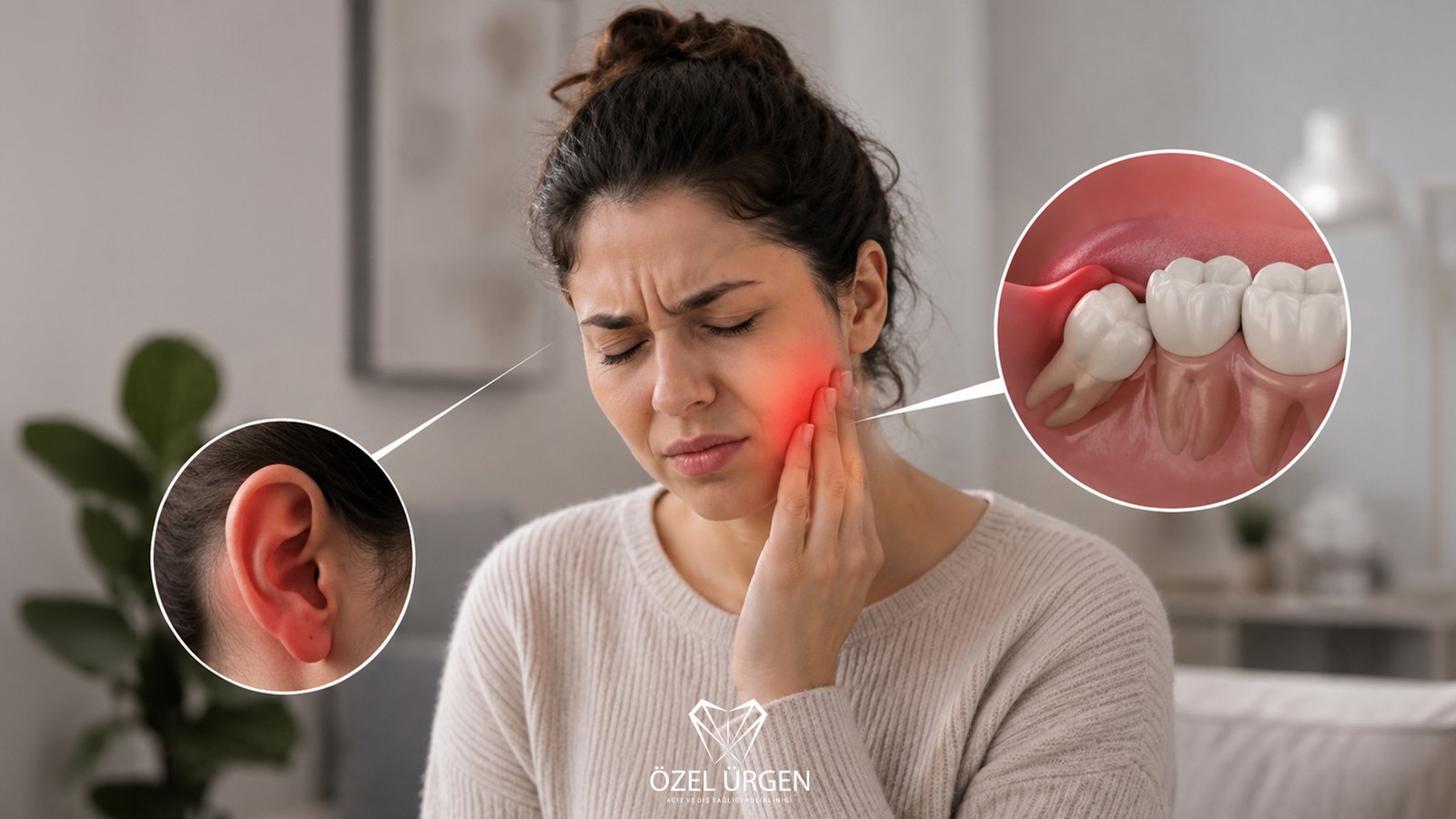
What Causes Wisdom Tooth Pain?
Do you feel pain that starts at the very back of your mouth and sometimes spreads toward your jaw, ear, or even the side of your head? If you have difficulty chewing while eating, feel soreness when opening your mouth, or notice that the pain becomes more noticeable when you lie down at night, your wisdom teeth may be the reason.
Wisdom tooth pain often begins as mild sensitivity. During the first few days, it may be ignored with the thought, “It will probably go away.” However, if the pain gradually becomes stronger, swelling develops in the gums, or it starts affecting your daily life, there may be another issue developing inside your mouth. This is because wisdom teeth may not be able to erupt properly when there is not enough space for them. Only part of the tooth may become visible through the gum, it may remain completely impacted, or it may grow at an angle toward the tooth next to it.
Wisdom teeth generally begin to erupt between the ages of 17 and 25 and are the last teeth to appear in the mouth. However, every person’s jaw structure, tooth alignment, and wisdom tooth position are different. Some people barely notice their wisdom teeth coming in, while for others, this period can be quite uncomfortable. Symptoms such as gum sensitivity, difficulty opening the mouth, pain while chewing, an unpleasant taste, bad breath, and swelling in the face may occur.
Wisdom tooth pain is not always caused simply by the tooth trying to erupt. Food particles building up around the tooth, difficulty cleaning the area properly, gum infection, tooth decay, or pressure from the wisdom tooth on nearby teeth may also lead to pain. For this reason, every pain should not be dismissed by saying, “The tooth is coming in, so this is normal.”
Especially if the pain lasts longer than a few days, the swelling increases, or you have difficulty opening your mouth or swallowing, it is important to have the tooth examined. An oral examination and, when necessary, dental imaging can help determine the position of the wisdom tooth, the condition of the surrounding tissues, and the actual cause of the pain more clearly.
What Is a Wisdom Tooth?
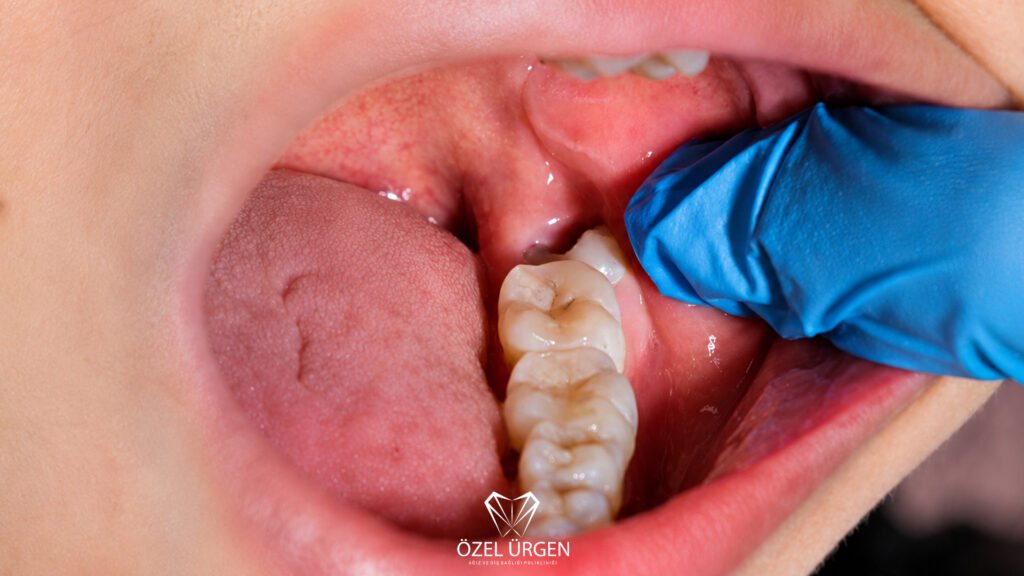
Wisdom teeth are the third molars located at the very back of the upper and lower jaws. They are commonly called “wisdom teeth” because they usually begin to appear during young adulthood. However, the timing of their eruption is not the same for everyone.
For some people, wisdom teeth erupt properly and do not cause any discomfort. For others, there may not be enough space in the jaw, which can prevent the tooth from fully erupting. It may come in at an angle or remain trapped beneath the gum and jawbone.
When a wisdom tooth erupts in an incorrect position, cleaning the area can become difficult. Food particles and bacteria may collect especially around partially erupted teeth. Over time, this can lead to pain, swelling, infection, and difficulty moving the jaw.
What Causes Wisdom Tooth Pain?
Wisdom tooth pain does not always have a single cause. To understand where the pain is coming from, it is necessary to look at how the tooth is erupting, the condition of the surrounding gum tissue, and the nearby teeth. Sometimes the problem is simply related to the eruption process, while in other cases, a different issue may be causing the discomfort.
The Wisdom Tooth Beginning to Erupt
When a wisdom tooth begins to push through the gum, pressure and sensitivity may be felt in the area. Mild to moderate pain, tightness in the gum, and discomfort while eating are quite common during this period.
If there is enough room in the jaw for the tooth to erupt, these symptoms may gradually decrease on their own. However, if the pain continues for a long time, becomes increasingly severe, or is accompanied by swelling, it should not be assumed that the discomfort is only caused by the tooth coming in.
Impacted Wisdom Tooth
When there is not enough space in the jaw, a wisdom tooth may not be able to erupt fully. If the entire tooth remains beneath the gum or bone, it is called a fully impacted wisdom tooth. If only part of the tooth erupts, it may be described as a partially impacted wisdom tooth.
Impacted wisdom teeth do not always cause symptoms. However, they may lead to pain, infection, damage to the neighboring tooth, and areas that are difficult to clean.
Gum Infection and Pericoronitis
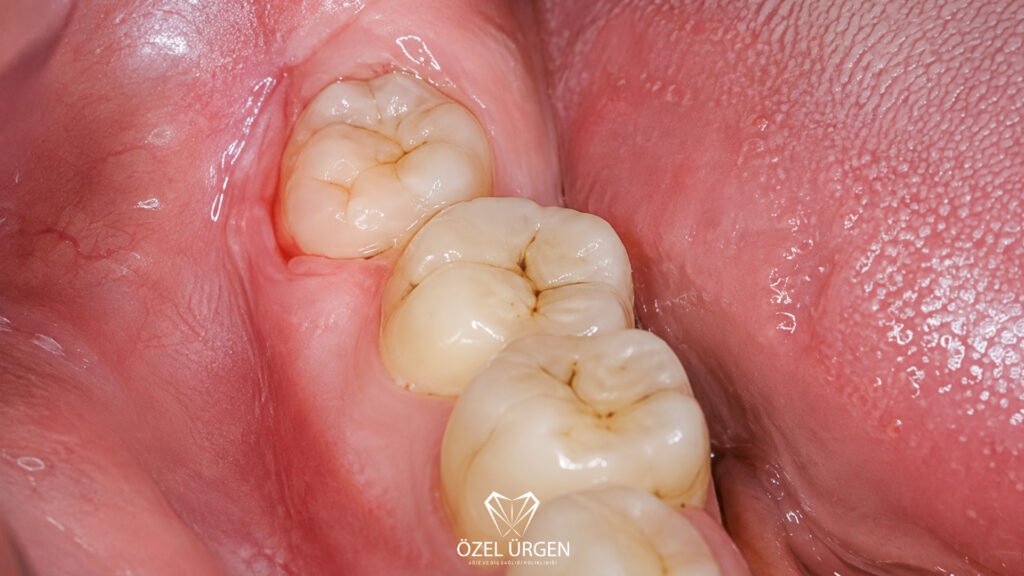
A piece of gum tissue may remain over a partially erupted wisdom tooth. When food particles and bacteria collect beneath this tissue, the surrounding gum can become inflamed. This condition is known as “pericoronitis.”
Pericoronitis can cause symptoms ranging from mild gum sensitivity to swelling in the face. Bad breath, an unpleasant taste, pus, stiffness in the jaw, and difficulty opening the mouth may also occur. Since delaying treatment may allow the infection to progress, early evaluation is important.
Tooth Decay in the Wisdom Tooth
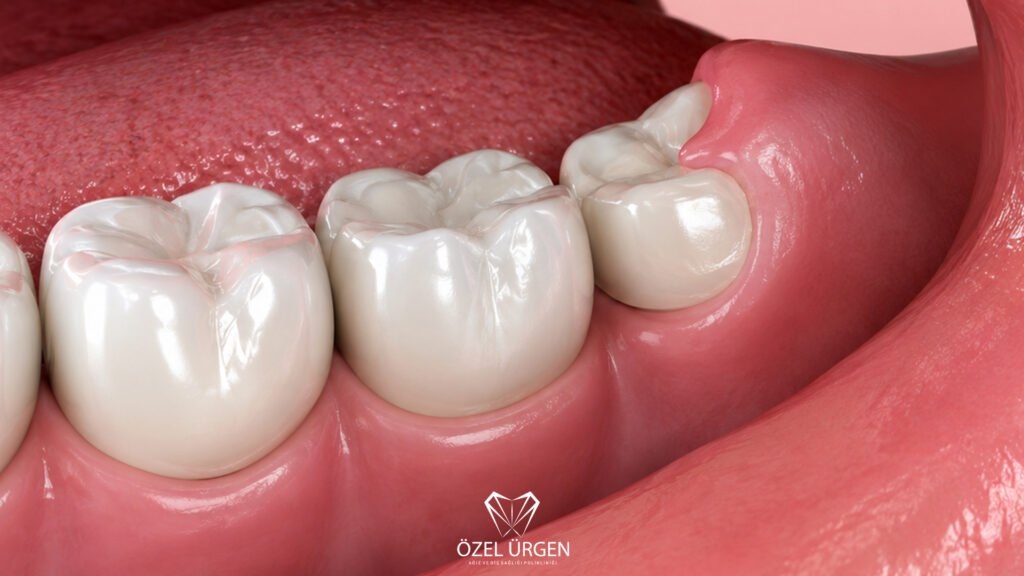
It can be difficult to reach wisdom teeth located at the very back of the mouth with a toothbrush. For this reason, plaque and food particles may collect on the tooth more easily.
Wisdom teeth that cannot be cleaned properly may develop tooth decay. As the decay progresses, sensitivity to hot, cold, or sweet foods, throbbing pain, and toothache that becomes worse at night may occur.
Pressure on or Damage to the Neighboring Tooth
A wisdom tooth that erupts at an angle may press against the second molar in front of it. When a difficult-to-clean area forms between these teeth, both the wisdom tooth and the neighboring tooth may develop decay or gum problems.
When an impacted wisdom tooth is positioned toward the neighboring tooth, it may sometimes damage the surrounding tissues or the root of the adjacent tooth.
Cysts or Problems Affecting the Surrounding Tissues
Although less common, cyst-like formations may develop around impacted wisdom teeth. These conditions can cause not only pain but also problems affecting the surrounding bone and tooth structures.
For this reason, even impacted wisdom teeth that do not cause any noticeable symptoms may need to be monitored through a clinical examination and dental imaging when necessary.
How Long Does Wisdom Tooth Pain Last?
How long wisdom tooth pain lasts depends on what is causing it. Mild sensitivity related to the normal eruption process may decrease within a few days. However, if the pain is caused by tooth decay, infection, an abscess, pericoronitis, or an impacted wisdom tooth, the symptoms may not go away completely on their own.
The pain becoming milder from time to time does not necessarily mean that the problem has been resolved. In cases involving an infection, the pain may become more intense for a while and then decrease. However, this temporary relief does not always mean that there is no longer a problem in the area.
If wisdom tooth pain lasts longer than two days, becomes worse with each passing day, or is accompanied by symptoms such as swelling, difficulty opening the mouth, or discomfort while chewing, it may be helpful to have the area evaluated by a dentist.
What Can Help Relieve Wisdom Tooth Pain at Home?
When wisdom tooth pain begins, the first thing most people wonder is what they can do at home. Pain that starts during the night or continues until a dental appointment can be especially uncomfortable. However, there is one important point to keep in mind: Home remedies do not eliminate the underlying cause of the pain. They may only help reduce the discomfort for a short period of time.
Because the painful area feels sensitive, many people avoid brushing that side of their mouth. However, not cleaning the area at all may cause more food particles and plaque to build up. For this reason, you should continue brushing your teeth, but do so with very gentle movements. The area around the wisdom tooth at the very back of the mouth should be cleaned carefully. Gentle cleaning without applying too much pressure may help remove trapped food particles and make the gum feel a little more comfortable.
Rinsing the mouth with warm salt water is another commonly used method. You can prepare it by adding a small amount of salt to a glass of warm water and gently rinsing your mouth. It is important to make sure that the water is not too hot and to avoid forceful movements that may irritate the painful area. This may help keep the area clean and provide temporary relief.
You may also need to pay a little more attention to what you eat during this time. Hard, crunchy, very hot, very cold, or spicy foods may irritate the sensitive area further. Soup, yogurt, mashed foods, or other soft foods that are easy to chew may feel more comfortable. Avoiding chewing on the painful side as much as possible may also prevent further pressure on the area.
If there is swelling on the outside of your cheek, you may apply a cold compress for short periods. Rather than placing ice directly on your skin or gum, it is better to wrap it in a clean towel and apply it intermittently to the outside of the cheek. This may temporarily help reduce the feeling of swelling and sensitivity.
It is important to be careful when using painkillers. Not every medication is suitable for everyone. Pregnancy, allergies, stomach or kidney problems, and regularly used medications are among the many factors that can affect which medicine is appropriate. For this reason, it is safer to read the medication instructions before use and, if you are unsure, consult a dentist, doctor, or pharmacist. Crushing painkiller tablets and placing them directly on the tooth or gum is not recommended, as this may irritate the area.
Using leftover antibiotics without professional advice is also not a suitable approach. Antibiotics are not required for every case of wisdom tooth pain. The cause of the pain and the type of treatment needed can only be determined after an evaluation by a dentist. For this reason, home remedies should only be considered temporary support. If the pain continues or the swelling increases, postponing a dental examination is not recommended.
Comments are closed