




How Long Does Teeth Whitening Last? Factors Affecting the Longevity of Whitening Results
A beautiful, healthy-looking smile can help people feel more confident in both their social lives and everyday interactions. However, over time, the color of our teeth may change due to the foods and beverages we consume, tobacco use, and the natural aging process. In particular, frequent consumption of tea, coffee, and highly pigmented foods can cause staining on the tooth surface. As a result, many people who want a brighter smile turn to professional teeth whitening treatments.
One of the most frequently asked questions about this procedure is how long does teeth whitening last? The duration of whitening results depends on several factors, including the method used, oral hygiene habits, dietary choices, and the natural structure of the teeth.
Teeth whitening is a cosmetic dental procedure designed to lighten the natural color of teeth. However, no professional whitening method can guarantee that teeth will remain the same shade of white for a lifetime. With consistent oral care and healthy habits, it may be possible to maintain the results for a longer period.
In this comprehensive guide prepared for Ürgen Oral and Dental Health Polyclinic, we explore how long teeth whitening results last, the characteristics of different whitening methods, why teeth become discolored again, and what patients should consider after treatment.
What Is Teeth Whitening and How Is It Performed?
Teeth whitening, also known as bleaching, is a dental procedure intended to reduce discoloration and lighten the natural shade of teeth. The treatment generally involves specialized whitening products containing hydrogen peroxide or carbamide peroxide.
These substances interact with the compounds responsible for discoloration within the tooth structure, helping to produce a lighter tooth shade. The effectiveness of the procedure may vary depending on the cause of discoloration and the treatment protocol used.
Teeth whitening methods can generally be divided into three categories:
- In-Office Teeth Whitening: A professional procedure performed by a dentist in a clinical setting.
- At-Home Teeth Whitening: A method performed at home using custom-made trays prepared by a dentist and worn according to a prescribed schedule.
- Combined Teeth Whitening: An approach that combines professional in-office whitening with dentist-supervised at-home treatment.
The most appropriate method should be determined according to the patient’s current tooth color, oral health, sensitivity levels, and expectations.
Before beginning teeth whitening, it is important to evaluate existing cavities, gum disease, and dental restorations. Whitening agents primarily affect natural tooth structure and do not change the color of crowns, veneers, or fillings in the same way.
How Long Does Teeth Whitening Last?
The answer to how long does teeth whitening last varies from person to person. In general, the effects of professional teeth whitening may last approximately six months to three years.
However, this timeframe is not a guarantee. Some individuals may experience renewed discoloration earlier, while others may maintain their brighter smile for a longer period.
According to Cleveland Clinic, teeth whitening results can last approximately six months to three years. The United Kingdom’s National Health Service (NHS) also states that results may last up to three years when patients follow their dentist’s recommendations.
Therefore, when evaluating the longevity of teeth whitening, it is essential to consider not only the treatment method but also the patient’s daily habits after the procedure.
For example, someone who drinks several cups of coffee daily, smokes, and does not maintain adequate oral hygiene may notice discoloration sooner.
In contrast, individuals who brush regularly, maintain good oral hygiene, and follow their dentist’s instructions may preserve their whitening results for longer.
An important point to understand is that whitening effects do not usually disappear suddenly. Teeth generally begin to change color gradually over time.
Therefore, mild discoloration appearing several months after treatment does not necessarily indicate that the whitening procedure was unsuccessful.
What Factors Affect the Longevity of Teeth Whitening?
The primary factors affecting how long teeth whitening results last include:
- The natural shade and structure of the teeth.
- The whitening method used.
- Consumption of tea, coffee, and other colored beverages.
- Smoking and the use of other tobacco products.
- Daily oral hygiene habits.
- The type and severity of existing tooth discoloration.
- Professional dental cleaning and regular dental checkups.
- Compliance with maintenance or touch-up treatments recommended by the dentist.
Considering these factors together provides a more personalized and realistic answer to how long does teeth whitening last.
How Long Does In-Office Teeth Whitening Last?
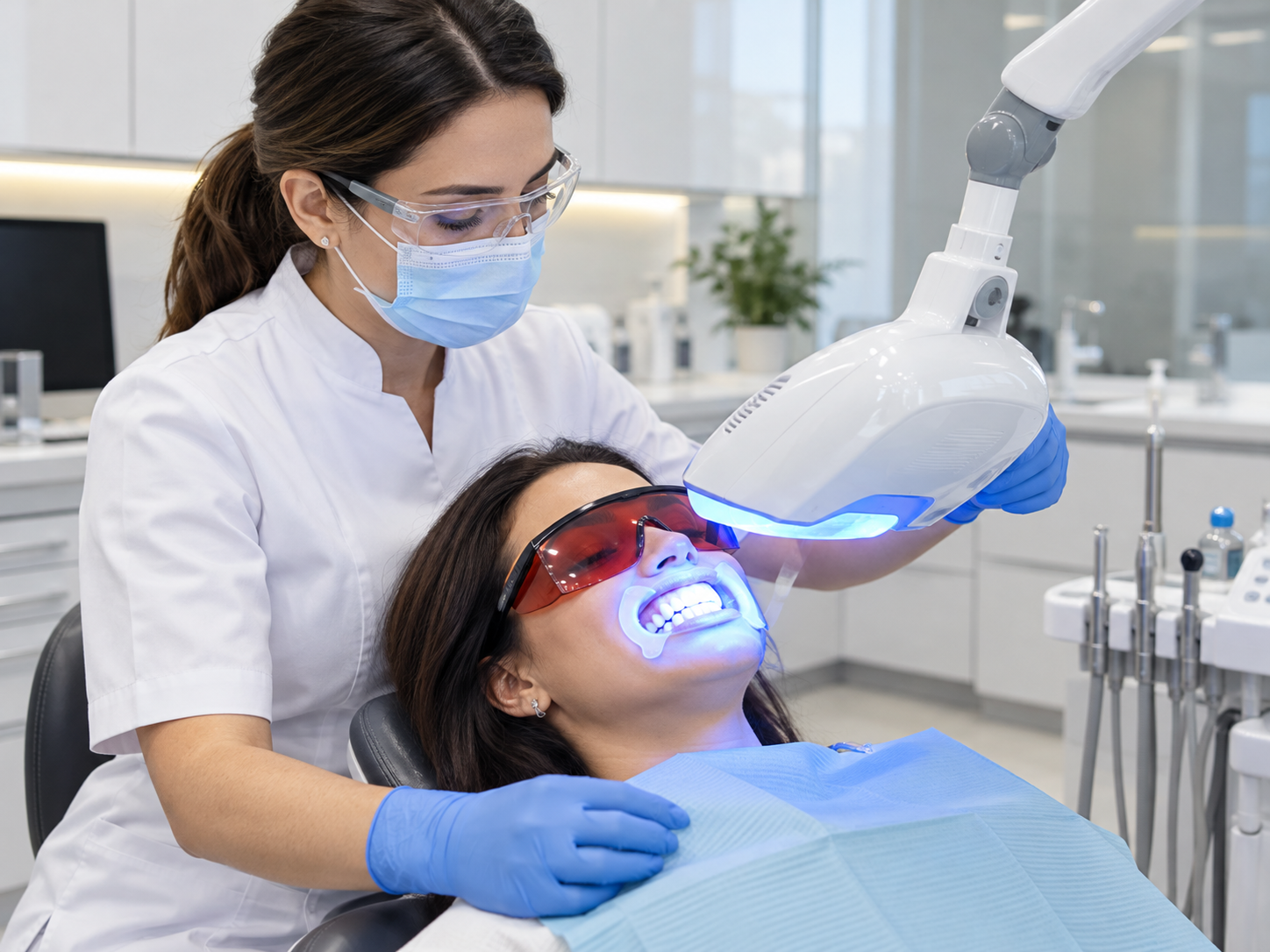
In-office teeth whitening is a professional treatment performed in dental clinics that can often produce visible improvements in tooth color within a relatively short period.
During the procedure, the gums are protected with appropriate materials, and a whitening gel is applied to the surfaces of the teeth.
Depending on the whitening system, the treatment may be performed with or without light activation.
One of the main advantages of in-office teeth whitening is that the procedure is performed under the supervision of a dentist.
This allows gum protection, product concentration, and application time to be adjusted according to the patient’s individual needs.
However, undergoing treatment in a dental clinic does not automatically mean that the whitening results will last longer.
The longevity of the results largely depends on the patient’s habits after treatment.
Teeth may become stained again following in-office whitening. Therefore, maintaining good oral hygiene, managing habits that contribute to discoloration, and seeking dental evaluation when necessary are important.
Is In-Office Teeth Whitening Permanent?
In-office whitening does not guarantee permanent tooth color changes.
Although the procedure can lighten the shade of natural teeth, new stains may develop due to external factors.
Therefore, individuals researching how long does teeth whitening last should understand that the procedure is not necessarily a one-time treatment that provides lifelong results.
Maintaining whitening results depends not only on proper treatment planning but also on consistent aftercare.
How Long Does At-Home Teeth Whitening Last?
At-home teeth whitening involves the use of custom-made transparent trays prepared by a dentist, along with an appropriate whitening gel.
The patient uses the trays according to the duration and frequency prescribed by the dentist, allowing tooth color to lighten gradually.
At-home whitening may require a longer treatment schedule compared with in-office procedures. However, when performed correctly, it can produce effective results.
As with in-office whitening, the longevity of at-home whitening depends on the patient’s daily habits.
The fact that the treatment is performed at home does not necessarily mean its results will last for a shorter period.
For some patients, dentist-supervised at-home whitening may be considered part of a maintenance plan designed to preserve existing results.
However, using excessive whitening gel or exceeding the recommended application time may cause tooth sensitivity and gum irritation.
For this reason, at-home whitening should always be performed according to the treatment protocol recommended by a dentist.
Why Do Teeth Become Yellow Again After Whitening?
The return of tooth discoloration after a whitening procedure is a common occurrence.
The main reason is that teeth continue to come into contact with substances that can cause staining during everyday life.
Teeth whitening can reduce existing discoloration, but it cannot completely prevent new stains from developing.
1. Tea and Coffee Consumption
Tea and coffee are among the beverages that can cause extrinsic staining, which affects the outer surfaces of teeth.
Frequent consumption may allow colored pigments to accumulate on the tooth surface, gradually making teeth appear darker.
Therefore, tea and coffee consumption habits should be considered when attempting to maintain whitening results.
Rinsing the mouth with water after consuming these beverages, maintaining regular oral hygiene, and following the dentist’s recommendations may be beneficial.
2. Smoking and Tobacco Products
Smoking can contribute to yellowish or brownish stains on the teeth.
Regular tobacco use may cause the tooth shade achieved through professional whitening to change more quickly.
In addition to its aesthetic effects, smoking poses significant risks to gum health and overall oral health.
Quitting smoking is therefore important for both maintaining oral health and reducing the development of new tooth stains.
3. Frequent Consumption of Highly Pigmented Foods
Certain foods contain strong color pigments that may contribute to staining on tooth surfaces.
Frequent consumption of dark-colored fruits, strongly colored sauces, and other highly pigmented foods may gradually affect the appearance of teeth.
However, this does not mean that healthy foods must be completely eliminated from the diet.
The key is to maintain appropriate oral hygiene after eating.
4. Inadequate Oral Hygiene
Failing to brush regularly, neglecting interdental cleaning, and allowing plaque to accumulate on tooth surfaces can make discoloration more noticeable.
Plaque and tartar buildup may contribute to a dull or yellow appearance.
For this reason, daily oral hygiene should not be neglected.
5. Aging and Changes in Tooth Structure
As people age, the appearance of tooth enamel and the way the underlying tooth structure is perceived may change.
In particular, gradual thinning of the enamel can make the underlying dentin more visible.
Because dentin naturally has a more yellowish appearance than enamel, teeth may look darker over time.
This process is part of natural aging and is not caused solely by stains on the outer surface of the teeth.
How Can You Maintain White Teeth After Whitening?
One of the most important factors influencing the answer to how long does teeth whitening last is proper aftercare.
Following a professionally performed whitening procedure, adopting healthy dental habits can help preserve the aesthetic appearance of the teeth for a longer period.
Establish a Daily Brushing Routine
Brushing teeth at least twice a day with fluoride toothpaste is one of the fundamental habits for maintaining oral and dental health.
A soft-bristled toothbrush should be used, and excessive pressure on tooth surfaces should be avoided.
Brushing too aggressively may contribute to gum recession and tooth surface wear.
Therefore, using the correct brushing technique is essential.
Clean Between Your Teeth Regularly
A toothbrush cannot always adequately clean the narrow spaces where adjacent teeth meet.

For this reason, using dental floss or appropriate interdental cleaning tools can help reduce plaque accumulation.
Regular interdental cleaning is an important part of overall oral hygiene and can support the maintenance of whitening results.
Limit Beverages That Cause Staining
Frequent consumption of coffee, tea, and other highly pigmented beverages may contribute to renewed discoloration after whitening.
Reducing the consumption of these beverages may help control the development of new stains.
Drinking water or rinsing the mouth with water after consumption may also help remove some staining substances from the mouth.
Do Not Neglect Regular Dental Checkups
Regular dental examinations are important not only for evaluating whitening results but also for the early detection of tooth decay and gum disease.
During an examination, the dentist can identify possible causes of discoloration and recommend professional cleaning or other appropriate procedures when necessary.
Avoid Abrasive Home Whitening Methods
Social media frequently features recommendations for whitening teeth using substances such as lemon juice, baking soda, vinegar, or activated charcoal.
However, sufficient scientific evidence may not be available to support the effectiveness of these methods.
Incorrect use of acidic or abrasive substances can potentially damage dental tissues.
The American Dental Association (ADA) highlights important limitations regarding the safety and effectiveness of certain homemade whitening mixtures.
Therefore, patients should avoid using highly abrasive products without consulting a dentist, particularly when attempting to address discoloration after whitening.
Why Are the First 48 Hours After Teeth Whitening Important?
One of the considerations following teeth whitening is adherence to the aftercare instructions provided during the first few days.
Depending on the whitening technique and the patient’s oral condition, the dentist may recommend temporarily limiting certain foods and beverages.
Avoiding coffee, tea, dark-colored drinks, and tobacco products during the first 24–48 hours is included in some clinical aftercare protocols.
However, scientific evidence supporting a mandatory 48-hour special diet for every patient remains limited.
Therefore, dietary choices and oral care after treatment should follow the dentist’s individualized recommendations.
Mild tooth sensitivity may occur after whitening.
During this period, extremely hot or cold foods and beverages may cause discomfort for some individuals.
Sensitivity is usually temporary. However, patients should consult their dentist if sensitivity becomes severe or persists for an extended period.
When considering how long does teeth whitening last, it is essential to focus not only on aftercare during the first few days but also on maintaining healthy oral hygiene habits over the long term.
Can Teeth Whitening Be Repeated?
Teeth whitening may be repeated when considered appropriate following a dental evaluation.
However, there is no fixed retreatment interval that applies to everyone.
When determining whether another whitening procedure is suitable, the following factors should be considered:
- The current tooth shade and cause of discoloration.
- The time elapsed since the previous whitening treatment.
- Whether tooth sensitivity is present.
- The current condition of the gums and tooth enamel.
- The characteristics of the whitening method previously used.
- The patient’s aesthetic expectations.
In some individuals, a limited maintenance treatment may be sufficient when mild discoloration develops.
In other cases, a new whitening procedure may be considered.
Nevertheless, repeating whitening treatments too frequently in an attempt to achieve increasingly white teeth is not advisable.
Unsupervised use of whitening agents may increase the risk of temporary tooth sensitivity and gum irritation.
Therefore, anyone considering another teeth whitening procedure should first undergo a dental examination.
Does Teeth Whitening Damage Tooth Enamel?
The safety of teeth whitening is one of the most frequently discussed topics among patients.
Whitening procedures performed with appropriate products under professional dental supervision can be considered a safe cosmetic treatment option for suitable patients.
However, no whitening treatment can be described as entirely risk-free.
The most commonly reported side effects include temporary tooth sensitivity and gum irritation.
Incorrect use of highly concentrated whitening products or leaving them on the teeth longer than recommended may increase the risk of unwanted effects.
For this reason, existing cavities, gum disease, and sensitivity problems should be evaluated before whitening.
Patients with cracked, worn, or decayed teeth should undergo a dental examination before beginning treatment.
The American Dental Association also emphasizes the importance of professional assessment and appropriate treatment protocols when discussing the safe and effective use of teeth whitening products.
Is Teeth Whitening Suitable for Everyone?
Teeth whitening may be considered for many adults who wish to lighten the natural color of their teeth.
However, the procedure is not suitable for everyone.
Individuals with active gum disease, untreated cavities, or significant tooth sensitivity may need to address these oral health problems before undergoing whitening.
Cosmetic teeth whitening is generally not recommended during pregnancy or breastfeeding.
Whitening treatments for children and individuals whose permanent teeth are still developing also require special consideration.
Patients with veneers, crowns, implant-supported restorations, or large fillings in their front teeth should receive appropriate information before treatment.
This is because whitening products can lighten natural teeth but do not change the shade of restorative materials in the same way.
As a result, some patients may develop visible color differences between their natural teeth and existing restorations.
Therefore, alongside asking how long does teeth whitening last, patients should also consider whether the treatment is suitable for their individual dental condition.
Is Permanent Teeth Whitening Possible?
The term “permanent teeth whitening” is frequently encountered online.
However, it would be inaccurate to claim that professional whitening procedures provide results that remain unchanged for a lifetime.
After treatment, teeth continue to be exposed to the natural effects of everyday life.
Dietary habits, oral hygiene, and the aging process may influence their appearance over time.
For this reason, the phrase “long-lasting teeth whitening results” more accurately describes the expected outcome than “permanent teeth whitening.”
Individuals who want to maintain their tooth shade for as long as possible should prioritize good oral hygiene, avoid tobacco products, and attend regular dental checkups.
It is also important to understand that not everyone will achieve the same whitening results.
Some forms of tooth discoloration respond very well to whitening, while certain types of intrinsic discoloration may show only limited improvement.
In these situations, a dentist may evaluate alternative cosmetic treatment options.
What Is the Difference Between Teeth Cleaning and Teeth Whitening?
Professional teeth cleaning and teeth whitening are two different dental procedures that are sometimes confused.
The primary purpose of professional dental cleaning is to remove hardened plaque deposits from the teeth and around the gumline.
Certain surface stains may also be removed during the cleaning process.
Teeth whitening, on the other hand, is a separate procedure designed to lighten the natural shade of teeth.
After professional cleaning, teeth may appear cleaner and brighter. However, this is not the same as chemical teeth whitening.
When necessary, professional dental cleaning before whitening can help the dentist assess the patient’s existing tooth color more accurately.
For example, in a patient who is concerned about yellow-looking teeth, a significant part of the problem may be caused by surface stains and tartar accumulation.
In another patient, the natural tooth shade may simply be darker.
In such cases, professional cleaning alone may not produce the desired degree of whitening.
Understanding this distinction is important for preventing unnecessary procedures and helping patients develop realistic expectations.
Frequently Asked Questions About Teeth Whitening
How Many Years Does Teeth Whitening Last?
Teeth whitening results may last approximately six months to three years, depending on personal habits and the method used.
This duration is not the same for everyone.
Smoking, frequent coffee consumption, and inadequate oral hygiene may cause new stains to appear sooner.
How Long Does Teeth Whitening Last? Is It Permanent?
No, teeth whitening does not provide lifelong results.
The answer to how long does teeth whitening last is that whitening effects can be maintained for an extended period with proper care, but they are not permanent.
Over time, teeth may gradually become discolored again.
Can You Drink Coffee After Teeth Whitening?
Patients should follow their dentist’s instructions regarding coffee consumption after whitening.
Coffee is among the beverages that can contribute to staining on tooth surfaces.
Frequent consumption over time may cause teeth to gradually appear darker again.
Do Teeth Return to Their Original Color After Whitening?
Teeth may gradually become darker over time.
However, this does not mean that every patient’s teeth will necessarily return completely to their original shade.
The extent and speed of discoloration vary according to individual habits and tooth structure.
Does Laser Teeth Whitening Last Longer?
Laser-assisted whitening or treatments using other light-based systems are not necessarily more long-lasting than alternative professional whitening methods.
The whitening agent used, treatment protocol, and patient’s aftercare habits are important factors.
The potential benefits and limitations of light-assisted methods should be evaluated according to the specific whitening system.
How Long Does Tooth Sensitivity Last After Whitening?
Sensitivity following teeth whitening is generally temporary and often decreases within a few days.
However, its duration may vary depending on the whitening product, treatment method, and individual tooth structure.
Patients experiencing severe or persistent pain should consult their dentist.
Can Yellow Teeth Become Completely White?
The response of yellow teeth to whitening depends on the underlying cause of discoloration.
Surface stains and certain types of intrinsic discoloration may be reduced.
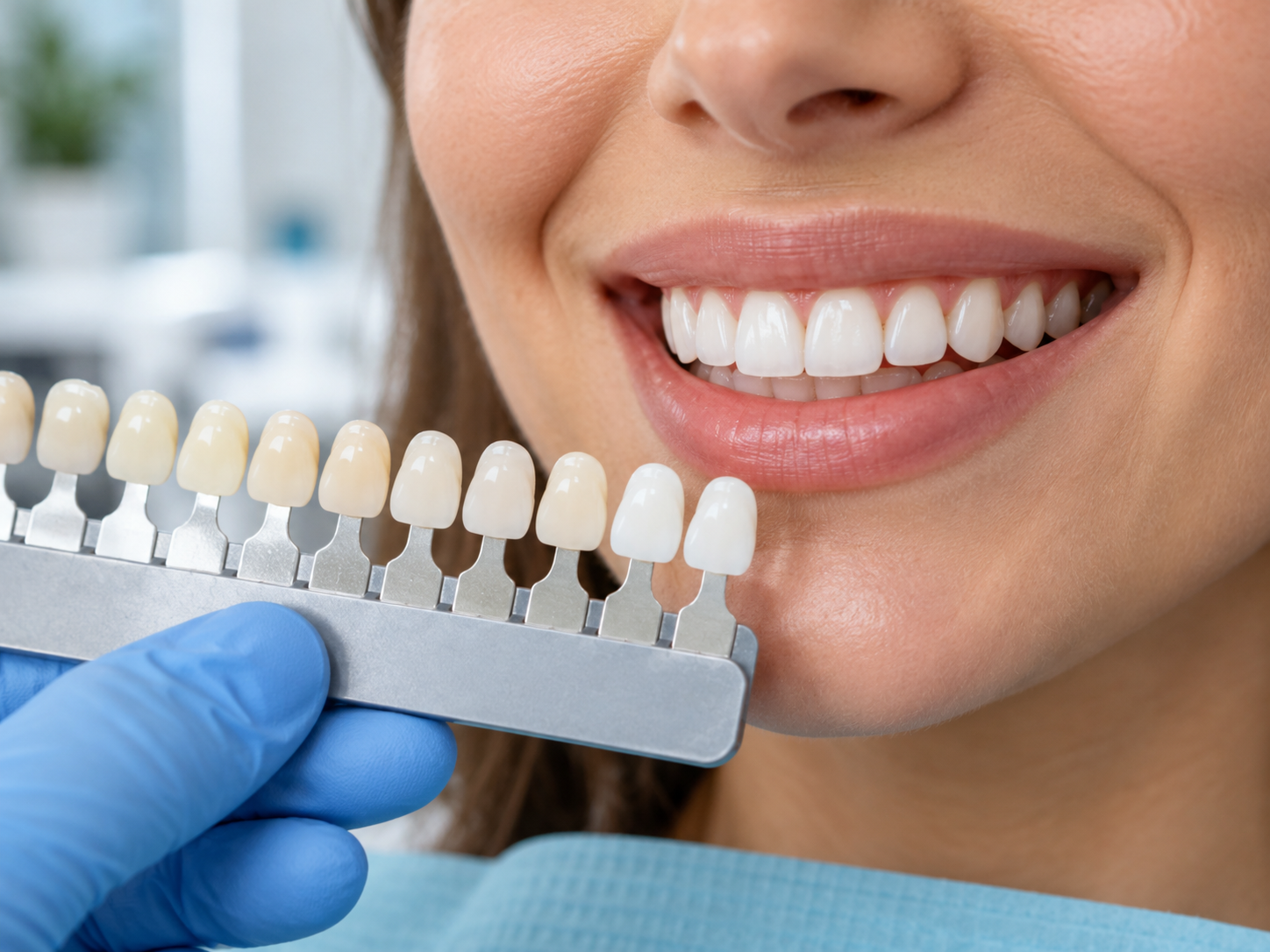
However, achieving a completely white shade cannot be guaranteed for every patient.
The natural structure and original shade of the teeth influence the final result.
How Often Should Teeth Whitening Be Performed?
There is no universally recommended fixed interval for repeating teeth whitening.
The need for retreatment should be determined by a dentist after evaluating the patient’s tooth and gum health.
Unsupervised or excessively frequent whitening procedures should be avoided.
Which Toothpaste Should Be Used After Teeth Whitening?
Using fluoride toothpaste suitable for the patient’s dental condition is generally recommended after whitening.
Individuals experiencing sensitivity may benefit from desensitizing products recommended by their dentist.
Unsupervised use of highly abrasive products should be avoided.
How Many Sessions Does Teeth Whitening Require?
The number of sessions depends on the whitening technique and the severity of tooth discoloration.
For some patients, in-office whitening may be completed in a single appointment, while others may require additional sessions.
At-home whitening generally involves a treatment schedule spread over several days.
Evaluate Your Teeth Whitening Options with Ürgen Oral and Dental Health Polyclinic
Teeth whitening should be planned by considering not only aesthetic expectations but also the patient’s existing oral and dental health.
The causes of tooth discoloration can vary significantly from person to person.
Some individuals may primarily experience surface staining, while others may have darker natural tooth shades, age-related changes, or deeper discoloration.
For this reason, a professional dental evaluation before whitening can help determine the most appropriate treatment method.
By consulting Ürgen Oral and Dental Health Polyclinic, you can receive information about the possible causes of your tooth discoloration, whether whitening methods may be suitable for you, and the precautions that should be taken after treatment.
Planning treatment according to individual needs is important for both maintaining oral health and evaluating aesthetic expectations realistically.
Conclusion: How Can Teeth Whitening Results Last Longer?
The answer to how long does teeth whitening last depends on a person’s oral hygiene habits, dietary choices, natural tooth structure, and the whitening method used.
Although professional teeth whitening results may last approximately six months to three years, this timeframe is not guaranteed.
New stains and changes in tooth color can develop over time.
Brushing regularly, cleaning between the teeth, avoiding tobacco products, managing the consumption of highly pigmented beverages, and attending routine dental checkups may help maintain whitening results.
For individuals seeking long-lasting aesthetic improvements, the most appropriate approach is to plan teeth whitening under professional dental supervision and establish sustainable oral hygiene habits afterward.
At Ürgen Oral and Dental Health Polyclinic, you can schedule a dental examination to learn more about teeth whitening and explore treatment options appropriate for your oral health.
Comments are closed